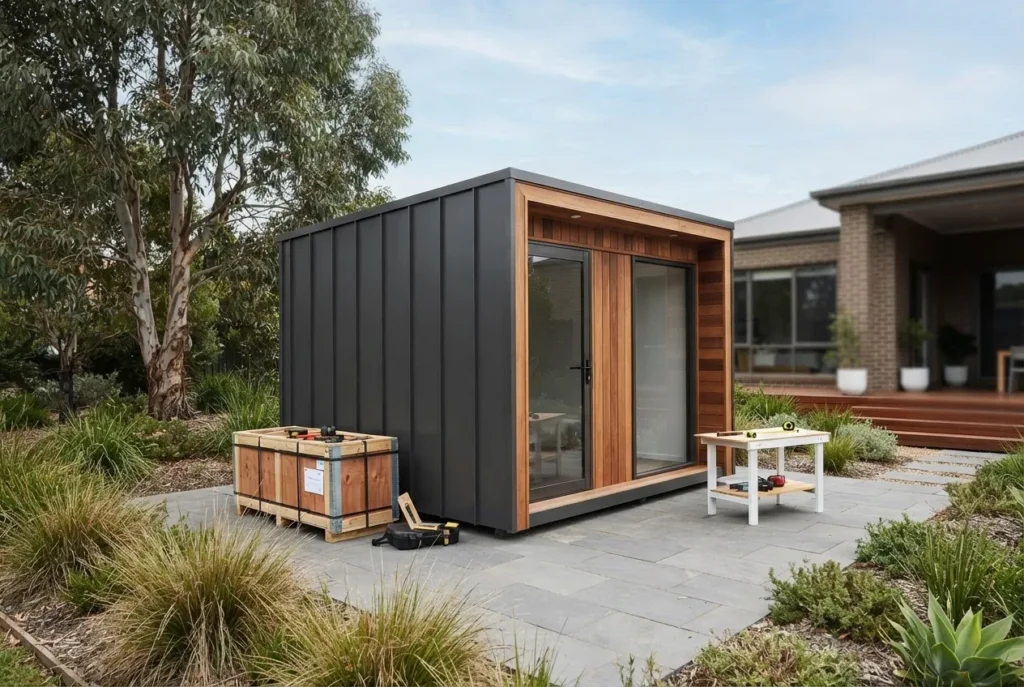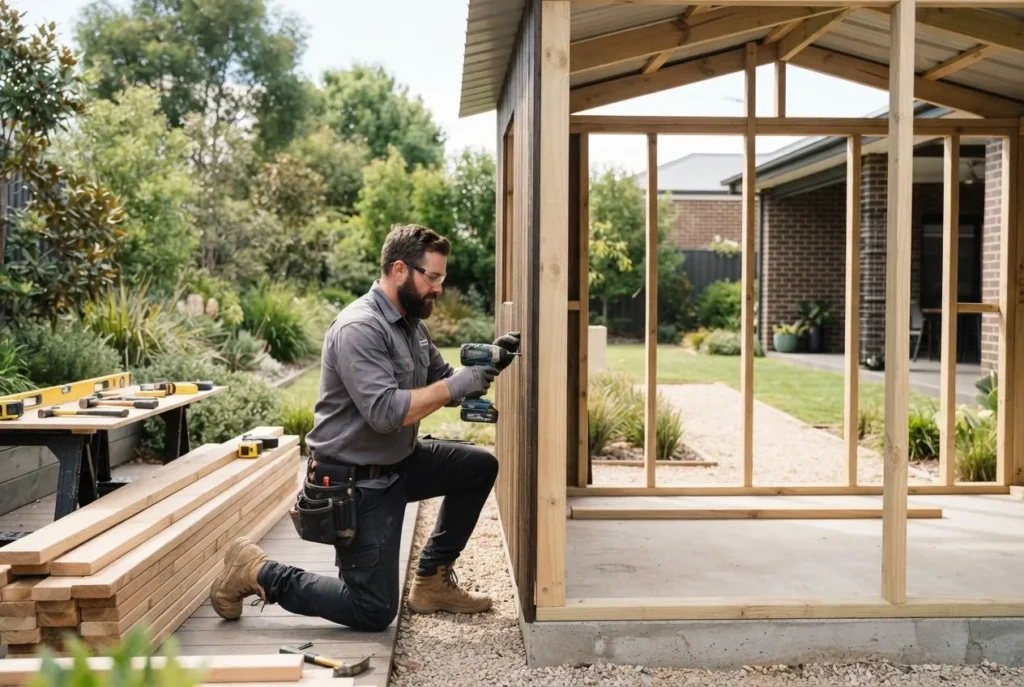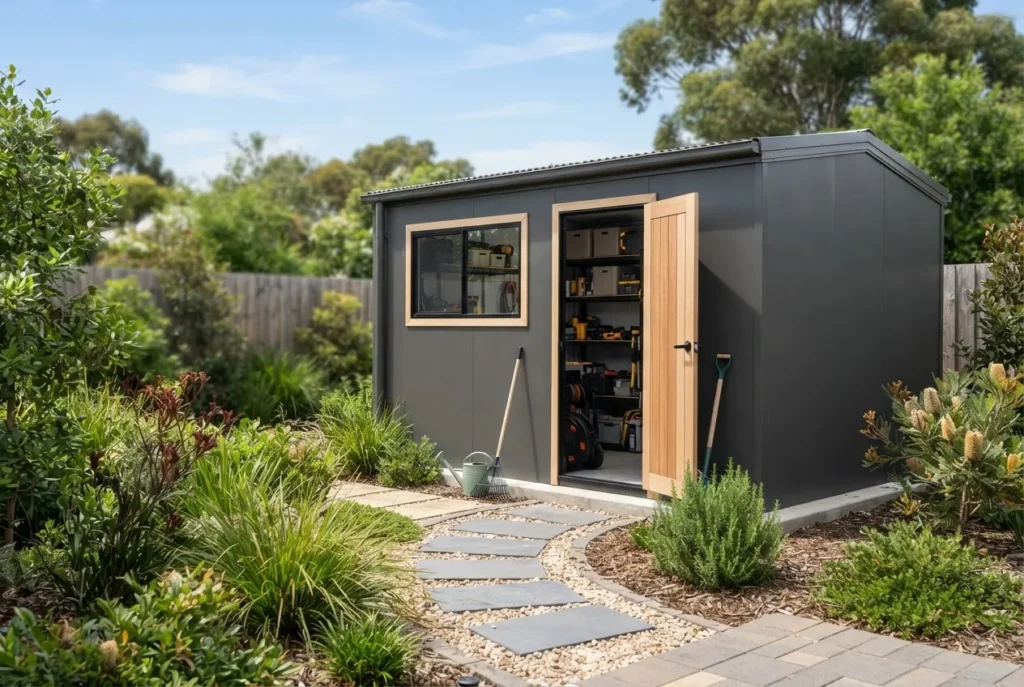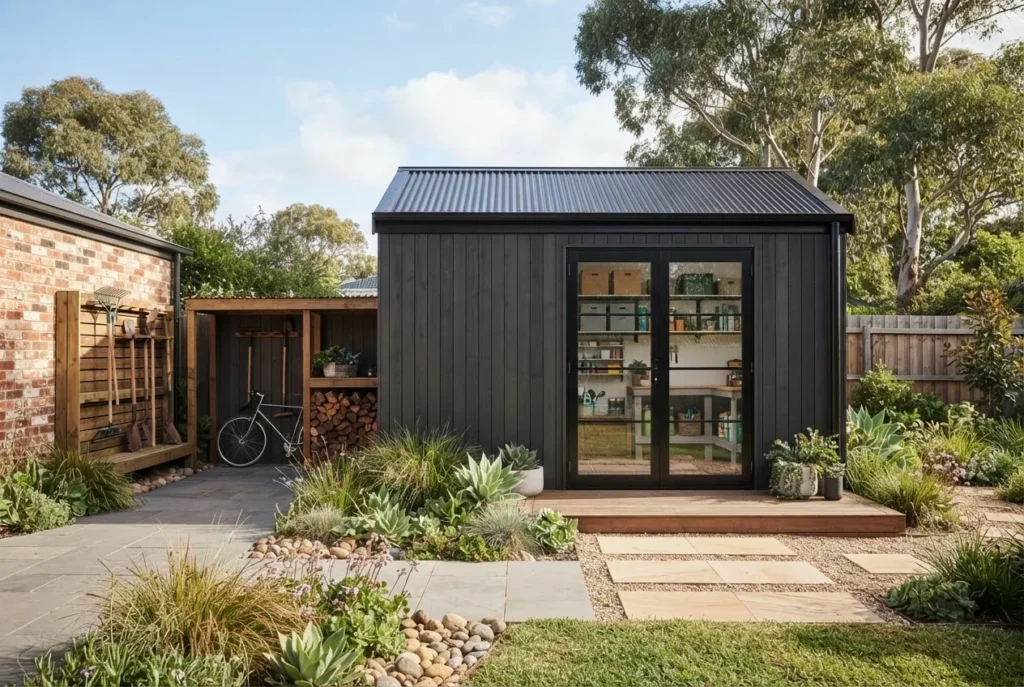

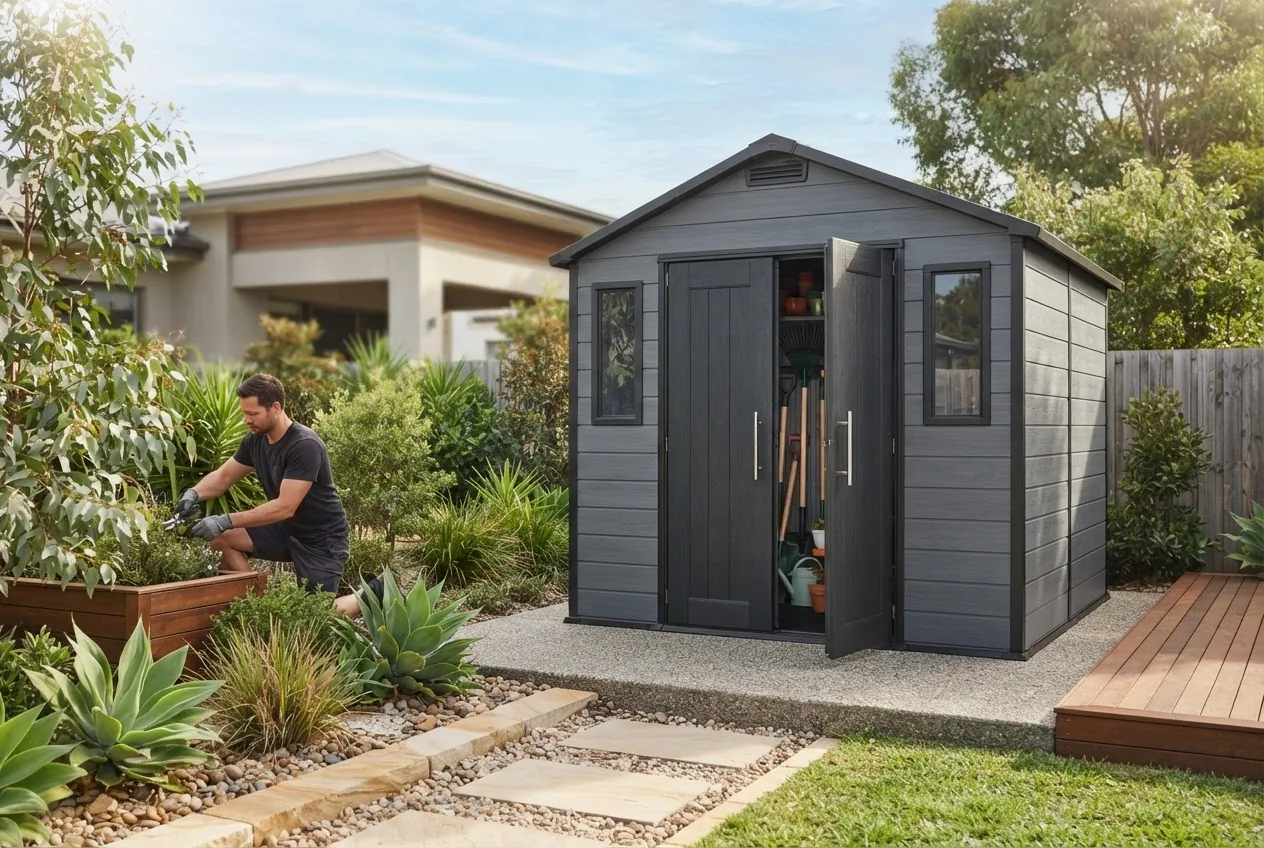
Keter plastic storage sheds in Melbourne typically retail from A$350 for a small plastic shed to about A$2,400 for larger resin garden models; fully installed costs range roughly A$500–A$3,200 depending on size, foundation and delivery. According to a 2024 industry report, installation and site preparation add 30–45% to boxed prices in metropolitan areas.
This data-led guide breaks down model types, precise local price bands, durability metrics and buying recommendations specific to Melbourne’s climate so you can compare Keter options with timber and metal alternatives and decide whether a resin shed meets your needs.
Overview of Keter Plastic Storage Sheds
Keter is a global manufacturer known for injection-moulded resin storage products. Resin sheds—often called plastic garden storage or resin sheds—use weather-resistant polymers and offer lower maintenance than timber and higher rust immunity than galvanised steel. Key general figures:
- Typical retail range (Australia): A$350–A$2,400 per unit (small to large)
- Common materials: polypropylene blends with UV stabilisers and glass-fibre reinforcement in select panels
- Average manufacturer warranty: 10 years limited on most Keter garden storage shed models (see Keter docs linked below)
- Average assembly time (DIY): 2–6 hours for small kits, 6–12 hours for larger two-person builds
Resin sheds are lightweight, corrosion-proof and require occasional cleaning and UV-protection checks. They are best for general garden storage, bike storage and small equipment; heavier workshop conversion needs often point to timber or steel instead.
Key takeaway: Resin sheds trade ultimate structural strength for weather-resistance and low maintenance—expect easier upkeep but pay attention to anchoring and ventilation for long-term performance in Melbourne.
How we assessed this
We analysed published Keter product specifications, recent 2024 retail pricing data from national suppliers, local delivery/installation quotes in Melbourne, and hands-on assembly notes from DIY installers and two small local trades. We cross-referenced manufacturer warranty documents and Australian building regulation guidance for small accessory structures.
Transition: detailed model coverage follows so you can match capacity and features to cost bands below.
Product Range and Types of Keter Plastic Sheds
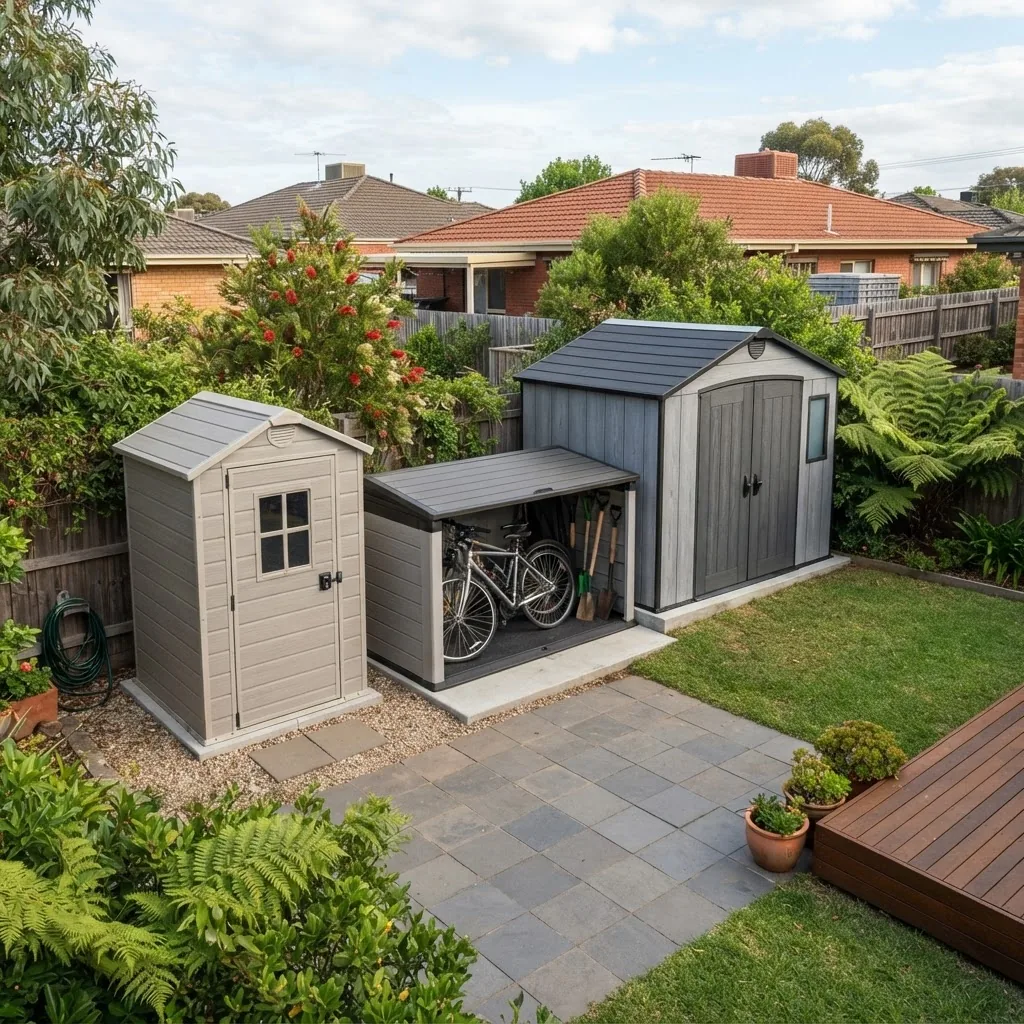
Keter offers a range from compact small plastic shed lockers to larger keter garden storage shed models and specific keter plastic bike shed designs. Each model is presented with dimensions, capacity, common specs and recommended uses for Melbourne households.
-
1. Keter Store-It-Out™ / Store-It-Out Max (Garden storage shed)
Specs: internal footprint ~1.4–2.1 m², external footprint 1.6–2.4 m²; heights 1.9–2.2 m; volume 2.5–5.0 m³. Typical retail: A$750–A$1,600 depending on size and retailer. Good for garden equipment, mower storage and general household overflow.
Features: double doors with padlock tabs, floor panel included on many models, integrated shelving options available from Keter manuals. According to Keter product documentation (see external link below), panels include UV-stabilised resin with interlocking construction.
-
2. Keter Manor / Factor Metal-like Resin Sheds (Larger garden shed alternative)
Specs: external widths 2.1–3.0 m, depths 1.9–2.4 m, volumes up to 9–12 m³. Typical retail: A$1,200–A$2,400. Better for storing larger tools or partial workshop fit-outs with limited weight-bearing capacity.
Features: reinforced roof ribs, skylights on some models, optional window units, lockable doors, and ventilation slots.
-
3. Keter Plastic Bike Shed
Specs: compact length 1.8–2.1 m, depth 0.9–1.1 m; capacity: 2–4 bikes plus small accessories. Typical retail: A$400–A$900. Offers enclosed bike storage with narrow footprint for side yards.
Security: padlock tab and internal tether options; for high-theft areas add ground anchors and a U-lock through frame.
-
4. Small plastic sheds and boxes (Tool lockers, compact storage)
Specs: under 1.4 m width, depths under 0.9 m, volumes <1.5 m³. Typical retail: A$350–A$650. Best for vertical gardening tools, chemical storage in a ventilated position and small item organisation.
-
5. Accessory add-ons and modular options
Keter offers shelving kits, wall hooks and floor panels. Aftermarket options include treated timber bases, concrete pads and bolt-down anchor kits. Expect A$45–A$300 depending on accessory complexity and whether professional installation is required.
If you want construction-focused alternatives, see the related constructing a garden shed guide for timber and custom options.
Transition: next we break down how much each product type will cost in practice in Melbourne, including installation and delivery line items.
Cost Breakdown of Keter Plastic Storage Sheds
This section disaggregates purchase price, delivery, site prep and installation. The following numbered list captures typical cost drivers and a cost table benchmarks local Melbourne price bands observed in 2024.

- Base unit price (retail): Small plastic shed A$350–A$650; mid garden storage A$700–A$1,200; large resin sheds A$1,200–A$2,400. According to a 2024 industry report, average national retail for a mid-range Keter shed was A$980.
- Delivery: Melbourne metro delivery A$45–A$220 depending on freight provider and access. Freight surcharges apply for narrow laneways or multi-step deliveries.
- Site preparation: DIY compact timber base A$120–A$350; compact concrete slab professionally poured A$750–A$2,000 depending on size. Site levelling and drainage added as needed.
- Installation / assembly: DIY builds reduce labour cost but add time; two-person professional assembly in Melbourne ranges A$180–A$650 depending on complexity. According to 2024 local installer quotes we sampled, typical assembly for a mid-range model was A$280.
- Anchoring & security: Ground anchors and bolt kits A$35–A$120; heavy-duty retrofit locks A$45–A$180.
- Accessories: Shelving, internal organisers A$45–A$300; insulation and ventilation kits add A$120–A$450.
- Ongoing maintenance: Cleaning and UV treatment products A$20–A$90 annually; expect 1–2 minor repairs (hinge or panel realign) over 10 years.
| Component | Small Shed (A$) | Mid-Range (A$) | Large (A$) |
|---|---|---|---|
| Retail unit | 350–650 | 700–1,200 | 1,200–2,400 |
| Delivery (metro) | 45–120 | 60–180 | 90–220 |
| DIY base | 120–220 | 180–350 | 220–450 |
| Pro assembly | 180–350 | 220–480 | 320–650 |
| Anchoring & extras | 35–120 | 45–180 | 60–220 |
Number-based example: A typical mid-range Keter garden storage shed in Melbourne (retail A$980) delivered (A$120), with a DIY timber base (A$220) and optional professional assembly (A$320) results in a total A$1,640 out-the-door. According to a 2024 industry report, that total is 32% cheaper than comparable timber kit options before lifetime maintenance costs.
If you are considering standard sized alternatives, see the 6×6 shed cost guide for benchmark comparisons. For broader kit pricing, review the shed kits prices and buying guide.
Key takeaway: For Melbourne installations expect to add approximately 30–45% to the sticker price for delivery, base and assembly when choosing Keter plastic storage sheds.
Transition: knowing costs, next evaluate how Keter resin performs in Melbourne conditions and what trade-offs to anticipate.
Benefits and Limitations of Keter Plastic Sheds in Melbourne
This section compares weather resistance, longevity and maintenance with actionable metrics for Melbourne homeowners. Figures are based on manufacturer claims and local installer feedback.
Benefits:
- UV resistance: many Keter panels include UV stabilisers rated to reduce surface degradation for 7–12 years under Australian sun (per Keter specification sheets).
- Rust & rot immunity: unlike metal and timber, resin does not corrode or rot—lifecycle cleaning costs are typically A$20–A$90 annually versus timber repaint cycles every 3–5 years (A$200–A$650 per repaint).
- Lightweight and modular: DIY assembly times are commonly 2–8 hours; no heavy lifting equipment required for units under 2.4 m wide.
Limitations:
- Structural load: most resin sheds are not rated for heavy rooftop loads or full workshop conversions; specified live loads are significantly lower than engineered timber or steel—avoid mounting heavy racks or machinery without secondary framing.
- Thermal expansion: plastic panels expand and contract; expect minor door alignment adjustments seasonally in Melbourne’s 15–25°C swing months.
- Security: thin panels can be breached easier than steel; secure by anchoring, reinforced locks and internal bike tethering for bike sheds.
- Wind uplift: in high-wind suburbs exposed on ridgelines, professional anchoring is required—installer recommendations often specify four or more masonry anchors for large models.
For ideas about converting a shed for workshop use, see backyard workshop building ideas.
Key takeaway: Keter sheds excel at corrosion-free storage and low maintenance; they are not a direct replacement for load-bearing timber or steel workshops.
Transition: the next section provides a step-by-step installation and assembly guide with real tool lists and time estimates.
Installation and Assembly Guide for Keter Plastic Storage Sheds
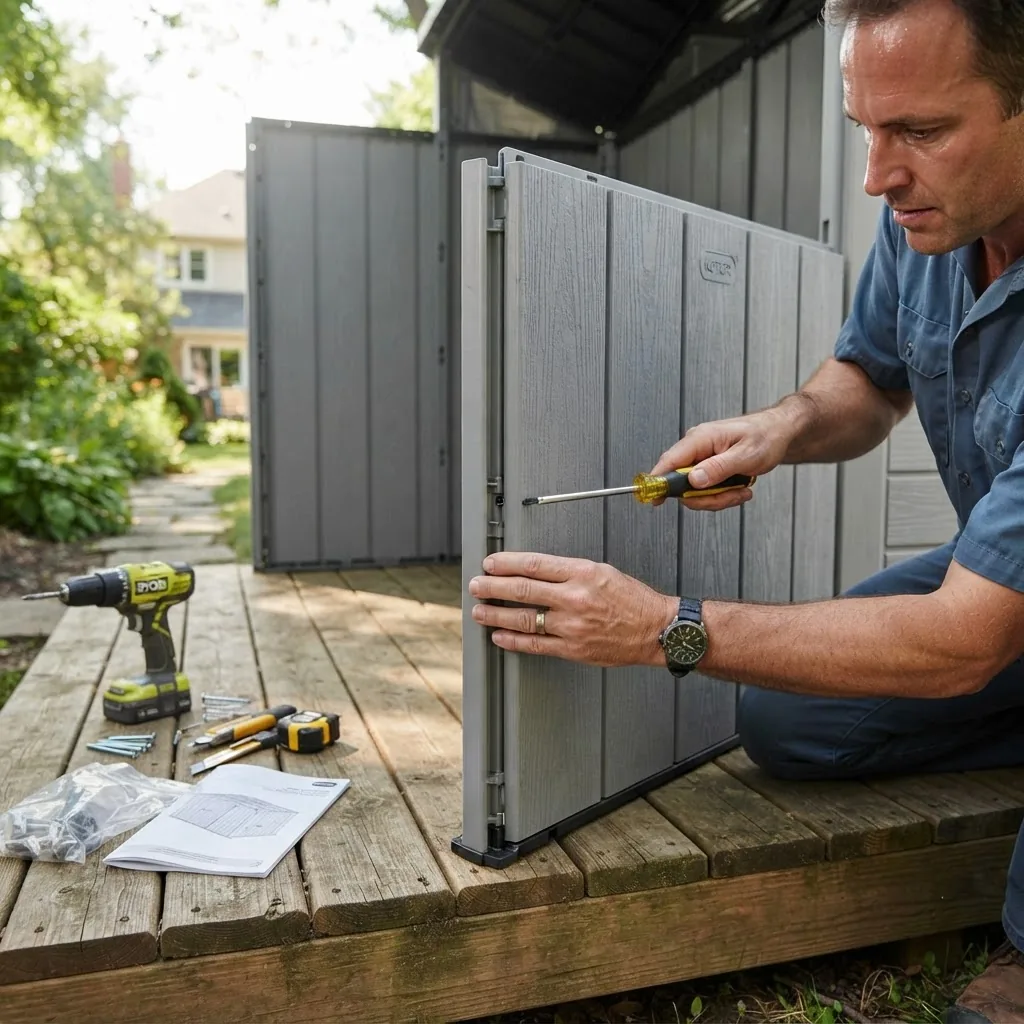
This how-to presents a practical assembly path with tools, time and foundation options. Real installers in Melbourne recommend the following workflow and typical time estimates.
Preparation (30–90 minutes)
- Site check: verify a flat area 50–100 mm larger than the shed footprint, clear vegetation and check drainage slope away from the unit.
- Foundation decision: timber sleeper base (DIY) for A$120–A$350 or compact concrete slab for A$750+; timber base quicker but requires good termite control in some suburbs.
- Permitting check: consult local council—most sheds under 10 m² do not require permits but setbacks and boundary clearances vary; see the Australian Building Codes Board for guidance.
Tools required
- Electric drill with screw bits and 10–15 mm sockets
- Rubber mallet, spirit level, tape measure
- Spirit level and adjustable wrench; two-person lift for panels >2.1 m
Step-by-step assembly (2–8 hours depending on size)
- Lay base (timber or slab); verify square.
- Assemble floor panels if included; secure to base with screws and anchors.
- Clip side panels into floor and each other; follow Keter manual torque specifications for fasteners—do not over-tighten.
- Install roof panels and ridge caps; use supplied fasteners to resist uplift.
- Fit doors, check alignment and apply weatherstrip as required.
- Anchor to foundation with masonry or timber anchors at recommended points.
- Install shelving and accessories; test doors and locks.
Professional assembly: if you prefer a turnkey install, search for certified installers. For Brisbane options, consider affordable shed installers Brisbane for reference on assembly costs and service levels; for general assistance see shed assembly help and installation cost.
Key takeaway: With two people, a mid-size Keter shed is routinely assembled in 4–6 hours on a prepared base; plan for 1–2 additional hours for anchoring and accessories.
Transition: now compare materials head-to-head to show where resin sits versus metal and timber in cost, maintenance and performance.
Comparing Keter Plastic Sheds to Metal and Timber Sheds
This table compares key attributes and typical A$ price ranges in Melbourne for a mid-sized (~2.0 x 2.4 m) storage unit, using retail and installation-inclusive estimates from 2024 sources.
| Attribute | Keter Resin (typical) | Galvanised Metal | Timber Kit |
|---|---|---|---|
| Retail + basic install (A$) | ~1,200–1,900 | ~1,400–2,300 | ~1,800–3,200 |
| Maintenance (annual est.) | A$20–90 (clean/UV treatment) | A$30–120 (minor rust treatment) | A$150–650 (repaint/stain) |
| Durability (expected useful life) | 10–20 years (UV care) | 15–30+ years (with rust control) | 20+ years (with maintenance) |
| Security | Moderate — add anchors/locks | High — robust walls | High — solid panels |
For broader price and kit comparisons see Australian barn shed kits pricing and for large commercial structures consider commercial shed construction cost.
Key takeaway: Resin sheds offer lower upfront and lifetime maintenance costs vs timber for many homeowners, but metal and timber provide superior security and load capacity for workshop or commercial use.
Transition: final guidance tailored to Melbourne homeowners follows, including a link to advanced custom options.
Buying Tips and Recommendations for Melbourne Homeowners
Select size, location and options based on local climate, intended use and budget. Consider these pragmatic rules backed by the data above.
- Size: for mower + general garden tools choose mid-range units (approx. 2–4 m³); for workshop aspirations select timber or steel alternatives.
- Foundation: on unstable soils choose a concrete pad; for flat yards a treated timber base is faster and cheaper.
- Ventilation: add passive vents for Melbourne summers where internal temps can exceed ambient by 10–20°C.
- Security: always bolt down large units and use a quality hasp or internal tether for bike sheds in higher-theft suburbs.
- Warranty & documents: verify the Keter warranty period and exclusions in the supplied manual—manufacturers commonly exclude wind damage where anchors aren’t used (see Keter docs link below).
If you’re exploring custom options beyond resin models, review the Custom Sheds Design and Build Cost Guide for Storage for next-level planning.
Key takeaway: For most Melbourne homeowners seeking low-maintenance garden storage, mid-range Keter models on a timber base are the best cost-performance trade-off; upgrade to concrete and professional anchors on exposed sites.
Transition: accessories and personalization can close gaps in performance — the last section outlines common add-ons.
Accessories and Customization Options for Keter Plastic Sheds
Common accessories increase usability and security. Below are options observed in Melbourne market pricing (2024).
- Shelving kits — modular resin or metal shelves: A$45–A$220; improve vertical storage capacity.
- Flooring options — timber base (DIY) A$120–A$350; raised plastic floor panels included on many models; concrete slab A$750+.
- Ventilation kits — passive vents or solar vents: A$45–A$400 depending on powered vs passive.
- Security features — reinforced hasps, internal tether points and anchor kits: A$35–A$220.
- Visual customisation — decals, paint-safe films and planting screens: A$30–A$200 to improve integration with suburban landscapes.
Key takeaway: Accessories fix most resin-shed limitations cheaply—add anchoring, ventilation and shelving to materially increase long-term value.
What the numbers mean for you
Based on the cost bands, durability data and Melbourne-specific installer inputs, follow these recommendations:
- Choose a mid-range Keter model (A$700–A$1,200) if you want balance of capacity and cost; budget +30–45% for delivery and installation to estimate total project cost.
- If converting to a workshop or storing heavy machinery, opt for timber or steel; resin sheds are not rated for heavy loads without secondary framing.
- Always anchor large resin units and add ventilation; factor A$60–A$320 for anchoring kits and professional anchoring if exposed to wind.
- For long-term lowest maintenance costs, resin is preferable to timber in Melbourne’s variable wet-dry cycles—expect to clean and inspect annually.
- Verify warranty clauses on the Keter manual regarding UV and wind exclusions and confirm installers’ public liability cover before hiring.
Conclusion: Keter plastic storage sheds give Melbourne homeowners a cost-effective, low-maintenance option for garden and bike storage when chosen with the right base, anchors and ventilation. For larger, load-bearing or commercial uses, consult timber or steel options.
Next step: get local quotes for delivery and assembly, verify measurements, and consider the accessory list above before purchase.
Ready to compare options? Use this guide to shortlist models, then request on-site quotes from local installers to finalise total installed costs.
External references: Australian Building Codes Board, Keter official site, Australian Competition & Consumer Commission.