

Old Colorbond colours are legacy roofing shades used across Australia; this guide directly compares classic and discontinued tones (slate grey, woodland grey, heritage red, Monument, Ironstone, Basalt, Windspray, Shale Grey, Armour Grey, Gunmetal) and shows modern Colorbond equivalents and matching strategies for Melbourne roofs in practical detail.
Introduction to Old Colorbond Colours
Answer: Old Colorbond colours refer to the historic palette and discontinued shades once offered as Colorbond roofing finishes; homeowners need precise comparisons because many older roofs have faded or used legacy names no longer sold, and matching requires both visual and technical checks.
Term: Old Colorbond colours — legacy or discontinued Colorbond paint shades produced for steel roofing systems, often replaced or renamed in modern palettes.
This section explains the heritage roofing colours used widely in Melbourne and Australian suburbs since the 1980s, why they matter for repairs and additions, and how historical production and pigment changes create matching challenges. Classic roof colours are an architectural cue: they affect perceived scale, heat reflection and street appeal. Discontinued Colorbond shades are common on older homes, sheds and commercial sheds across Melbourne and regional Victoria; accurate identification is the first step in repair or extension planning.
Historic palettes often included muted mid-greys and warm reds that today have modern counterparts with different pigment mixes and improved fade resistance. Bluescope Steel’s product updates and occasional renaming mean an exact one-to-one match is sometimes impossible—this guide lists closest modern equivalents and practical workarounds.
Transition: The next section compares popular old shades with their closest current equivalents, showing how to judge visual similarity and technical parity.
Popular Old Colorbond Colours and Their Modern Equivalents
Answer: Many classic shades have direct modern equivalents or close matches—this section lists common legacy colours and side-by-side comparisons so you can pick the closest existing Colorbond option for replacements or repairs.
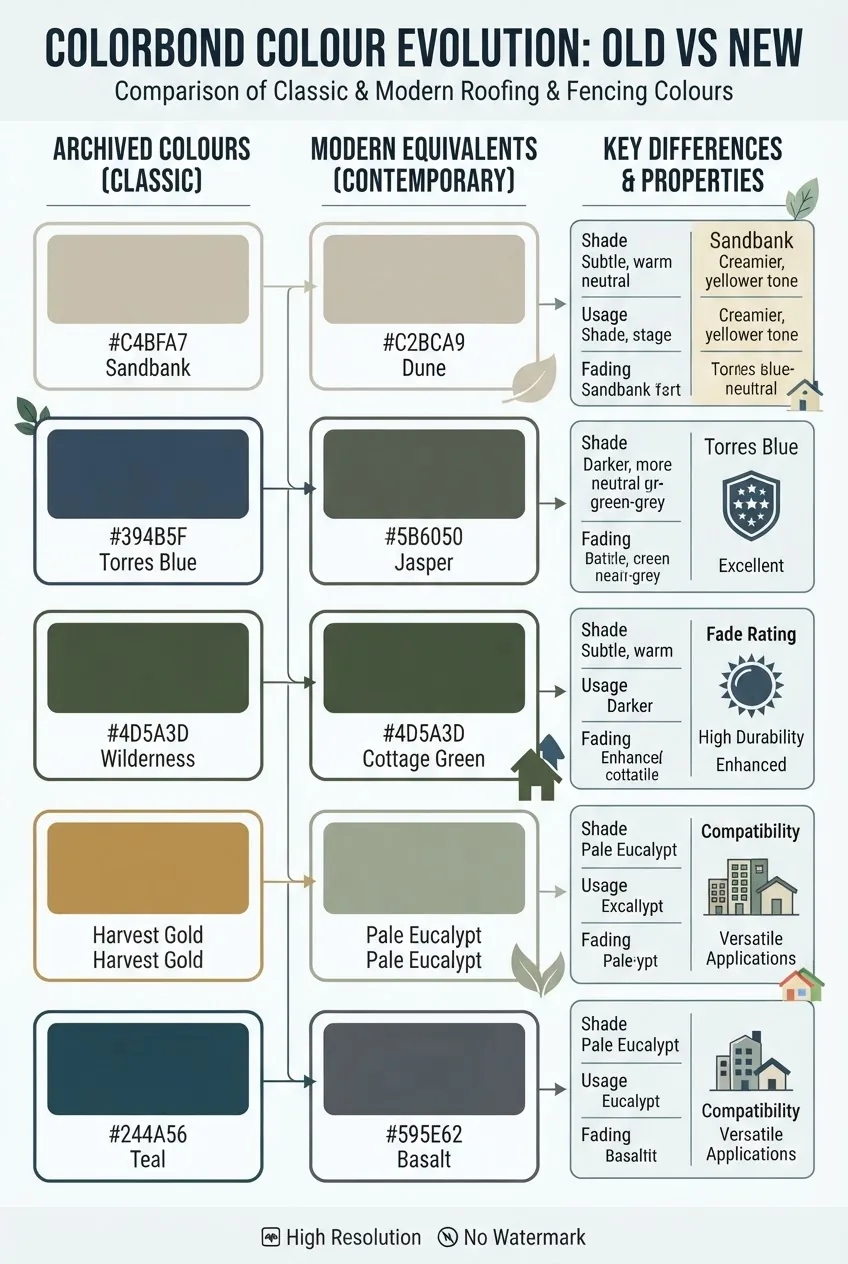
Below are comparative tables and notes for the most-requested legacy colours in Melbourne: slate grey, woodland grey, heritage red, manor red, armour grey and gunmetal. Each pairing includes visual character, likely modern equivalent and fade/reflectivity trade-offs based on Bluescope technical notes.
| Old Colour | Visual character | Closest modern equivalent | Notes on matching |
|---|---|---|---|
| Slate Grey | Cool mid-to-dark grey with slight blue undertone, semi-matte appearance on older roofs | Woodland Grey or new slate-equivalent (varies by batch) | Check roof samples under daylight; slate often reads bluer than Woodland Grey. |
| Woodland Grey | Neutral mid-grey with green-brown undertones on older sheets | Basalt or modern Woodland Grey | Basalt is darker and more neutral; use side-by-side swatches. |
| Heritage Red | Warm, muted red with slight brown undertone typical of older homes | Manor Red | Manor Red is the modern analogue; test for intensity in different light. |
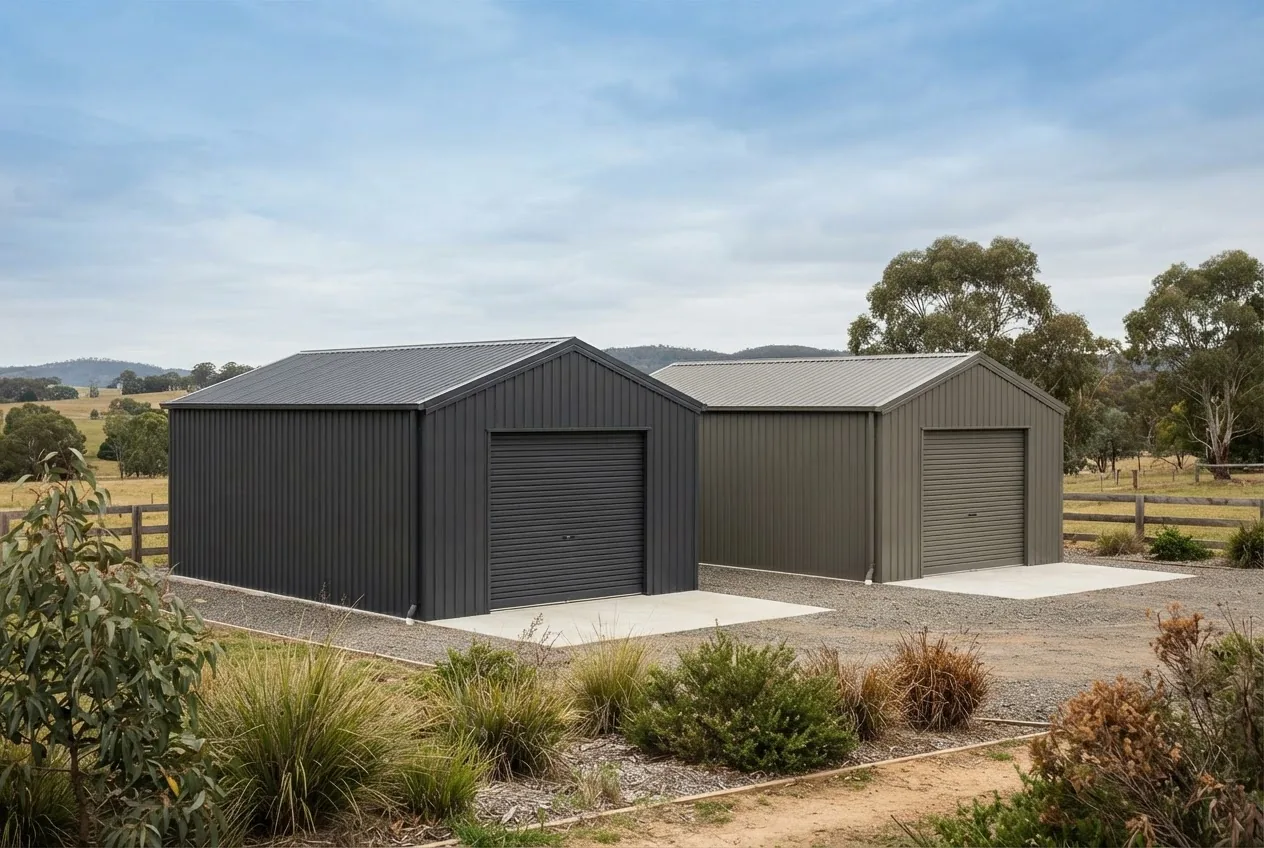
| Armour Grey | Deep, cool grey often used on industrial sheds | Monument or Monolith-like dark grey | Armour grey ages differently — check for reflectivity differences. |
| Gunmetal Grey | Very dark charcoal with bluish-metallic appearance | Monument or Monolith | Modern Monolith/Monument are similar but use different pigment stabilisers. |
H3-level comparisons below focus on common decision points: how slate grey reads against woodland grey, red family differences, and darker steely tones.
Slate Grey vs Woodland Grey – Colour and Texture Comparison
Answer: Slate Grey appears cooler with a blue-grey cast while Woodland Grey leans neutral to warm; slate reads thinner and bluer, woodland sits earthier and pairs better with warm brickwork.
Visual cues: slate grey often reflects a subtle blue in morning light; woodland grey softens in afternoon sun with green-brown undertones. For matching, hold swatches on the roof at sunrise and mid-afternoon—older slate will have faded edges making it read lighter than an unused swatch.
Term: Slate Grey — a cooler mid/dark grey with a slight blue cast; common in older Colorbond runs.
| Feature | Slate Grey | Woodland Grey |
|---|---|---|
| Undertone | Blue-grey | Green-brown neutral |
| Best paired with | Cool-toned bricks, coastal palettes | Warm bricks, earthy landscaping |
| Fade behaviour | Shows slight blue wash loss, appears lighter | May develop brownish cast over decades |
Heritage Red vs Manor Red – Classic Reds Side-by-Side
Answer: Heritage Red is a muted, brownish red from older palettes; Manor Red is the modern equivalent with deeper chroma and improved pigment stability—Manor reads richer under direct sunlight.
Heritage Red was widely used on federation-style homes and rural sheds. Manor Red replaces it in modern Colorbond ranges, offering better colourfastness. When matching, account for oxidation and dirt buildup that can make Heritage Red appear duller; cleaning a sample area helps a visual match.
Armour Grey and Gunmetal Grey – Darker Shades Compared
Answer: Armour Grey is a deep industrial grey with cool undertones; Gunmetal is darker with slight metallic sheen—Monument or Monolith are usually recommended modern equivalents, but test for sheen and pigment composition.
Armour and gunmetal tones tend to show heat spots and sheen differences prominently; modern Monument has higher UV and pigment stabiliser performance per Bluescope data, making it a durable choice for replacements.
Transition: The next major section provides detailed side-by-side comparisons of commonly confused shades with visual descriptions and technical notes to help you judge small tonal differences precisely.
Detailed Colour Comparisons of Frequently Confused Shades
Answer: Frequently confused shades (Windspray vs Shale Grey, Basalt vs Monument, Ironstone vs Monument, Woodland Grey vs Basalt, Monolith vs Monument) are analysed side-by-side with visual descriptions and technical notes on pigment, reflectivity and fade behaviour so you can determine the best match.
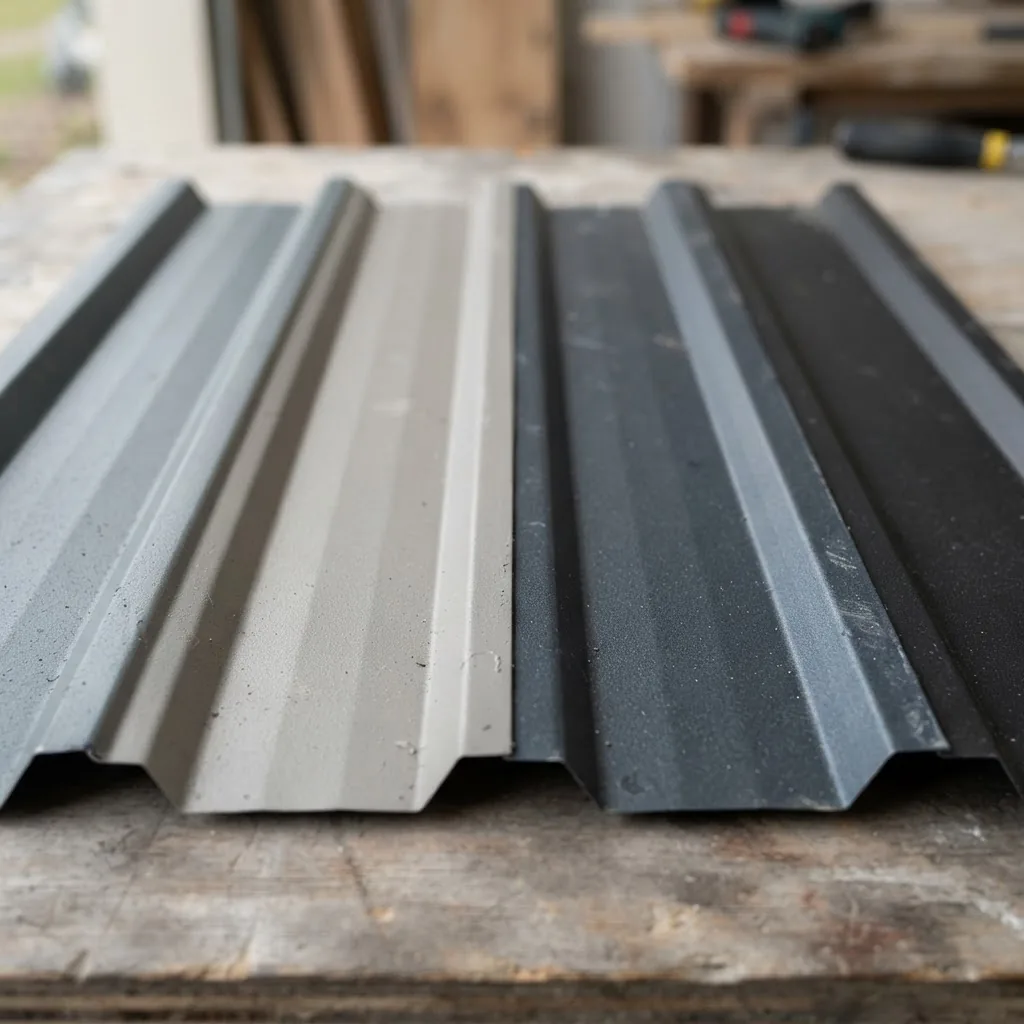
This section references Bluescope Steel technical notes and the Colorbond colour range and data for pigment stability claims. Use these comparisons when ordering replacement sheets or selecting touch-up paint.
Windspray vs Shale Grey – Subtle Differences Explained
Answer: Windspray is a pale greige (grey-beige) with soft warm cast; Shale Grey is a cooler, slightly darker grey—Windspray reads warmer and is often used as a neutral for light-coloured exteriors.
Term: Windspray — a warm, pale greige tone in legacy palettes.
| Characteristic | Windspray | Shale Grey |
|---|---|---|
| Tone | Warm greige | Neutral-cool grey |
| Best for | Heritage homes, light facades | Modern homes, minimalist schemes |
| Fade behaviour | Shows yellowing if pigment weak | Maintains neutral tone longer |
Practical test: hold a small panel of each on the roof for 24 hours to see diurnal shifts—Windspray warms at sunset; Shale Grey remains neutral.
Basalt vs Monument and Woodland Grey – Mid-Tone Greys Analyzed
Answer: Basalt is a mid-to-dark neutral grey with minimal blue/green undertone; Monument is a darker charcoal; Woodland Grey sits between Basalt and lighter greys—choose Basalt for neutrality, Monument for dramatic contrast.
Term: Monument — a modern Colorbond dark charcoal/near-black used as a standard deep tone in many palettes.
| Shade | Basalt | Monument | Woodland Grey |
|---|---|---|---|
| Depth | Mid-dark | Dark charcoal | Mid grey |
| Undertone | Neutral | Warm neutral (very dark) | Green-brown |
| Use case | Balanced modern homes | Contrasting trims and modern facades | Heritage sympathetic schemes |
For official reference use the Colorbond Monument colour chart when placing orders to confirm manufacturing batch tones.
Ironstone vs Monument and Monolith Colours Detailed
Answer: Ironstone is a warm mid-dark brown-grey; Monument is darker and colder; Monolith is a near-match to Monument with slightly different sheen—Ironstone reads softer and pairs better with brickwork.
Term: Ironstone — a brownish-grey Colorbond shade used on older roofs and fencing.
| Feature | Ironstone | Monument / Monolith |
|---|---|---|
| Visual warmth | Warm brown-grey | Cool charcoal |
| Best use | Traditional homes, timber accents | Contemporary facades, modern sheds |
| Matching difficulty | Moderate — fades to warmer tones | Low — stable pigment tech in recent runs |
For a deeper dive into Ironstone performance and matching guidance see the Colorbond Ironstone paint and roof guide.
Transition: Next we show a step-by-step guide to matching and replacing old Colorbond roof colours, including sourcing and finishing options.
How to Match and Replace Old Colorbond Roof Colours
Answer: Match old Colorbond colours by collecting roof samples, comparing swatches under natural light, consulting Bluescope batch charts, and choosing replacement panels or paint that account for fade—then install with compatible flashings and capping materials to avoid visible mismatches.
Step-by-step actionable guide below covers identification, sourcing, paint and panel options, and finishing details for a professional-looking repair or extension.
- Identify the existing shade: Photograph roof in diffuse daylight and remove a small panel (or use an exposed edge) for direct comparison with current Colorbond swatches; note roof age and exposure history. For technical match, request the building’s original manufacturer or local council records if available.
- Compare swatches: Place modern Colorbond samples next to the aged panel at sunrise and mid-afternoon. Order small offcuts/samples where possible.
- Check Bluescope datasheets: Use batch and product notes to confirm pigment families and recommended equivalents—modern pigments often include improved UV stabilisers that alter appearance slightly. Reference Bluescope technical pages for pigment and finish details.
- Decide between repainting vs replacement: Repainting can visually unify tones but may fail if substrates or seam details differ; replacement panels guarantee structural match but require careful blending of old and new finishes.
- Order compatible materials and finishes: Choose matching flashings, screws and capping; mismatched flashings reveal differences quickly.
- Install and finish: Use recommended sealants and ensure overlapping sheets follow original profiles to avoid colour striping.
Case study (Melbourne—Camberwell): A 1986 bungalow with faded Heritage Red replaced two roof spans; installer matched the modern Manor Red after testing swatches and used low-gloss finish to reduce perceived mismatch. Roofer Adam Russell reported: “Testing swatches on the roof for 48 hours showed Manor Red read closest in morning and evening light.” This installer feedback guided the final choice and finishing technique.
Sourcing options: If budget-limited, consider cheap roofing sheets for sale for non-visible areas or temporary spans—test samples before large purchases.
For finishing and flashing, coordinate with roof trades on roof capping materials and costs so new capping matches your chosen replacement sheets and avoids galvanic mismatches.
If paint touch-ups are required for small repairs, consult the Blue Ridge paint options and product compatibility notes to select lacquer types and primers that adhere to Colorbond substrates.
For budgeting and decision-making about full replacement versus patch repair, review the Colorbond roof cost per square meter to understand material and labour trade-offs.
For technical repainting, review recommended substrates and flashing techniques in the roof paint options and flashing guide; incorrect flashing paint can cause premature delamination.
Transition: Next we review how different old colours behave over time—this is critical for matching and maintenance planning in Melbourne’s variable climate.
Colour Fading, Weather Resistance, and Maintenance of Old Colours
Answer: Old colours fade mainly from UV exposure, heat and atmospheric pollutants; modern Colorbond paints use advanced pigments and UV stabilisers that improve colourfastness—maintenance and repainting strategies reduce visible mismatch but full replacement is often the most durable option.
According to a 2023 CSIRO roofing durability report, steel roofs in urban Melbourne may lose measurable chroma after 10–15 years depending on exposure and pigment family. Bluescope’s product datasheets also document improved fade resistance in modern Colorbond lines relative to older manufacturing runs.
Stat block
Typical observed fade: 0.5–2.5 ΔE units over 10 years in sheltered suburban Melbourne (source: 2023 CSIRO roofing durability summary).
Recommended repaint interval for visible roofs: 10–15 years depending on pigment and exposure (source: Bluescope technical notes).
Common drivers of faster fading:
- High UV index and north-facing roof exposure in summer.
- Coastal salt spray accelerating pigment breakdown.
- Airborne pollutants and acid rain in industrial zones.
Maintenance tips:
- Regular cleaning with low-pressure water and neutral detergent to remove dirt and reduce perceived fading.
- Use compatible touch-up paints matched to Colorbond product codes—see the Bushland colour paint and material options for complementary primers and finishes.
- Inspect and replace sealants and flashings to prevent corrosion that accelerates paint loss.
Expert installer note: Melbourne roofer Sarah Li states, “Older colours often need both cleaning and a light scuff-prime before any topcoat; skipping primer causes patchy adhesion.” This reflects common trade practice and aligns with Bluescope surface-prep recommendations.
Transition: Use these maintenance insights when choosing the right legacy shade for your Melbourne roof; next section gives climate-specific selection advice.
Choosing the Right Old Colour for Your Roof in Melbourne’s Climate
Answer: Choose legacy colours based on orientation, neighbourhood context and heat-reflectivity: lighter old colours (Windspray, Shale Grey) reflect heat better, while darker tones (Monument, Armour Grey) suit contemporary trims but absorb more solar heat—balance aesthetics and thermal performance for Melbourne’s variable seasons.
Melbourne’s climate has cool, variable winters and warm summers; roof colour affects internal comfort and energy use. Lighter tones reduce solar gain but may contrast with heritage brickwork—darker tones create strong visual contrast and require careful roof insulation planning.
Practical guidance:
- North-facing roofs: prefer lighter legacy colours (Windspray, Shale Grey) to limit summer heat gain.
- Heritage suburbs: match original tone (Heritage Red or Ironstone) to maintain streetscape value; consult local council heritage guidelines.
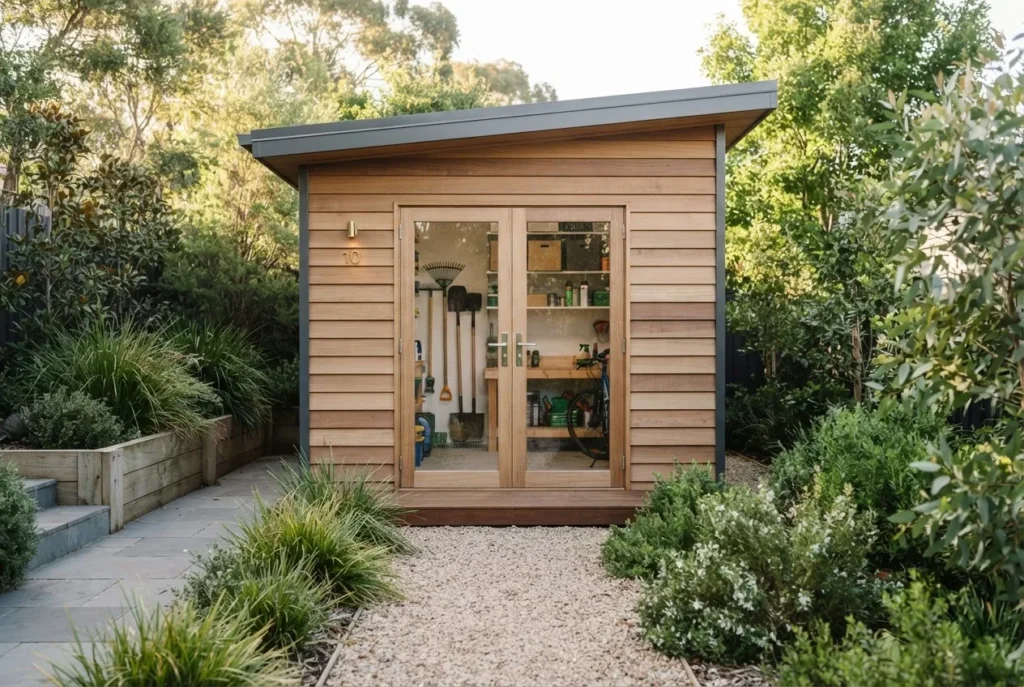
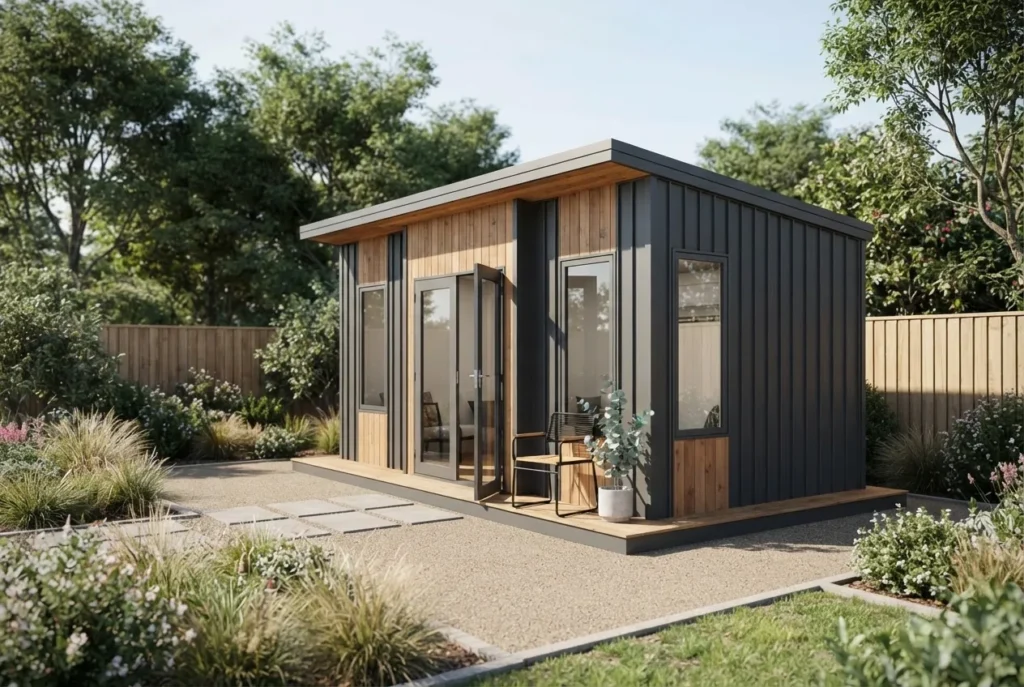
- Sheds and outbuildings: modern Monument or Basalt provide low-maintenance contrast; coordinate with Colorbond fence panel colours for cohesive yards.
Design tip: For balanced facades, pair a darker roof with lighter walls or vice versa; Monument roofs look particularly crisp with Surfmist facades—see the site’s Surfmist/Monument combination guide for examples.
Real-world example (Melbourne—Brighton): A modern renovation chose Basalt roof to complement mid-grey timber cladding; the client prioritized low visual maintenance and used higher-spec UV-stable Monuments for guttering and trims.
Transition: The final section summarises recommendations and gives a clear call to action for homeowners planning repairs or replacements.
Summary and Final Recommendations for Classic Roof Colours
Answer: Match legacy Colourbond shades by testing swatches against aged panels, consult Bluescope charts, prioritise weather resistance for Melbourne exposure, and use compatible flashings; when in doubt, modern equivalents like Manor Red (for Heritage Red) and Monument/Monolith (for Armour/Gunmetal) are reliable replacements.
- Always compare swatches on the roof during different daylight periods.
- Use Bluescope technical data and CSIRO durability summaries for long-term decisions.
- For small repairs consider professional repainting with proper primers; for full spans prefer replacement sheets for longevity.
- Coordinate roof colour with fence and trim finishes for visual cohesion.
Final CTA: If you need a practical roof-match, collect a small panel sample and contact a local installer for an on-site swatch test; our linked resources and guides can help you source samples, compare technical sheets and plan the replacement or repaint. Start with an on-roof swatch test and the Colorbond product chart before ordering full sheets.