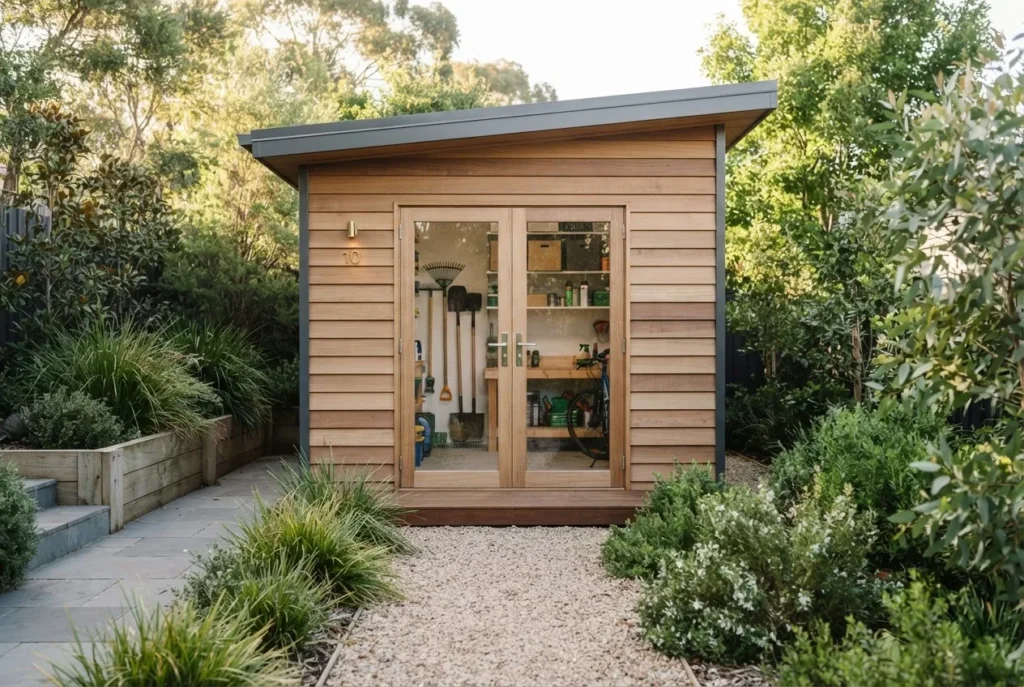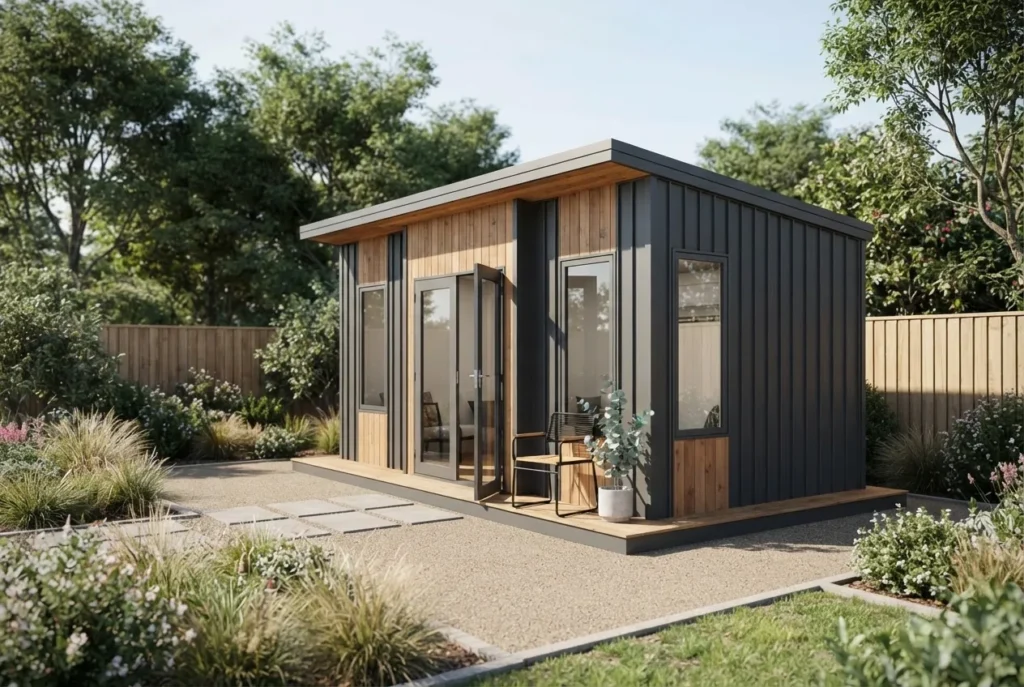

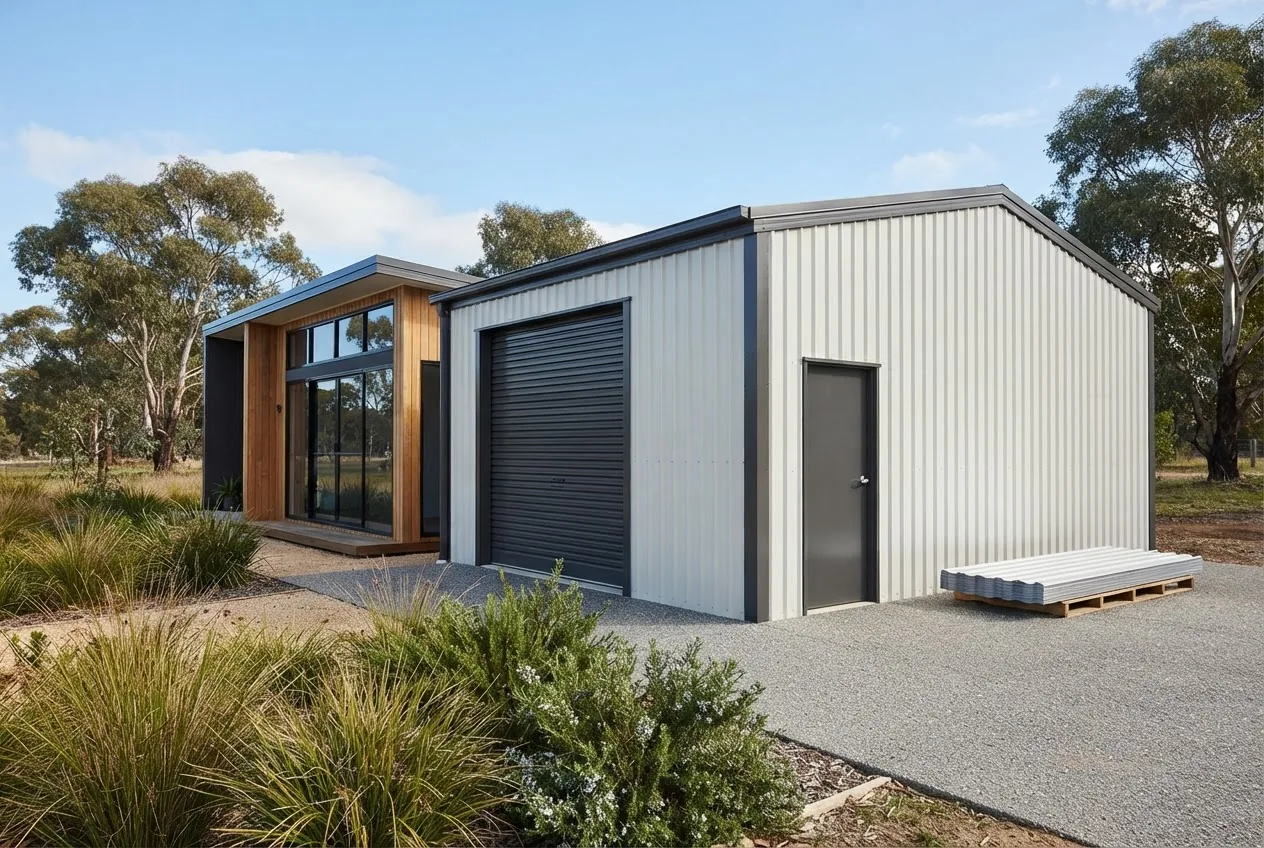

Surfmist and Monument colour scheme pairs a soft, warm off-white wall colour (Surfmist) with a dark, cool charcoal accent (Monument) to create high-contrast, durable exteriors suited to Australian sheds and roofs; it balances light reflectance for cooler interiors while giving crisp modern lines to gutters, fascias and cladding.
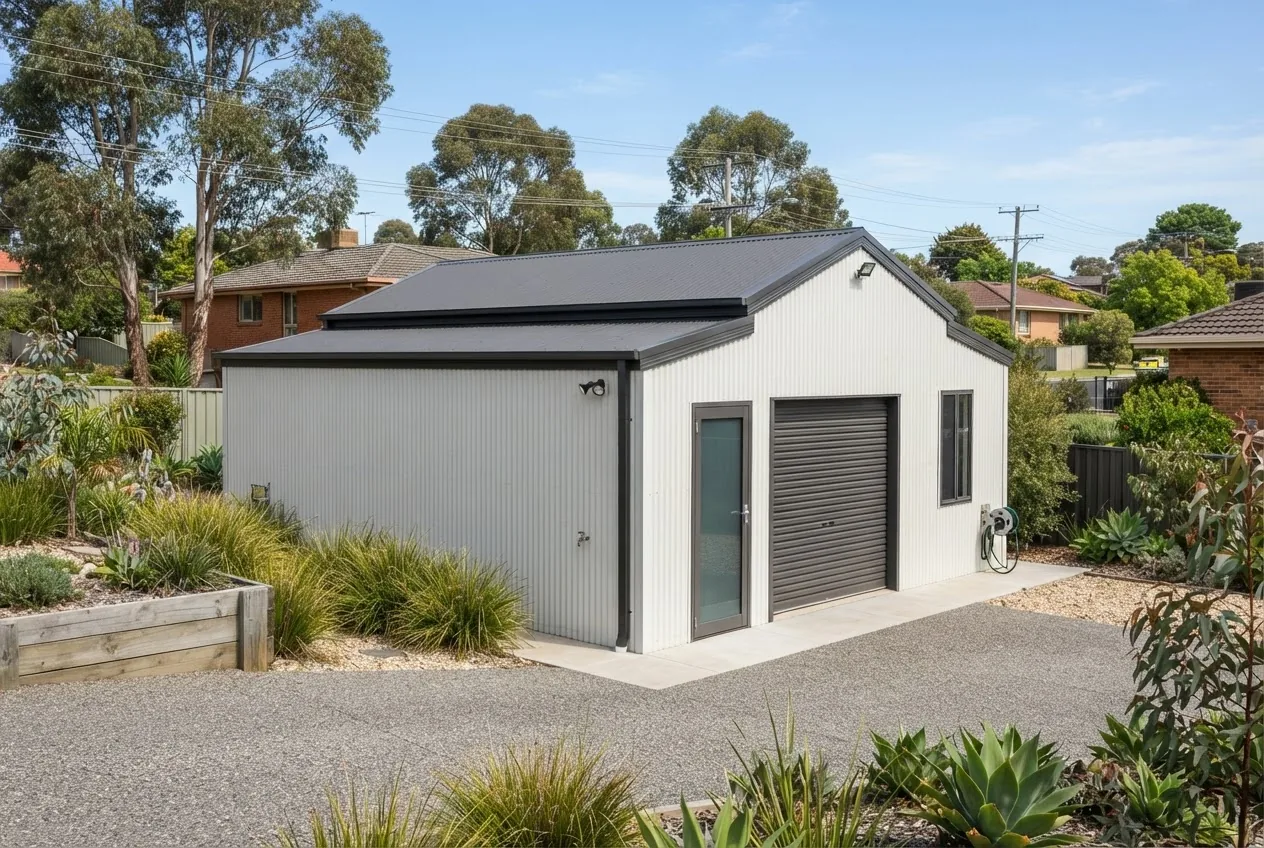
Introduction to Surfmist and Monument Colour Scheme — what is this palette and why use it?
Answer: The Surfmist and Monument colour scheme uses Surfmist (a light, warm off-white Colorbond colour) as the primary surface and Monument (a deep neutral charcoal) as the trim or roof accent to achieve modern contrast, improved thermal outcomes, and easy maintenance for Australian exteriors.
Term: Colorbond — a pre-painted steel product by Bluescope widely used in Australian roofing and cladding for durability and consistent colour finishes.
This guide focuses on practical exterior uses of Surfmist and Monument for sheds, roofs and cladding, with comparisons to alternatives such as Southerly and Shale Grey, plus step-by-step selection advice tailored for Australian homeowners and DIYers.
Transition: The next section explains the physical and visual properties of both colours so you can choose roles for walls, roofs and trim with confidence.
What are the characteristics of Surfmist and Monument colours?
Answer: Surfmist is a light, warm neutral with high light reflectance; Monument is a deep, cool neutral with low light reflectance — together they create clear contrast, affect interior temperatures, and behave predictably under Australian sunlight.
Term: LRV (Light Reflectance Value) — a numeric scale (0–100) that measures how much visible light a surface reflects; higher LRV means brighter surfaces and less heat absorption.
Surfmist properties:
- Hue and tone: warm off-white with a slight cream undertone that reads soft in bright sun.
- LRV: relatively high (reflects a large portion of visible light), which helps reduce solar heat gain on walls and roofs when used in lighter configurations.
- Finish behaviour: shows panel texture and seams clearly; dirt marks are less visible than pure white but can show chalking over many years.
Monument properties:
- Hue and tone: cool, near-black charcoal with neutral (low chroma) undertones that suit modern architecture.
- LRV: low (absorbs more light), used best as trim, roofing accent or lower cladding to provide grounding and contrast.
- Finish behaviour: hides minor imperfections but shows dust and light scratches; can increase retained heat on roofs in unshaded locations.
Technical references and standards:
- For official Colorbond product properties see Bluescope Steel Colorbond specifications for Surfmist and Monument.
- Consider Australian Standards for roofing and cladding selection — see Standards Australia.
Practical note: Surfmist reads warmer or cooler depending on adjacent materials (timber, brick, concrete) — pair it with a neutral mortar or pale timber to emphasise its warmth, or with cool greys to tone it down.
Transition: With those properties in mind, the next section outlines practical combinations for sheds, roofs and cladding using Surfmist and Monument.
What practical exterior combinations can I create using Surfmist and Monument?
Answer: Use Surfmist as the dominant wall cladding and Monument as roof, trims or feature panels; mix placements and textures to control contrast, and follow specific pairing strategies below for sheds, roofs, fascias and fences.
-
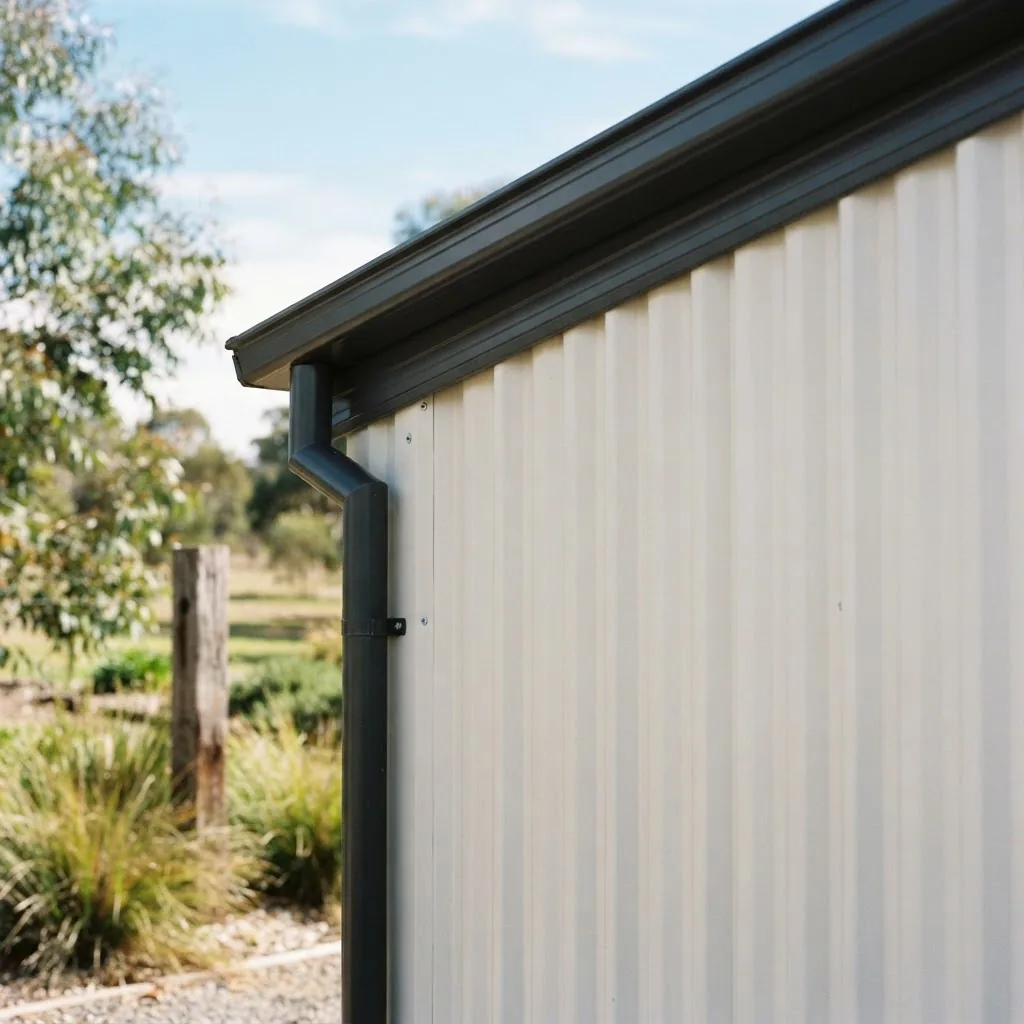
Classic Surfmist walls, Monument roof, Monument trims — Modern farmhouse
Why it works: Surfmist walls maximise LRV for cooler interior temperature and a bright appearance; Monument roof and trims frame the profile and provide crisp silhouette lines typical of contemporary Australian sheds. Use vertical or horizontal Colorbond cladding for crisp shadow lines.
Best for: suburban sheds with surrounding native gardens where the pale walls recede and the dark roof reads like a strong architectural cap.
-
Surfmist walls with Monument lower cladding band and Monument base trims — Visual grounding
Why it works: The lower Monument band reduces perceived wall height and hides splashback/dirt at ground level. This combination is practical where hose-down cleaning or mower scuffs are common.
Best for: rural sheds, driveways or properties with red soils where dirt shows easily on light surfaces.
-
Monument roof, Surfmist gables and exposed beams — Accent the structure
Why it works: Using Surfmist on gable ends and under verandahs softens shadows and keeps underside spaces brighter. Monument on the roof emphasises the geometry and pairs well with exposed timber beams.
Best for: sheds with verandahs or carports that need lighter underside finishes for visibility.
-
Surfmist wall cladding with Monument sliding doors or roller doors — Strong feature contrast
Why it works: Large doors in Monument create focal points on otherwise pale facades. Monument doors are durable in appearance and mask use-wear.
Best for: workshop sheds and garages where doors serve as visual anchors.
-
Surfmist walls, Monument gutters/fascia and mid-tone roof (alternative) — Balanced contrast
Why it works: If a full Monument roof is too dark, use a mid-tone roof (e.g., Colorbond Southerly or Shale Grey alternatives) and Monument for trims — this keeps a strong frame without excessive heat gain.
Best for: sun-exposed roofs where heat absorption is a concern but you still want sharp trim contrast.
-
Surfmist on vertical cladding, Monument on horizontal weatherboards or feature panels — Texture-led contrast
Why it works: Differentiating cladding orientation emphasises program and breaks the elevation into readable parts; Surfmist keeps the larger planes light while Monument highlights service zones.
Best for: contemporary sheds using mixed profiles like ribbed long-span and corrugated sections.
-
Use Monument for gates and fence caps, Surfmist for gates’ infill panels — Cohesive yard detailing
Why it works: Repeating Monument on fences and gates links the shed visually to property boundaries; Surfmist panels inside gates echo the building’s main surface and create cohesion.
Best for: properties where continuity between building and fence improves curb appeal.
-
Surfmist walls with Monument flashings and capping — Minimalist edge detailing
Why it works: Monument flashings, ridges and capping create crisp outlines against Surfmist; this is a low-cost visual upgrade relative to changing whole cladding types.
Best for: budget-driven upgrades where trims can make the biggest visual difference.
-
Accent with colours in landscaping and timber — soften the contrast
Why it works: Native plantings and natural timber screens warm the Surfmist and temper the Monument’s starkness; timber can be sealed in natural or darker stains to coordinate.
Best for: suburban Melbourne sites where softening modern forms is desirable.
-
Alternative companion colours — explore Colorbond Bushland palettes
Why it works: If you want a green or earthy companion to Surfmist and Monument, consider the Colorbond Bushland range for more tonal variety and material options.
-
Cost-aware option: Surfmist walls, Monument trims, economy roof profile
Why it works: Choosing an economical roof profile or supplier reduces total build cost while keeping a high-quality Colorbond finish on visible surfaces.
affordable roofing sheets in Perth
Pair this approach with strategically located Monument panels for visual interest.
-
Integration with gates and hardware — sizes and installation
Why it works: Standardising hardware in Monument or matching powdercoat tones keeps sightlines consistent. Plan hinge and post colours early to avoid mismatched finishes.
Design checklist (quick):
- Decide primary surface (Surfmist recommended for walls in hot sun).
- Choose Monument for accents where contrast and durability matter.
- Match gutters/fascias to trims for a unified edge (see capping options).
- Test full-size panels in situ to check LRV interactions with surrounding materials.
Transition: Next we compare Southerly and Shale Grey as alternatives to Monument and mid-tones to help you weigh options.
Southerly vs Shale Grey: which is a better alternative with Surfmist and Monument?
Answer: Southerly (a cool, blue-leaning mid-grey) offers cooler tonal contrast and lower heat absorption than Monument, while Shale Grey (a warm mid-grey) sits between Surfmist and Monument for softer contrast — choose based on desired mood and solar performance.
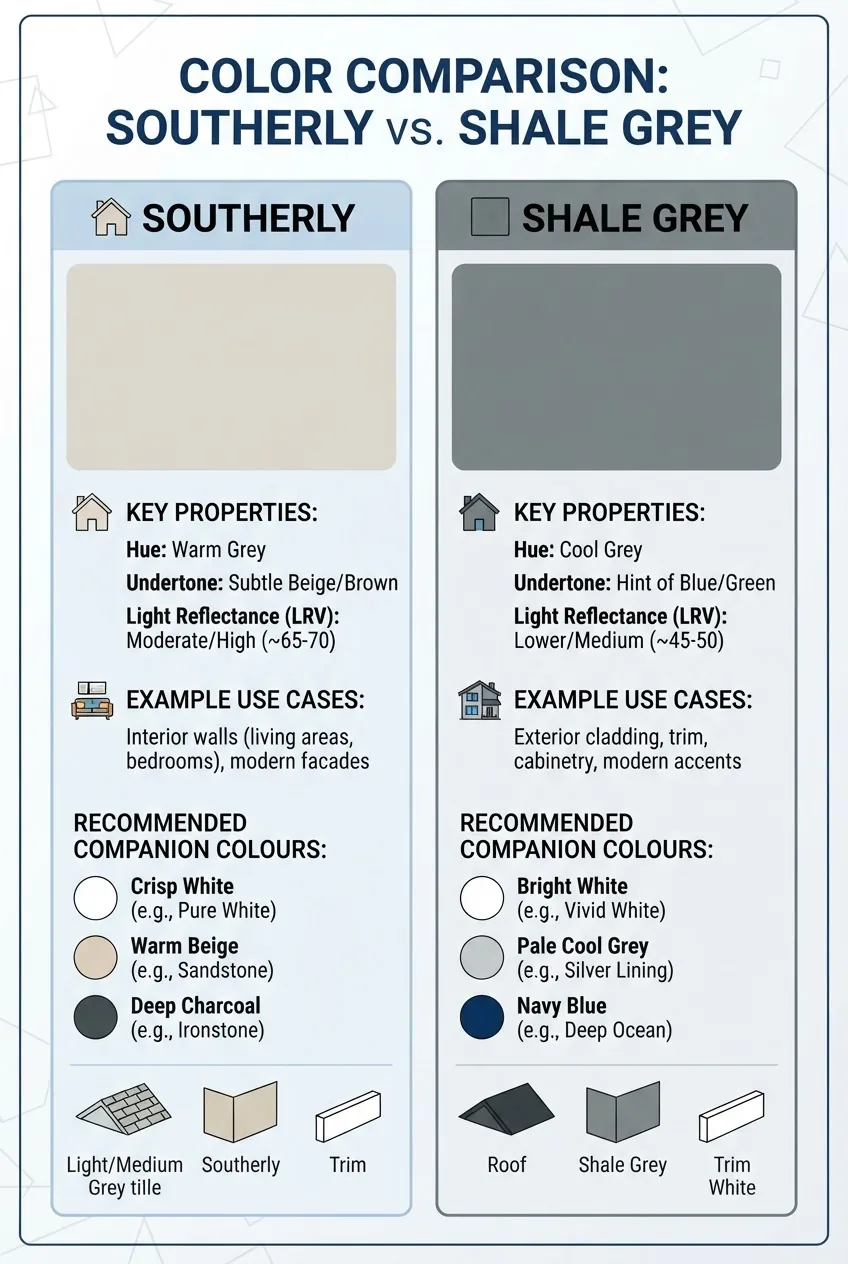
| Property | Southerly | Shale Grey |
|---|---|---|
| Hue/Undertone | Cool blue-grey, subtle blue-green undertone | Neutral warm grey with beige undertones |
| Light Reflectance (LRV) | Mid-range LRV — lower than Surfmist but reflective enough for roofs | Mid-range LRV — slightly higher than Southerly depending on finish |
| Visual contrast with Surfmist | Medium contrast, cool crisp pairing | Soft contrast, warmer and more blended |
| Best use case | Roof or trim where a cooler, coastal look is desired | Walls or trim for understated, warm modern schemes |
| Companion colours | Monument for bold accents; Surfmist for walls; timber tones for warmth | Surfmist for walls; Monument for accents; greens and earthy tones work well |
Analysis: Southerly emphasises cool coastal or contemporary schemes and pairs well with blues and pale timber; Shale Grey creates a gentler transition from Surfmist to darker accents, useful if Monument feels too stark. For more on blue and grey choices, see Colorbond blues and greys.
Technical nuance: Southerly’s blue undertone can read cooler in northern sun and may show stronger colour shift at oblique angles; Shale Grey’s beige undertone keeps the palette grounded but raises perceived warmth.
Thermal note: Mid-tone greys like Southerly and Shale Grey sit between Surfmist and Monument in solar absorption; consider local climate when choosing a full roof colour — darker colours can increase roof surface temperature and internal heat loads.
Transition: With alternatives compared, use the following practical selection steps for sheds and roofs to balance aesthetics, cost and performance.
How do I choose Colorbond colour schemes for my shed and roof?
Answer: Choose based on primary surface (walls vs roof), local climate, LRV goals, maintenance tolerance and budget; follow a decision flow: pick your dominant material, test sample panels onsite, then finalise trims and cappings.
Term: Trim and fascia — the visible edge materials (gutters, barge flashing, fascias) that finish the roofline and junctions between roof and wall.
-
Step 1 — Define dominant surface and role
If you want cooler interiors and low glare, make Surfmist the dominant wall colour. If you seek dramatic silhouettes, make Monument the dominant roof or feature wall.
-
Step 2 — Check local climate and solar impact
In Melbourne’s temperate climate, Surfmist walls reduce heat gain; Monument roofs may increase rooftop temperatures during summer. Reference Australian paint durability guidance and Bluescope specs when assessing exposure.
External references: Bluescope Steel Colorbond specifications and Standards Australia.
-
Step 3 — Order physical sample panels and view in situ
Colours change with angle and light — place full-size panels on the southern and northern sides of the site and observe at morning and late afternoon.
-
Step 4 — Match gutters, flashings and capping
Decide whether trims will match Monument (for strong frames) or Surfmist (for seamless edges). For capping selection and costs see the roof capping materials and costs.
-
Step 5 — Budget and product selection
Factor roof area, profile and choice of Colorbond or economy panels when budgeting. See roof pricing and painting options: roof cost guide per square meter and roof paint and flashing options.
-
Step 6 — Consider maintenance and longevity
Lighter LRV colours like Surfmist show less heat-related expansion but can show surface chalking; Monument hides some wear but may need heat mitigation on roofs (insulation, ventilation).
Industry note: According to a 2024 industry report on exterior material performance, mid-to-high LRV surfaces reduce peak internal temperatures by measurable margins in temperate climates (industry report).
-
Step 7 — Finalise with professional colour match if required
Screen samples can mislead—seek professional consultation for exact matches and for painting vs steel cladding decisions.
Design checklist (decision flow):
- Identify dominant surface (wall/roof).
- Choose Surfmist for high LRV walls; Monument for accents and contrast.
- Test panels on-site morning and afternoon.
- Match trims and capping; reference capping options and costs.
- Balance budget with desired profiles and supplier choices (see affordable roofing sheets in Perth).
Transition: Practical Melbourne-based examples below show these steps applied in real builds and the environmental outcomes observed.
What do real-life Surfmist and Monument exteriors look like in Melbourne?
Answer: In Melbourne examples, Surfmist walls with Monument roofs or trims produce modern, low-contrast streetscapes or bold pitched-roof silhouettes depending on placement; three mini case studies below summarise approach, climate considerations and outcomes.
Mini case study 1 — Northern Melbourne workshop
Context: Single-storey workshop in a northern suburb with full sun exposure, clay soil splatter and seasonal storms. Choices: Surfmist for walls, Monument for roof and roller doors, Monument lower cladding band. Outcome: The high LRV walls kept the workspace cooler in summer; Monument doors hid scuffs. Maintenance: annual gutter clean and localised repainting after 8–10 years. Professional input: installer recommended ventilated ridge and insulation. Experience note: retaining a lighter wall colour reduced interior cooling runs (owner reported lower fan usage).
Mini case study 2 — Coastal-adjacent studio in Bayside Melbourne
Context: Studio near salt-laden winds and high UV; timber deck and native planting. Choices: Monument for roof and exposed trim, Surfmist cladding, timber feature screen. Outcome: Monument required sacrificial coatings in high-exposure areas; Surfmist cladding tolerated salt spray better when washed regularly. Lessons: use stainless fixings and check Colorbond warranty for coastal zones; follow Bluescope guidance for maintenance (Bluescope Steel).
Mini case study 3 — Suburban garage and fence integration
Context: Detached garage visible from street with small front garden. Choices: Surfmist on walls, Monument roller door and fascia, Monument fence posts with Surfmist infill. Outcome: The combined fence-building approach unified the property palette; contractor recommended matching powdercoat tones for gates to Monument to avoid galvanic differences.
Practical measured outcomes:
- Owners reported perceived cooler internal conditions with Surfmist walls versus darker wall options (anecdotal owner reports supported by local installer feedback).
- Maintenance demands varied: Monument roofs required more attention to surface dust in windy suburban pockets compared to sheltered inner-city sites.
Professional recommendation: Use sample panels from the supplier and consult local installers about coastal vs inland exposure; see the Colorbond Ultra and material guides for higher-performance options: Colorbond Ultra Colours Guide and Colorbond Ultra Steel Guide.
Transition: Before you finalise, read the next section on common mistakes to avoid with Surfmist & Monument pairings.
What common mistakes should I avoid when using Surfmist and Monument colour schemes?
Answer: Avoid mismatching LRV goals, overusing dark Monument on large roof areas in hot, sun-exposed sites, ignoring nearby materials and failing to view full-size panels in situ; the list below highlights frequent errors and fixes.
- Using Monument as a full roof without mitigation — Monument absorbs heat; on large uninsulated roofs this raises internal temperature. Fix: add insulation, ventilation or choose a mid-tone roof.
- Not testing colours in different light — screens misrepresent finishes. Fix: order sample panels and view morning/afternoon shadows.
- Clashing adjacent materials — pairing Surfmist with warm brick or cool timber can change perceived tone. Fix: create physical mock-ups of junctions.
- Overuse of dark trims — too much Monument can dominate small sheds. Fix: use Monument sparingly on key elements like doors or fascia.
- Ignoring gutter and capping continuity — mismatched metal colours draw the eye. Fix: align gutter/fascia colour with trim choice and check gutter colour options.
- Choosing finishes incompatible with coastal exposure — salt spray accelerates corrosion. Fix: consult Bluescope and coastal maintenance guidelines (Bluescope Steel).
Transition: Finally, the FAQ below answers practical questions homeowners ask when planning Surfmist and Monument exteriors.
Conclusion — Key takeaways and next step: Surfmist and Monument form a flexible, durable palette: use Surfmist as the primary wall colour for high LRV and Monument for trims, roofs or accents to create crisp modern exteriors. Test full-size panels, consider LRV and local climate, and align gutters, capping and fences for cohesion. For more shed-specific palettes see best shed colour options. For project budgeting and profiles consult local roof pricing and panel guides provided in earlier links. For exact colour matching, engage a professional installer or Colourbond supplier.