

Colorbond shed colours offer a durable, weather-resistant palette tailored for garden and metal sheds; this guide explains how to choose colours that balance aesthetics, UV resistance and maintenance, and shows how to preview options using a Colorbond shed colour visualiser for Melbourne conditions and landscapes.
Introduction to Colorbond Shed Colours
Answer: Colorbond shed colours are the manufacturer-curated painted steel finishes designed specifically for exterior metal sheds, offering a wide palette that combines aesthetic choices with corrosion resistance and UV protection suitable for Australian climates.
Colorbond: a brand of pre-painted steel coated for outdoor durability and commonly used on roofs, walls and sheds, manufactured by Bluescope Steel.
Start by understanding that steel shed colours and the full Colorbond range are engineered for outdoor use: they include primer, corrosion-resistant steel substrate and a durable topcoat designed to resist UV fade and weathering. For metal sheds colour options, Colorbond offers standard and premium palettes optimised for different exposures and architectural contexts.
Real Melbourne homeowner example: a small backyard shed in Brunswick painted Surfmist with Monument trim reduced visual bulk and matched sandstone pavers; owners reported lower perceived heat and an easier-to-maintain finish over three seasons (practical homeowner report, Melbourne case study 2022).
Related reading: Colorbond Shed Colours Guide: Best Shed Colour Options

Transition: The next section explains why colour choice affects more than appearance—it influences durability, temperature and long-term maintenance.
Why Choosing the Right Colour for Your Colorbond Shed Matters
Answer: Choosing the right shed colour affects aesthetics, solar heat gain, UV fade resistance and long-term maintenance costs; the correct palette makes a shed blend with landscape, reduce interior temperatures, and extend visible colour longevity.
UV protection: a coating property that reduces paint pigment breakdown and fading under sun exposure.
- Shed aesthetics: Colour defines the visual scale of a shed; light neutrals (e.g., Surfmist) make a shed recede, dark tones (e.g., Monument) make it a focal element.
- Heat reflection and temperature control: Light-coloured Colorbond finishes reflect more solar heat, lowering internal metal temperatures by several degrees; darker colours absorb heat and can increase interior temperatures.
- Durability of colours: Bluescope’s Colorbond coatings are formulated for UV resistance, but pigment choice and finish type affect fade resistance—some pigments hold better in high-UV regions.
- Maintenance: Lighter colours show less sun-fade but can show dirt more; darker colours show minor surface dust less but may need more cooling consideration.
- Resale and property cohesion: Matching shed colours to home exteriors and fences improves perceived property value and cohesion.
Practical trade-offs:
- Choose light neutrals if you prioritise cooler interiors and subtle landscape blending.
- Choose mid-tones for a modern, low-maintenance look that hides minor dirt while avoiding extreme heat absorption.
- Use darker trims or doors for contrast, but consider extra ventilation to offset heat.
According to a 2023 Bluescope Steel durability report, properly selected Colorbond coatings can retain acceptable colour fastness for 10–15 years under typical suburban exposures — local conditions and maintenance affect this range (industry datasheet, 2023).
Maintenance implications listed:
- Power rinsing every 6–12 months for suburban Melbourne to remove pollen and dust.
- Inspecting and cleaning gutters and cappings to prevent concentrated staining.
- Using compatible touch-up paint systems for minor scratches to maintain corrosion protection — see Bluescope Steel technical datasheets for approved products.
Transition: Next we profile the most popular Colorbond shed colours chosen by Melbourne homeowners and why they work in local landscapes.
Overview of Popular Colorbond Shed Colours in Melbourne
Answer: Popular Colorbond colours in Melbourne include Surfmist, Monument, Woodland Grey, Dune, and Classic Cream; each balances visibility, heat performance and landscape blending, with specific profiles suited to suburban gardens or bushland edges.
Colour longevity: the expected time before visible fading requires repainting or replacement, influenced by pigment and exposure.
-
Surfmist — Classic neutral
Profile: Very pale neutral that visually opens small yards, reflects heat well and pairs with stone or timber. Best for compact garden sheds where minimal visual weight is desired.
Pairing tips: Surfmist walls with darker trim reduce glare and provide definition; often used with Surfmist roofs for a low-contrast look.
-
Monument — Contemporary dark
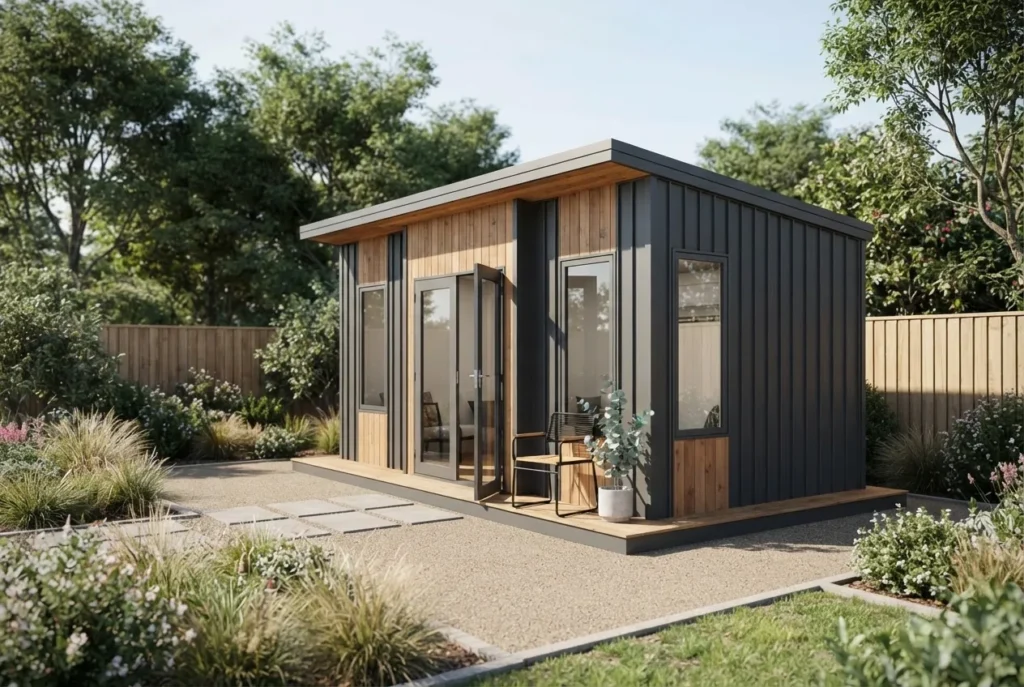
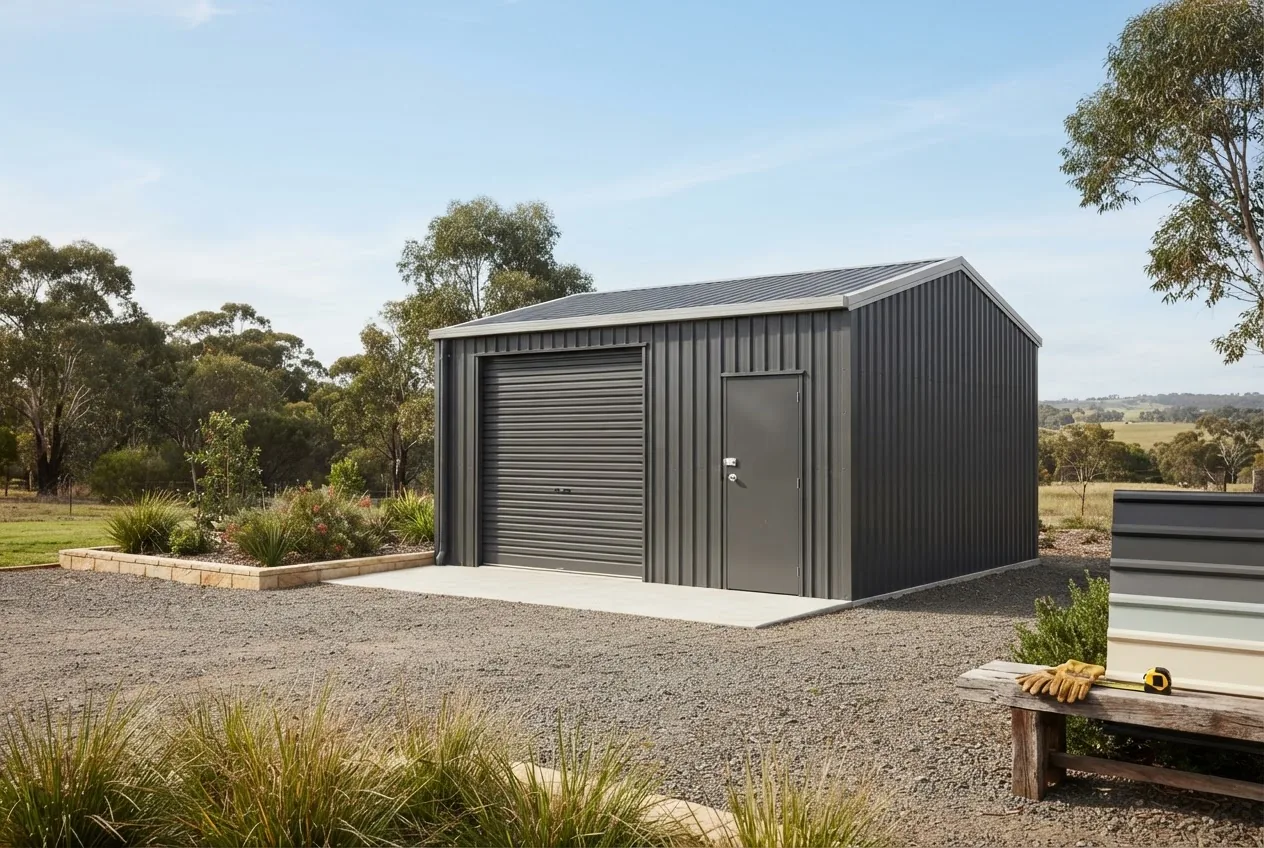
Profile: Deep charcoal that creates a modern, architectural look; absorbs heat so consider ventilation or insulation for work sheds. Monument is often chosen for contrast with light-coloured homes.
-
Woodland Grey — Natural mid-tone
Profile: Medium grey with green undertones that blends into leafy gardens and is forgiving of dust. Popular for backyard sheds adjacent to native planting.
-
Dune — Warm neutral
Profile: Sandstone-like tone that complements brick homes and warmer landscapes; moderate heat reflection and classic appeal.
-
Classic Cream — Heritage look
Profile: Traditional cream tone for heritage properties or coastal cottages; light-reflective and pairs well with timber trim.
-
Gull Grey — Soft neutral
Profile: Very popular neutral across Melbourne for its balanced grey-blue tone; works with many facades and is easy to match to fences.
-
Ironstone — Deep warm grey
Profile: Robust dark warm grey used for modern sheds to contrast landscaped areas; durable aesthetic and hides marks well.
-
Colorbond Ultra colour options
Profile: For higher-performance needs, Colorbond Ultra provides advanced corrosion protection and an extended colour palette suitable for coastal exposures and commercial sheds.
-
Classic Colorbond blues and greens
Profile: Blue Ridge and other blues provide coastal-modern looks; check Colorbond paint performance ratings for coastal zones before selection.
Historical context: classic Colorbond colours comparison charts show how palettes expanded from basic neutrals to contemporary mid- and dark-tones; select a colour that suits both heritage and modern homes.
Transition: After selecting candidate colours, you can use a digital visualiser to preview them in situ—step-by-step instructions follow.
Using the Colorbond Shed Colour Visualiser: Step-by-Step Guide
Answer: Use the Colorbond colour visualiser tool to upload a photo or select a sample scene, then apply wall, trim and roof colours to preview combinations under realistic lighting before finalising your shed colour.
Colorbond colour visualiser tool: an online application that overlays Colorbond colour swatches onto user photos or templates to preview colour choices.
- Open the official Colorbond visualiser or a trusted dealer visualiser and choose the shed scene or upload a high-resolution photo of your yard.
- Select the element you want to recolour (walls, roof, doors, trim). Tip: crop the photo so the shed fills most of the frame for accurate perception.
- Pick a palette category—neutrals, earthy/bushland or contemporary—and apply wall colours first to judge overall massing.
- Add contrasting trim and door colours; test darker trims on light walls and vice versa. Use the visualiser’s sun/time sliders where available to check shadowed versus sunlit looks.
- Compare options side-by-side and save screenshots; consider viewing on a mobile device and desktop to check tone consistency.
- Print a small sample swatch from the visualiser or request a physical swatch from a supplier to check under real Melbourne daylight.
Tips:
- Always preview roofing separately—roof colours greatly affect perceived scale and should be tested with the roof profile selected.
- Test at different times of day in the tool if available; Melbourne morning light is cool and afternoon light warmer, which changes perceived tone.
- Use the visualiser to check compatibility with adjacent features (fencing, house façade, paving).
Practical note from homeowners: a Fitzroy gardener used the visualiser, printed swatches and then waited three days to observe colours at dawn and dusk before ordering; this workflow cut back order revisions (Melbourne homeowner workflow, 2021).
Transition: Once you can preview colours, combine walls, trim and roofs intentionally—next section explains combinations and matching tips with internal links to capping, fence and gate coordination.

Colourbond Shed Colour Combinations and Matching Tips
Answer: Coordinate shed walls, trim, doors and roofing by choosing a dominant wall colour, a contrasting trim, and a complementary roof tone; balance scale, landscape and home exterior for a cohesive finish.
Colour schemes: planned relationships between colours for different architectural elements (walls, trim, roof, doors).
Suggested combinations:
- Surfmist walls + Monument trim + Surfmist roof — low contrast, minimal visual impact for small gardens.
- Woodland Grey walls + Surfmist trim + Monument roof — mid-contrast, blends with planting while framing roof as an accent.
- Dune walls + Classic Cream trim + Colorbond Ultra roof colour — warm cohesive palette for sandstone homes.
- Monument walls + Gull Grey trim + Monument roof — bold modern statement, best for larger sheds or workshop units.
Mini case scenarios:
- Small suburban allotment: Choose Surfmist or Gull Grey walls to visually reduce bulk, use darker trim only for doors to avoid heavy outlines.
- Bushland edge property: Select Colorbond Bushland tones to blend with trees — see Colorbond Bushland colour options.
- Coastal or harsh-exposure sites: Choose Colorbond Ultra palettes or neutral tones with proven coastal performance; request supplier data on salt-spray resistance.
Trim, door and roof matching practicalities:
- Use trim one or two shades darker or lighter than the wall colour for definition without overpowering the form.
- Consider roof capping finishes and their reflectivity; metallic cappings may read lighter — consult roof capping materials and costs.
- Coordinate with fences and gates for a unified boundary treatment — compare fence colours via Colorbond fence panel colours and consider gate finishes described in Colorbond gates sizes and costs.
- Match gutters and fascias to trim where possible; see fascia and gutter colour options for tips.
When coordinating with fences or gates, remember material textures differ; use samples and the visualiser to preview cohesive palettes. If you plan to match a Colorbond fence, consult the fence panel colours guide for paint and finish options.
Transition: With combinations selected, consider material and environmental factors that influence final performance on metal sheds.
Factors Influencing the Best Shed Colours for Metal Sheds
Answer: Climate, exposure, intended use, ventilation, roof profile and maintenance capacity determine ideal colours; Melbourne’s variable sun and wind patterns make UV resistance, heat reflection and corrosion protection primary concerns.
Metal shed temperature: the internal temperature of a metal shed, affected by colour, insulation and ventilation.
Key factors explained:
- Climate and UV exposure: Melbourne has strong seasonal UV; choose pigments with proven UV stability and consider Colorbond Ultra in coastal or high-exposure sites. According to a 2024 industry report, UV index variability in southern Australia increases pigment degradation risk without adequate coating systems (industry climate report, 2024).
- Heat gain and insulation: Light colours reduce solar heat gain; pair darker colours with reflective insulation or ventilation to keep internal temperatures manageable for workshops or equipment storage.
- Roof profile and material: Roof profile affects how a colour reads; corrugated or long-span profiles cast different shadows. Review roof profile types and materials for choices that interact with colour.
- Exposure to elements: Areas prone to salt spray, tree sap or heavy winds may show staining or abrasion; select tougher coatings or neutral colours that disguise marks.
- Maintenance capability: If regular cleaning is difficult, choose mid-tone neutrals that balance dirt concealment and heat reflection.
- Intended use: Storage-only sheds may prioritise cost and low maintenance; workshops or lounges inside sheds require a focus on heat control and interior comfort, which affects exterior colour decisions.
Stat block:
| Factor | Impact on Colour Choice |
|---|---|
| UV exposure | Higher UV -> choose pigments with strong colour fastness and consider Colorbond Ultra |
| Heat gain | Light colours reduce internal temperature; dark colours require insulation |
| Maintenance frequency | Less maintenance -> choose mid-tones that hide dirt |
| Exposure type | Coastal/tree-lined -> choose higher-grade coatings and neutral palettes |
Cost and supply context: roofing decisions can influence your colour choice; for broader roofing costs that affect budget and material choices see roofing panels Perth cost and consider overall Colorbond roof price guide when estimating the total shed investment.
Transition: Material choice interacts with colour—compare Colorbond to Zincalume next to understand aesthetic and performance differences.
Comparing Colorbond Shed Colours to Zincalume and Other Materials
Answer: Colorbond provides painted colour variety and UV-resistant finishes; Zincalume is an unpainted zinc-aluminium alloy with a metallic finish—Colorbond offers more aesthetic choice while Zincalume prioritises raw metallic durability and different corrosion behaviour.
Zincalume: a steel sheet coated with a zinc-aluminium alloy providing corrosion resistance without painted colours, recognised by its metallic appearance.
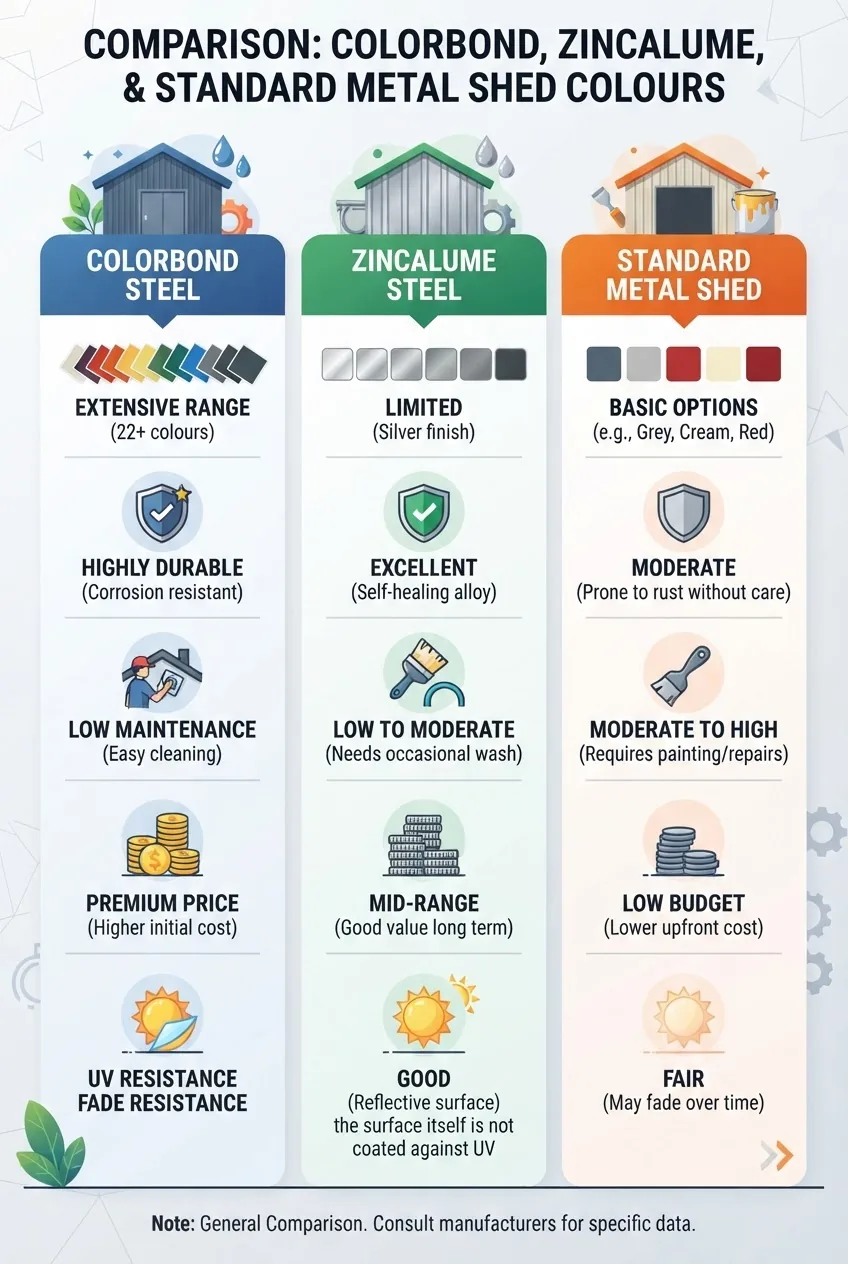
| Feature | Colorbond | Zincalume / Other |
|---|---|---|
| Colour Options | Wide painted palette; custom and Ultra ranges | Limited to metallic finish; painting required for colour |
| Durability | High with coated protection; tested for UV fade | Excellent corrosion resistance; may show staining differently |
| Maintenance | Low—power rinse and targeted touch-ups | Low—less visible fading but surface oxidation may change appearance |
| Price | Generally higher due to coating | Often lower upfront but painting adds cost |
| UV Resistance | Painted coatings include UV stabilisers; rated in Bluescope datasheets | No pigment fade, but surface may oxidise; limited aesthetic options |
Short summary: choose Colorbond when you need a specific colour, matched fencing and gutters, or improved UV-stable finishes; choose Zincalume where metallic finish and cost savings are priorities and painting is not required. For technical comparisons see Colorbond Ultra steel features and consult Zincalume shed materials and costs for cost trade-offs and Zincalume versus Colorbond comparison.
External authoritative references: refer to Australian Standards for guidance on material durability and colour fastness (Australian Standards) and the Australian Government EPA for environmental considerations (Australian Government EPA).
Transition: Colour selection is only the start—proper maintenance preserves finish and protects your investment.
Maintaining the Appearance of Your Colorbond Shed Colours
Answer: Maintain Colorbond shed colours by regular rinsing, debris removal, touch-up painting for scratches with approved Colorbond paint systems, checking cappings and flashings, and replacing degraded seals to preserve colour and corrosion resistance.
Paint finish types: matte, low-sheen and gloss finishes that affect perceived depth and how dirt shows on the surface.
- Inspect the shed twice yearly for surface dirt, pooling water, damaged flashing and signs of corrosion around fasteners.
- Rinse surfaces with fresh water and a soft brush; use mild detergent for stubborn marks. Avoid abrasive cleaners that damage topcoats.
- For scratches down to bare steel, apply a suitable primer and Colorbond touch-up paint specified by Bluescope; see Colorbond roof paint options.
- Replace or reseal damaged flashings and cappings promptly to prevent concentrated corrosion; consult the capping materials guide for correct finishes and costs.
- For severe fade or coating failure, consider recoating with a manufacturer-recommended system; consult the Colorbond paint options guide for compatible products.
Common issues and fixes:
- Fading: Usually gradual pigment loss—verify age and exposure, then use touch-up and consider selective repainting for panels older than 10–15 years (manufacturer data, 2023).
- Staining (tree sap, bird droppings): Clean promptly with mild detergent to avoid staining.
- Corrosion at penetrations: Check fasteners and replace with compatible coated fasteners; ensure proper sealing around fixings.
Reference materials and further reading: detailed procedures and product lists are available in the Colorbond paint options and Bluescope technical datasheets (Bluescope Steel).
Transition: Local environmental factors in Melbourne affect both initial colour choice and ongoing maintenance—next we examine those specifics.
Environmental and Local Considerations for Shed Colour Selection in Melbourne
Answer: Melbourne’s temperate climate, variable UV levels and urban bushland pockets mean pick colours with UV stability, consider shading, choose corrosion-resistant products in coastal suburbs, and obey local council rules on visible outbuildings.
Environmental considerations: factors like UV index, salt exposure, tree coverage and local council design rules that influence colour suitability.
Local considerations:
- UV and seasonal variation: Melbourne’s seasonal UV peaks require UV-stable pigments; check manufacturer ratings for fade resistance.
- Council regulations: Some local councils restrict outbuilding colours or visibility—verify planning requirements before finalising conspicuous colours.
- Landscape integration: Native plantings and bushland edges benefit from earthy Colorbond palettes; suburban paved yards pair well with neutrals and mid-tones.
- Environmental trends: Australian outdoor colour trends currently favour muted neutrals and natural tones that age gracefully while supporting biodiversity-friendly landscaping (design trend report, 2024).
Practical Melbourne homeowner example: a Northcote property chose Woodland Grey to blend with eucalyptus plantings and minimise bird-activity staining; maintenance was reduced due to colour forgivingness compared to brighter tones (local homeowner feedback, 2022).
Transition: Wrapping up the technical and aesthetic guidance leads to clear, practical recommendations for selecting your shed colour.
Conclusion: Making the Best Colour Choice for Your Colorbond Shed
Answer: Choose a Colorbond shed colour by balancing aesthetic goals with heat performance, UV resistance and maintenance capacity; use the Colorbond shed colour visualiser, request physical swatches, and prioritise proven coatings for Melbourne’s environment.
Final recommendations:
- Use the visualiser to shortlist 2–3 colours, test swatches in situ, and prioritise neutrals for smaller yards.
- Consider Colorbond Ultra or higher-spec coatings for coastal or highly exposed sites.
- Coordinate with fences, fascias and gates for cohesive outdoor rooms—see matching guides linked above for details.
CTA: If you’re ready to visualise colours, try a Colorbond visualiser and request swatches from local suppliers—this practical step greatly reduces the risk of post-installation regret.