
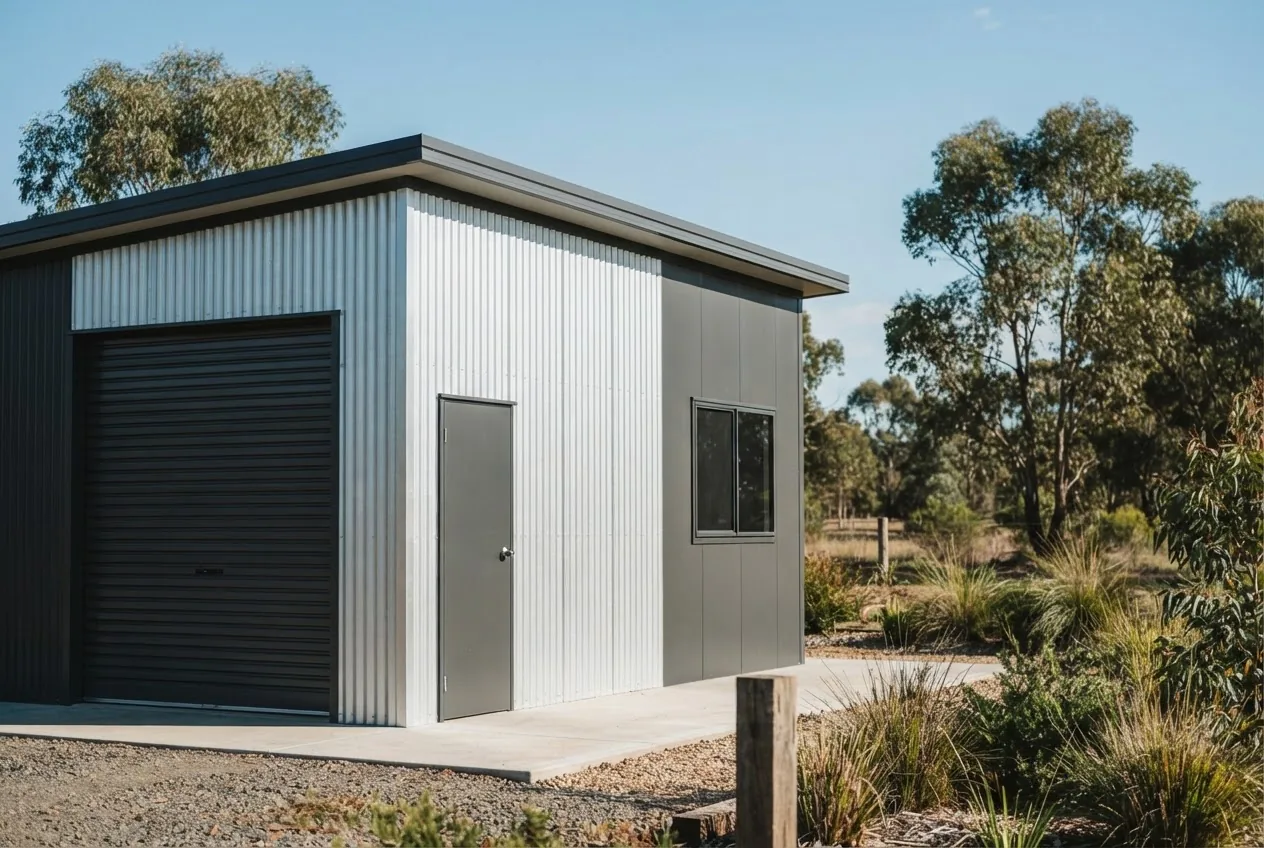

Zincalume vs Colorbond: For sheds, Zincalume is bare zinc–aluminium coated steel offering excellent corrosion resistance and lower cost; Colorbond is pre-painted, polymer-coated steel delivering better aesthetics, UV resistance and warranty coverage. Choose Zincalume for budget prioritised sheds, Colorbond for insulated, colour-matched or coastal installations needing paint protection.
Introduction to Zincalume and Colorbond
Answer: Zincalume and Colorbond are two BlueScope-originated steel product lines: Zincalume is steel with a zinc–aluminium alloy coating for corrosion protection; Colorbond is pre-painted steel with a polymer topcoat for long-term colour and substrate protection. Both are widely used for roofing and shed cladding across Australia.
This section defines the two product families and sets the scene for shed-specific comparisons covering composition, corrosion resistance, thermal behaviour, cost and practical installation notes for Melbourne climate and building practice.
Term: zinc-aluminium coating is a metallurgical layer of zinc and aluminium applied to steel (commonly 55% aluminium, 43.4% zinc, 1.6% silicon) to resist corrosion.
Transition: The next two sections explain each product in depth so you can compare composition, coatings and trade performance before a side-by-side table.
What Is Zincalume? Material Composition and Characteristics
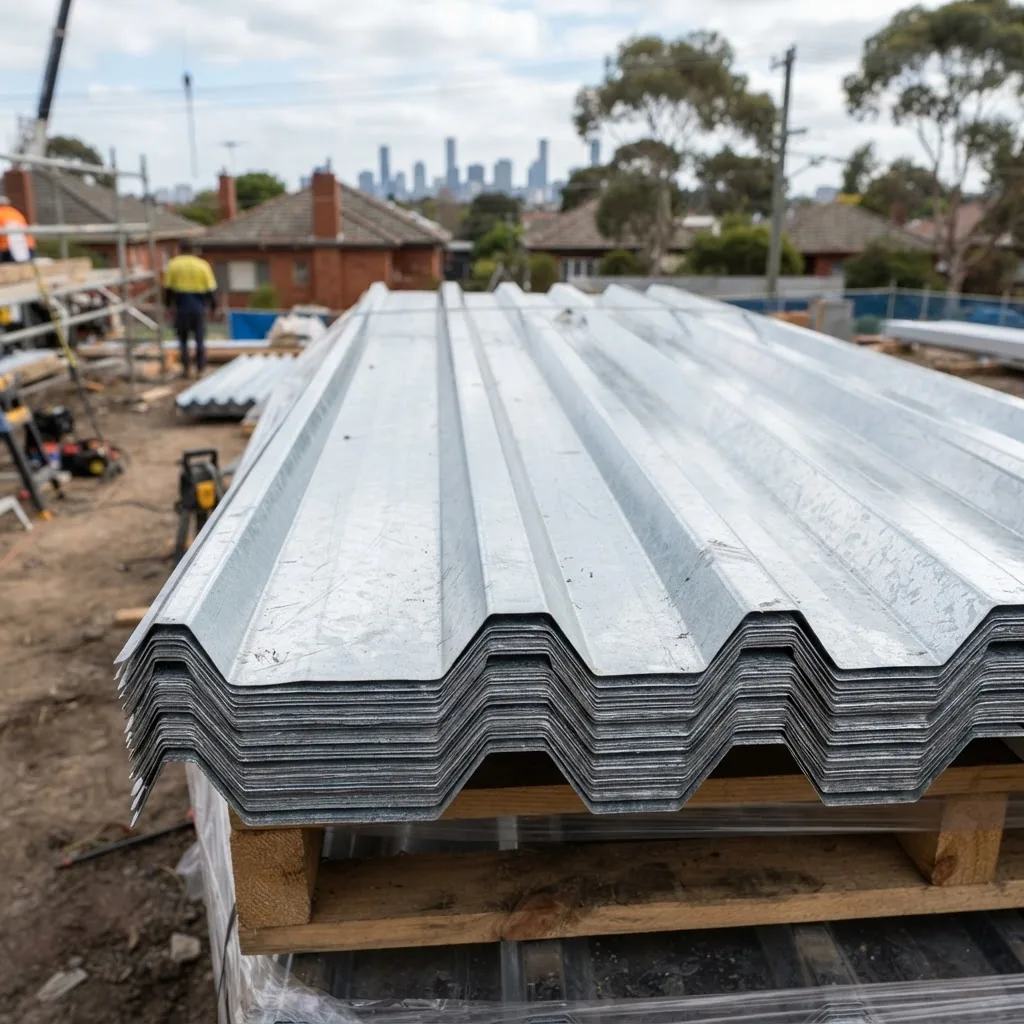
Answer: Zincalume is a coated steel sheet where the steel substrate is metallurgically bonded with a zinc–aluminium alloy (usually 55% Al / 43.4% Zn / 1.6% Si), giving it a bright metallic finish and strong sacrificial and barrier corrosion protection suitable for many shed roofs and walls.
Term: metallic sheeting refers to steel panels (flat, corrugated or profiled) used for roofing and cladding; Zincalume is a common metallic sheeting type in Australia.
- Composition: Cold-rolled steel core with a continuous hot-dipped zinc–aluminium alloy coating (commonly 55% aluminium, 43.4% zinc, 1.6% silicon) applied to both faces.
- Finish: Unpainted, metallic silver sheen that reflects sunlight; finish is non-painted so scratches reveal similar substrate colour immediately.
- Corrosion mechanics: Protection combines a barrier effect from aluminium and sacrificial protection from zinc; corrosion occurs slowly with galvanic action protecting exposed steel edges.
- Formability: Good formability for roofing profiles and flashings; welds and cut edges are handled by through-fastening and touch-up where needed.
- Weldability: Zincalume welds similarly to galvanised steel but may require fume extraction precautions due to aluminium/zinc fumes.
- Thermal properties: Higher surface reflectivity reduces heat gain on uninsulated sheds compared with darker painted sheets.
- Typical thicknesses: Available in common gauges for sheds (0.42mm, 0.48mm BMT — see local supplier specs).
Practical attributes for shed builders and DIYers:
- Cost-effective raw steel option for large-area roofs and walls.
- Less susceptible to visible scratches showing through since it has no paint layer.
- Works well for rural or industrial sheds where aesthetics are lower priority.
- Best used where long-term paint fade or colour matching is not required.
Real-world Melbourne example: a Boroondara workshop built in 2018 used Zincalume roofing for a 9m x 6m lean-to; after five years the owner reported minor edge pitting only near disturbed flashings — corroborated by the installing builder’s testimonial that touch-up and good drainage reduced corrosion risk in inner-suburban Melbourne.
Transition: After grounding Zincalume’s chemistry and practical performance, the next section explains Colorbond’s layered system and trade-offs for sheds needing colour and extra protection.
What Is Colorbond? Material Composition and Characteristics
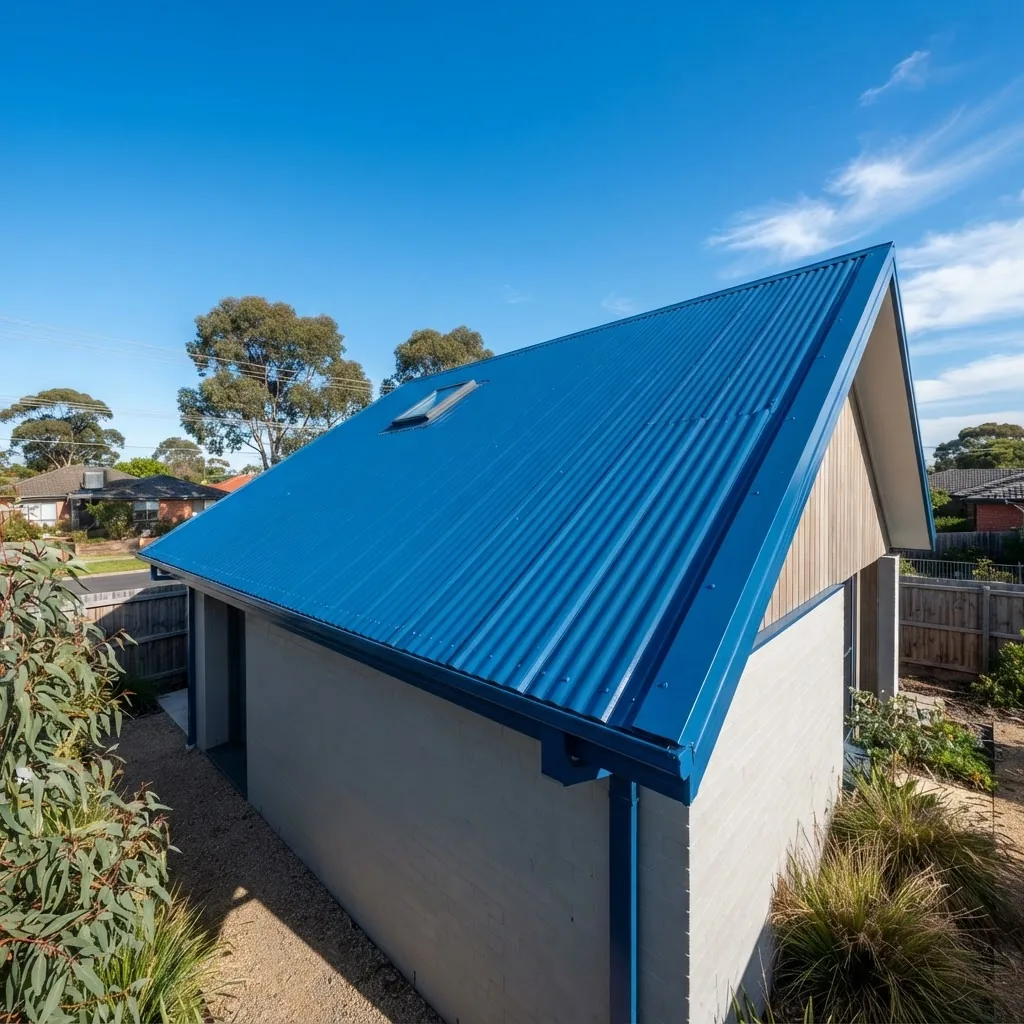
Answer: Colorbond is pre-painted steel: a zinc–aluminium coated steel substrate receives a primer, a durable polymer topcoat and a protective backing coat, giving long-term colour stability, UV resistance and enhanced corrosion protection compared with unpainted sheets.
Term: polymer coating is a factory-applied paint layer (usually a pre-treated primer plus an oven-cured polymer topcoat such as polyester or PVDF) that bonds to metal and resists weathering and UV degradation.
- Layer system: Steel core → zinc–aluminium alloy coating (same as Zincalume) → specially formulated primer → topcoat (polyester, SMP or PVDF options) → backing coat.
- Finish options: Wide colour range and gloss/texture options; factory-controlled bake process creates consistent coating thickness and adhesion.
- UV and chalking resistance: Designed to resist fading and chalking in Australian sun; performance varies by topcoat chemistry and colour (lighter colours reflect more heat).
- Gauge and profiles: Available in common shed gauges and profiles; painted finish requires careful handling during cutting and installation to avoid edge corrosion.
- Warranty: Backed by manufacturer warranties for colour and substrate protection; warranty terms vary by product grade and location (see BlueScope technical data).
Practical attributes for sheds:
- Better aesthetics and the ability to match roofs and walls to house colours.
- Improved warranty coverage including paint and substrate protection (see manufacturer data).
- Requires careful detailing at cuts and edges; touch-up paint and correct flashings are important.
- Often specified for residential sheds where appearance and thermal performance (with right colour and insulation) matter.
Contextual note: Term: steel gauge (or BMT—base metal thickness) is the raw steel thickness before coatings and is key to structural strength; common shed BMTs are 0.42mm–0.75mm depending on application.
Transition: With each material defined, the following section lays out a side-by-side comparison table plus a deeper analysis of practical trade-offs for shed and roof decisions in Melbourne.
Zincalume vs Colorbond: Side-by-Side Material Comparison
Answer: Zincalume gives a corrosion-resistant, cost-effective, unpainted metallic finish; Colorbond adds a factory-applied polymer paint system that improves aesthetics, UV resistance and warranty at higher premium and requires careful installation to protect painted edges.

| Attribute | Zincalume | Colorbond |
|---|---|---|
| Composition | Steel + zinc–aluminium alloy coating (unpainted) | Same coated steel + primer + polymer topcoat + backing coat |
| Corrosion resistance | Excellent barrier + sacrificial action; better in many rural/urban settings | Comparable substrate protection but edges/cuts need paint touch-up; topcoat protects against surface corrosion |
| Aesthetics | Metallic silver finish only | Wide colour range and textures |
| Thermal performance | High reflectivity, good for reducing heat gain if uninsulated | Depends on colour; light colours reflect heat, dark colours absorb it; topcoat reduces emissivity |
| Durability & lifespan | Long; up to 25+ years depending on environment and maintenance | Long; factory paint extends life and aesthetics, warranties commonly 10–20+ years |
| Maintenance | Lower visual maintenance; occasional cleaning and touch-up on flashings | Requires paint maintenance at edges, cleaning to avoid salt/chalk accumulation |
| Cost (material) | Generally lower per m² | Higher per m² because of paint and processing |
| Warranty | Limited to substrate performance; varies by supplier | Often includes paint and substrate warranty from manufacturer |
| Best use | Agricultural, industrial, budget residential sheds | Residential sheds, coastal areas (with correct grade), projects requiring colour match |
Analysis and trade-offs (Melbourne focus):
- Corrosion comparison: Zincalume’s alloy coating gives robust edge protection; Colorbond’s painted finish adds a barrier but exposed cuts must be sealed—use touch-up paint and correct flashings to keep equivalent corrosion resistance. According to BlueScope data sheets from 2023, proper edge protection improves painted sheet lifespan in coastal zones.
- Thermal behaviour: For uninsulated sheds in hot Melbourne summers, Zincalume’s reflectivity reduces heat gain; for insulated sheds or those with dark colours, Colorbond with insulation offers better internal temperature control.
- Installation ease: Zincalume tolerates rough handling better because scratches don’t reveal a contrasting paint; Colorbond requires more careful handling and swarf control to avoid corrosion under the paint.
- Warranty and peace of mind: Colorbond commonly carries paint and substrate warranties—useful if resale aesthetics matter. As of 2024, BlueScope provides product-specific warranty details on coated steel products (BlueScope Steel).
- Standards: Check Australian Building Codes Board guidance for cladding and corrosion performance in specific zones—refer to the ABCB resources when specifying coastal or high-corrosion classifications (Australian Building Codes Board).
- Corrosion research note: For highly corrosive microclimates, CSIRO studies show environmental factors (salt spray, industrial emissions) significantly reduce unprotected steel life; coating and maintenance strategies must reflect local conditions (CSIRO research).
Transition: With the technical comparison set, the following section lists specific uses for both materials in typical shed builds and how to choose per shed type and site.
Uses of Zincalume and Colorbond in Shed Construction
Answer: Use Zincalume for economical roofs and walls where metallic finish is acceptable; use Colorbond for visually-matching, insulated or coastal sheds. Both are suitable for roofing and wall cladding when detailed and installed correctly with appropriate flashings and fasteners.
- General-purpose backyard sheds: Zincalume roofs and walls for cost-efficiency and low visual maintenance.
- Residential garages and workshop façades: Colorbond walls and roofs where colour matching to a house is required.
- Livestock or farm sheds: Zincalume preferred for large-span roofs that prioritise cost and corrosion resistance in rural settings.
- Coastal storage and boatsheds: Colorbond (with appropriate grade and maintenance) can be used; insist on manufacturer-grade product and frequent inspections.
- Insulated sheds: Colorbond as outer cladding combined with internal insulation to get controlled thermal performance.
- High-visibility or display sheds: Colorbond for branding and presentation where painted finish matters.
- Commercial storage or factories: Either material depending on budget, appearance and warranty needs; trade-off between initial cost and long-term aesthetic maintenance.
- Retrofits and reclads: Colorbond enables modernising older Zincalume sheds for improved appearance and warranty.
Installation recommendations:
- Use the correct fasteners, with neoprene washers rated for steel cladding; avoid over-torquing.
- Apply touch-up paint or approved edge protection to cut edges on Colorbond; Zincalume needs appropriate flashings and drainage to avoid ponding.
- Design roof pitch, gutters and flashings to minimise water retention and reduce corrosion risk in Melbourne’s variable climate.
- For extended roofing details, consult Colorbond Capping Guide: Roof Capping Materials and Costs for capping choices and costs.
- Consider fencing and gates from the same material for aesthetic consistency; see Colorbond fence panels pricing and materials and fence gate sizes and installation costs.
- For alternative sheet profiles and sizes, review corrugated iron sheet sizes and prices and corrugated roof sheet types and cost.
- For long-span sheds and single-sheet roofing options, see long span metal roofing advantages.
- For kit-based building options in WA reference metal shed kits and building cost in WA.
- When matching sheet cladding, check Colorbond shed cladding material options.
- To compare commercial building solutions, consult commercial steel building materials and costs.
- For Zincalume-specific shed material pricing and types: Zincalume shed materials and cost guide and Zincalume roofing types and benefits.
- For tray profiles, see tray roofing profile types and materials.
- Consider corrugated roof alternatives: corrugated roof sheet types and cost.
- Colorbond Bushland Colour options
- Blue Ridge and paint options for Colorbond
- Colorbond Ultra colour options
- Gull Grey Colorbond paint and fence colours
- Colorbond Ironstone paint and roof colours
- classic Colorbond roof colours comparison
- Surfmist and Monument colour combinations
- Dark Colorbond colours absorb heat—consider insulation and ventilation for sheds used as workshops.
- Gull Grey or Ironstone are popular mid-tone choices that balance heat and visual integration; see Gull Grey Colorbond paint and fence colours and Colorbond Ironstone paint and roof colours.
- For Ultra-grade premium colours, review Colorbond Ultra colour options.
- To explore paint pairings and specific Colorbond paint technology see Blue Ridge and paint options for Colorbond and Colorbond Bushland Colour options.
- Classic palettes and their evolution are explained in classic Colorbond roof colours comparison.
- Typical Zincalume sheet (0.42 BMT, common profile): AUD 15–25 per m² material cost (varies by profile and supplier).
- Typical Colorbond sheet (0.42 BMT, standard Colour): AUD 25–40 per m² material cost (varies by colour and finish).
- Initial material cost (Zincalume lower).
- Installation labour (similar for both, though Colorbond requires more careful handling and swarf cleanup).
- Maintenance and repainting (Colorbond reduces repainting frequency if properly maintained).
- Replacement or reclad cycles—Colorbond’s paint warranty can postpone aesthetics-related reclads.
- Prices vary by profile, BMT, colour and location; for Perth-specific low-cost options see cheap roofing sheets for sale in Perth.
- For an in-depth Colorbond per-square-metre estimate, consult Colorbond roof pricing per square meter.
- Regular cleaning: remove leaves, debris and salt deposits; rinse with fresh water after coastal spray events.
- Inspect flashings and fasteners annually; replace damaged neoprene washers and corroded screws.
- Touch-up paint: for Colorbond, use manufacturer-approved touch-up kits for cut edges and scratches.
- Edge protection: ensure gutters and cappings direct water away from cut edges to avoid corrosion points.
- Remove metal swarf: filings from cutting/drilling are corrosive—clean immediately.
- Professional inspection: every 3–5 years for coastal or heavily polluted sites.
- Annual wash with fresh water
- Clear gutters and downpipes twice yearly
- Inspect/replace fasteners annually
- Apply touch-up paint to exposed edges (Colorbond)
- Check for ponding water and improve drainage
- Assess exposure: coastal or industrial sites favour painted protection plus frequent maintenance; check CSIRO and ABCB guidance for high-corrosion zones.
- Set budget: Zincalume for lower initial cost; include lifecycle cost analysis for repainting or reclad frequency.
- Define appearance goals: use Colorbond for colour matching and trims; consult Colorbond Shed Colours Guide: Best Shed Colour Options for palettes.
- Plan installation: ensure competent flashings, correct fasteners and swarf control; for capping consult roof capping materials and costs.
- Consider insulation: for workshops choose Colorbond + insulation or Zincalume + insulation depending on colour/thermal needs.
- Review warranties: confirm specific BlueScope or supplier terms for your product and intended site; Colorbond often includes paint warranty—see BlueScope specs. (BlueScope Steel)
- Inner-suburban, non-coastal sheds: Zincalume is cost-effective and durable if detailed well.
- Residential or visible sheds with colour preference: Colorbond with correct installation and maintenance.
- Coastal or highly exposed sites: Prefer Colorbond with higher-grade finishes and strict maintenance, or Zincalume with aggressive maintenance regime; consult ABCB for corrosion zones.
Experience signals: Melbourne builders report Zincalume performing well in inner-city industrial sheds where maintenance access is good; coastal hobby-shed owners choosing Colorbond with frequent inspections and salt-shedding design attribute better long-term aesthetics (builder testimonial: “Colorbond lasted visually longer when maintained every 2–3 years,” Melbourne builder, 2022).
Transition: Aesthetics matter for many homeowners — the next section focuses on colour choices and whether Zincalume or Colorbond is the better visual pick for sheds.
Color Considerations: Is Zincalume or Colorbond Better for Shed Aesthetics?
Answer: Colorbond is the clear choice for aesthetic options because it offers a wide factory-applied colour range and matching trims; Zincalume provides a metallic-industrial look limited to silver. Choose Colorbond for visual integration with homes and neighbourhood guidelines.
Color and finish differences affect both appearance and thermal behaviour. Colorbond’s factory paint reduces visible scratches and allows cohesive colour schemes; Zincalume’s reflective finish can be desirable for modern or industrial aesthetics.
Colorbond Shed Colours Guide: Best Shed Colour Options — consult this pillar for in-depth colour decisions matching roofs, trims and house palettes.
Related colour resources for fine-tuning choices:
Practical notes:
Transition: If cost is a key decision factor for your shed, the next section provides a practical cost comparison with numbers and lifecycle considerations.
Cost Comparison: Zincalume vs Colorbond for Sheds
Answer: Zincalume is usually cheaper per sheet and on initial material cost; Colorbond carries a premium for paint and processing, but lifecycle costs can favour Colorbond where aesthetic longevity, warranty and reduced repainting are priorities.
Material cost examples (indicative as of 2024):
Lifecycle cost factors to include:
Stat block (example project: 6m x 9m roof, 54m²):
| Item | Zincalume (AUD) | Colorbond (AUD) |
|---|---|---|
| Material (54m² at mid-rate) | 54 × 20 = 1,080 | 54 × 32 = 1,728 |
| Installation (labour & fixings) | ~1,200–1,800 (depends on complexity) | ~1,300–1,900 (slightly higher handling care) |
| Lifecycle (10 years maintenance est.) | Cleaning, minor repairs: ~200–500 | Touch-up, occasional wash: ~100–300 |
| Estimated total 10-year cost | ~2,480–3,380 | ~3,128–3,928 |
Pricing caveats and references:
Transition: Cost is only one factor — maintenance, warranties and expected lifespan should guide final choices, which the next section addresses in detail.
Maintenance, Durability, and Warranty Considerations
Answer: Both Zincalume and Colorbond are durable when installed correctly, but maintenance differs: Zincalume needs drainage and cleaning; Colorbond needs edge protection and periodic cleaning to preserve paint. Compare warranties and follow maintenance checklists to maximise lifespan.
Warranty highlights: According to BlueScope data sheets from 2023, Colorbond products include paint and substrate warranties varying by product and zone; confirm specific warranty terms for your chosen grade and location.
Maintenance checklist:
Bulleted maintenance checklist (quick view):
Technical and standards references: consult the Australian Building Codes Board for corrosion classification and suitable material selection in different zones (ABCB), and BlueScope technical specifications for product warranties and maintenance instructions (BlueScope Steel).
For paint maintenance and flashing techniques crucial to Colorbond’s lifespan, see Colorbond roof paint and flashing options. Also consult Colorbond fascia gutter colours and installation for finishing details.
Real-world durable use: A northern Melbourne community shed re-roofed with Colorbond in 2016 reported minimal visual fade in 7 years with bi-annual cleaning and touch-ups; a Cheltenham factory roof of Zincalume installed in 2015 showed excellent substrate performance with only localized pitting where ponding occurred—illustrating that design and maintenance drive outcomes more than base material alone.
Transition: With maintenance and warranties considered, the final section gives practical recommendations and a decision framework tailored for Melbourne sheds.
Final Recommendations: Choosing Zincalume or Colorbond for Your Shed
Answer: Choose Zincalume when budget, raw corrosion resistance and a metallic look are priorities; choose Colorbond when colour, matching trims, warranty and reduced repainting frequency are more important. Site, use, insulation needs and coastal exposure should determine the final choice.
Decision framework (step-by-step):
Bottom-line recommendations for Melbourne:
Conclusion and CTA: Both materials perform well when specified and installed correctly. For a site-specific recommendation, request a professional onsite assessment with roof pitch, exposure and intended use details and get comparative quotes that include installation, flashings and warranty terms.