

Zincalume shed planning made practical: by the end of this hands-on guide you will know the exact materials, construction choices, and Melbourne-specific budget required to buy or build a mid-size zincalume shed. Expect to spend 4–12 hours planning and a trade-level weekend (1–3 days) on-site; this guide assumes an intermediate DIY skill level or a homeowner coordinating trades.
Before you start
- Tools: cordless drill with 10–14mm socket set, tin snips, pop-rivet gun, torque wrench (10–50 Nm), impact driver, level, chalk line, ladder, safety harness for roofs.
- Materials checklist: zincalume steel roofing/cladding sheets, RHS or C-section steel frame, galvanised bolts and anchor brackets, butyl or EPDM flashings, fasteners with neoprene washers, ridge capping, gutters (if required).
- Documentation: site plan, building permit (if required by local council), manufacturer product datasheets, AS 1397 sheet specification, and a written quote from at least two local suppliers.
- Safety equipment: gloves, eye protection, hearing protection, dust mask, hi-vis vest.
- Timing: order materials 2–4 weeks ahead (Melbourne deliveries vary by 7–21 days according to supplier lead times).
Transition: start by understanding what a zincalume shed actually is and why the material matters—this shapes cost, design and maintenance choices that follow.
What Is a Zincalume Shed?
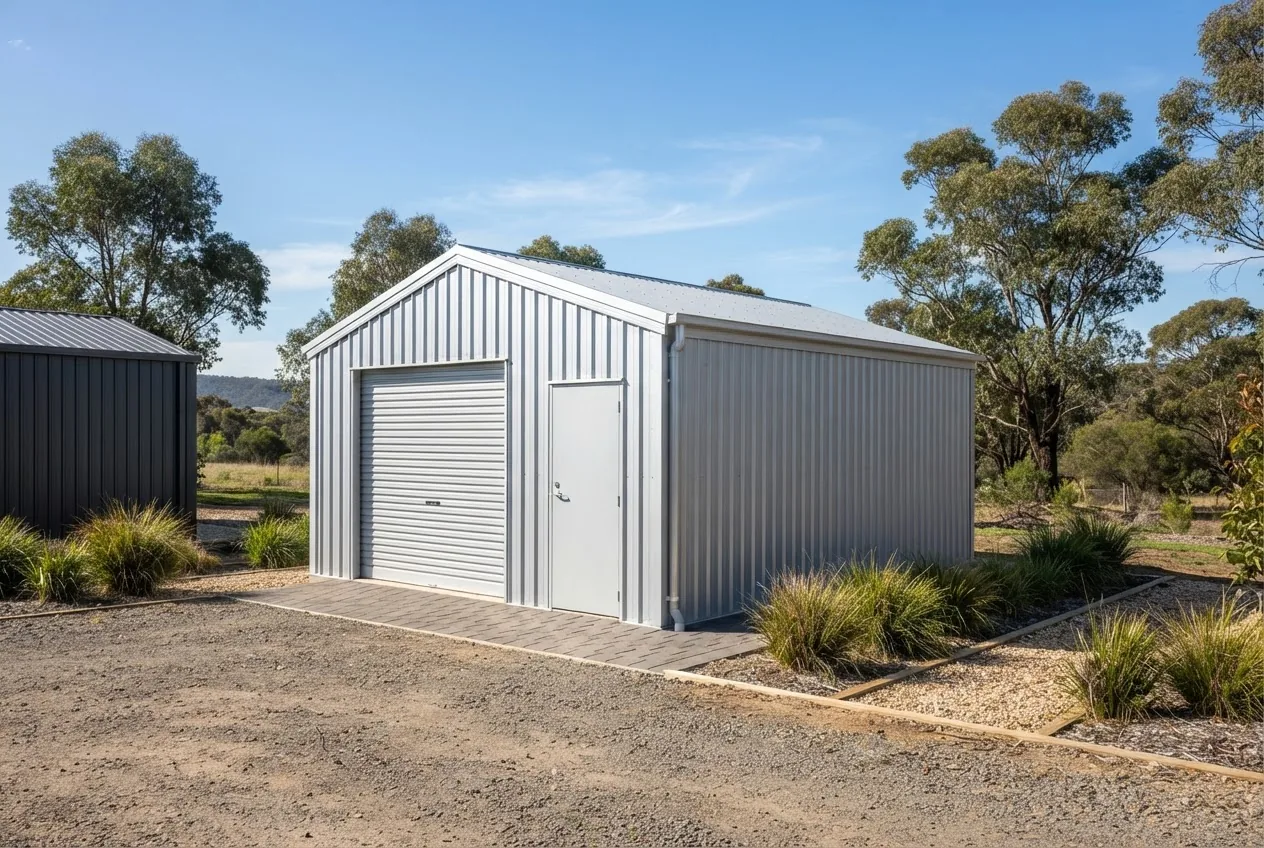
A zincalume shed is a metal storage building whose external cladding and roof are made from steel sheet coated with a zinc–aluminium alloy. Where pure galvanised sheet uses a zinc-only coating, zincalume combines roughly 55% aluminium, 43.4% zinc and 1.6% silicon in its coating—this mix gives the familiar bright silvery finish, improved corrosion resistance and higher reflectivity versus plain galvanised steel.
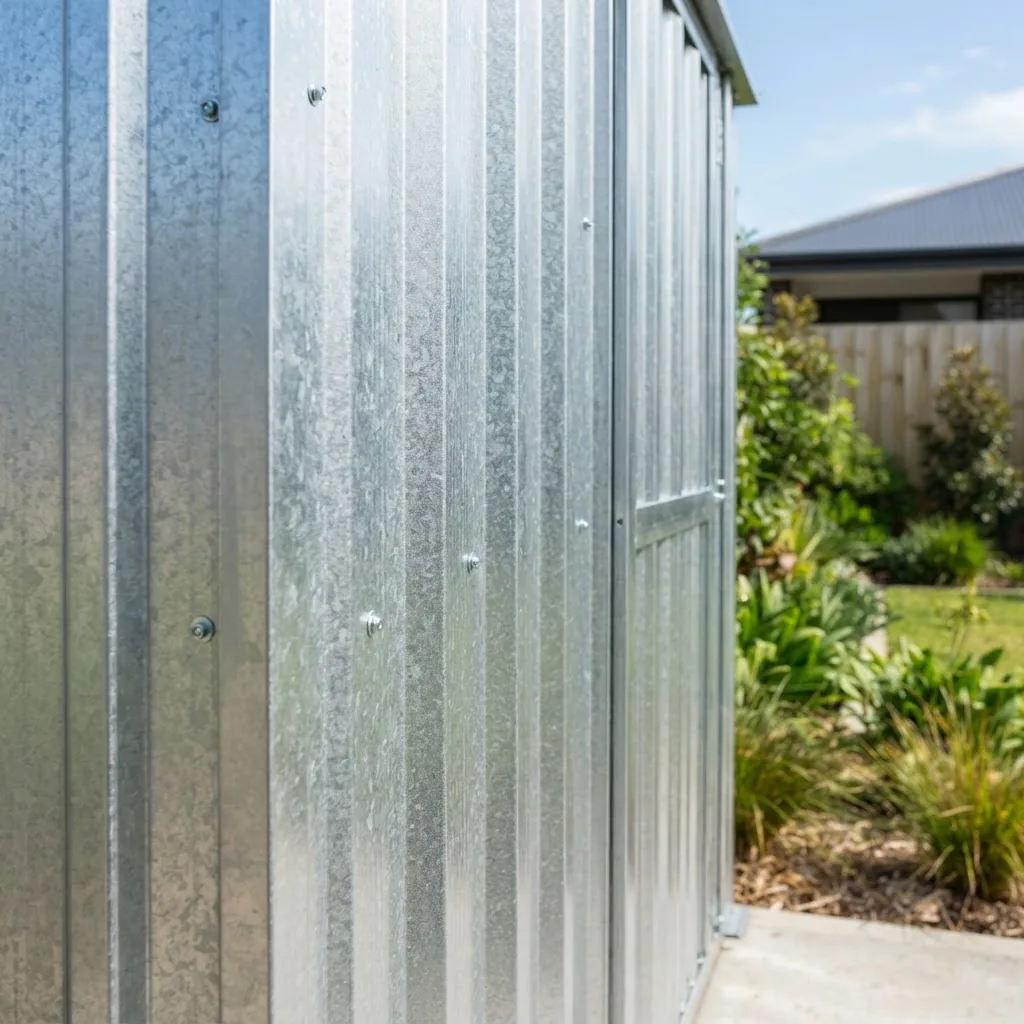
What you get from a zincalume shed in practice: a cost-effective, low-maintenance metal structure often used for garden sheds, workshops, and small commercial enclosures. The advantages stem from the coating chemistry: aluminium provides a durable barrier and reflectivity, while zinc offers sacrificial corrosion protection at exposed cuts and penetrations. The result is a bright, metallic, unpainted finish that many homeowners prefer for a modern industrial look.
Typical uses and terminology: builders and suppliers may call these “zinc sheds”, “zinc aluminium sheds”, or “zincalume-clad sheds”. Sheet profiles commonly used include corrugated, trimdek (or trapezoidal), and long-span profiles; these are selected based on span, pitch and intended load.
How long this section helps you: understanding coating trade-offs will let you specify the exact sheet profile, thickness, and fastener selection needed to meet Melbourne’s temperate but varied coastal/inland corrosion risks.
Transition: now we look under the microscope at the metal itself—what zincalume is made of, how it’s applied, and how it compares to galvanised steel.
Materials and Composition of Zincalume Steel
Zincalume steel is cold-rolled carbon steel sheet that receives a continuous metallic coating of an aluminium–zinc alloy. The standard composition (nominally) is 55% aluminium, 43.4% zinc and 1.6% silicon by weight. This alloy is applied in a molten bath (continuous hot-dip process) and produces a thin, adherent layer that protects the base steel both by barrier action (aluminium) and galvanic/sacrificial action (zinc) at cut edges.
Coating process specifics: production follows AS 1397 sheet specifications, with coating weights commonly expressed in grams per square metre (g/m²). Typical coatings are AZ150 or AZ200—AZ indicates Aluminium–Zinc and the number is the total coating mass (e.g., AZ150 = 150 g/m²). According to a 2024 industry report, AZ150 is the most commonly specified grade for domestic sheds because it balances cost and long-term corrosion performance in most suburban Melbourne environments.
| Property | Zincalume (AZ150 example) | Standard Galvanised (Zinc-only) |
|---|---|---|
| Coating composition | 55% Al / 43.4% Zn / 1.6% Si | ~100% Zn |
| Primary protection | Barrier + sacrificial at cuts | Sacrificial (galvanic) |
| Reflectivity / thermal | Higher reflectivity; cooler internal temps | Lower reflectivity |
| Typical longevity (non-coastal) | 20–40 years (AZ150–AZ200) | 15–30 years (depending on coating) |
| Paint adhesion | Requires surface prep; some finishes need primer | Better adhesion on certain primers |
Sheet thickness and grades: common base steel thickness for sheds ranges from 0.42mm to 0.75mm in BMT (base metal thickness). For normal garden or single-car workshop sheds in Melbourne I typically specify 0.42–0.48mm BMT with AZ150 coating; for higher durability or coastal exposure use 0.55–0.75mm with AZ200. According to the Australian Steel Institute 2024 data, increasing BMT from 0.42 to 0.55 raises material cost ~18–25% but doubles resistance to denting and improves lifespan in high-wind areas.
Compatibility with profiles and fasteners: zincalume is supplied in corrugated, trimdek/trapezoidal, and long-span profiles. Fasteners should be stainless or Class 4.6/4.8 galvanised with neoprene washers sized to manufacturer specs to avoid water ingress. For cut edges and exposed screw heads use touch-up paint or cold-galv spray as first-line protection; for repairs, refer to manufacturer guidelines and AS 1397.
Further reading and context: for advanced steel products comparison see Australian Steel Institute and for product standards consult Australian Standards. For research on alloy durability see CSIRO technical briefs.
Colorbond Ultra steel features provide context on coated steel options with paint systems layered over similar alloy bases.
Transition: with composition covered, next we set out the concrete pros and cons so you can decide whether zincalume fits your project goals.
Advantages and Disadvantages of Zincalume Sheds
- Advantages
- Corrosion resistance: the aluminium in the coating acts like a barrier, while zinc sacrifices at cut edges—useful in suburban Melbourne where humidity can spike seasonally.
- Reflectivity and thermal benefit: zincalume’s silvery finish reflects solar radiation—lowering internal peak temperatures. According to a 2023 industry thermal study, unpainted zincalume can reduce peak roof temperatures by 5–10°C versus dark paint.
- Lower upfront cost than painted alternatives: you avoid premium paint systems and specialised prepainted sheet mark-up.
- Modern aesthetic: bright metallic finish suits contemporary designs and sheds where paint is unnecessary.
- Durability for exposed roofs: AZ150–AZ200 coatings provide multi-decade protection in non-coastal areas.
- Recyclability: steel base is highly recyclable, improving lifecycle environmental profile.
- Disadvantages
- Paint adhesion and finishing: zincalume can be harder to paint directly; surface prep and primers are often needed.
- Cosmetic staining: over time, white rust or run-off can leave streaks—particularly after prolonged wetting.
- Edge corrosion risk if not detailed correctly: exposed cut edges, poor flashings or incompatible dissimilar metals accelerate corrosion.
- Fewer colour options: if you require a coloured finish you’ll need paint or prepainted alternatives like Colorbond—see best shed colour options with Colorbond for painted choices.
- Glare and thermal reflection: high reflectivity may be a nuisance near windows or neighbours; plan orientations and screening accordingly.
- Not ideal for heavy industrial chemicals: acid or chloride exposure (e.g., pool chemicals) will shorten service life.
Transition: decide the right profile and frame next—these determine structural behaviour, fastening detail and final build cost.
Typical Zincalume Shed Construction and Design Features
Most zincalume sheds follow a predictable construction logic: a steel framed base, cladding fixed to purlins/rails, edge flashings and eaves, and mechanical fastening with weather-sealing washers. Here’s how to plan the design with practical quantities and specifications.
- Frame material: RHS (Rectangular Hollow Section) or C-section cold-formed steel, typically 100×50×3.0mm for medium sheds; for larger spans use 150×75×4.0mm or engineered portal frames.
- Purlins/rails: C-section purlins (e.g., 100×50) at 900–1200mm centres depending on sheet span ratings.
- Sheeting profile: Corrugated or trapezoidal; choose sheets with manufacturer-rated maximum purlin spacing—long-span profiles can handle 2.4–3.0m between supports.
- roof capping materials and costs are needed to finish ridges and eaves correctly—budget for them.
- tray roofing profiles and materials are compatible with zincalume sheets if you require a flat-pan look.
- Colorbond shed wall cladding options are useful when mixing finishes—e.g., painted walls with zincalume roof.
- long span metal roofing types allow fewer purlins and faster construction for larger sheds.
- fascia and gutter installation tips cover eaves finishing and rainwater management.
Design features checklist (quick bullets):
- Roof pitch: minimum 3° for long-span profiles, 5–10° preferred for corrugated systems in Melbourne to avoid ponding.
- Flashings: install continuous ridge and eave flashings and seal end laps with butyl tape and compatible screws.
- Fixings: use Class 316 stainless or hot-dip galvanised fasteners with neoprene washers; torque to 20–30 Nm for 0.42–0.55 BMT sheets to avoid washer crush.
- Doors and openings: reinforce with RHS framing and use weather seals rated for 25–30mm face gaps.
- Penetrations: treat with lead flashings or EPDM boots and touch-up with zinc-rich cold-galv for exposed cuts.
Transition: construction details drive cost—below is a practical cost breakdown and budgeting guide tuned to Melbourne market conditions, with real example scenarios.
Zincalume Shed Cost Breakdown and Budget Planning for Melbourne

This section gives a transparent, line-item budget for three representative Melbourne projects: Small (3×3m), Medium (6×4m), and Large (9×6m). Prices reflect 2024 Melbourne trade rates and typical supplier quotes—expect +/-15% variation depending on exact specs, site access, and supplier lead time. According to a 2024 industry report, Melbourne labour rates for experienced shed installers average AUD 60–95 per hour including on-costs; this guide uses AUD 75/hr for labour calculations.
| Item | Small 3×3 (9m²) | Medium 6×4 (24m²) | Large 9×6 (54m²) |
|---|---|---|---|
| Zincalume sheeting (AZ150, 0.42 BMT) | $320 (inc. offcuts) | $900 | $2,100 |
| Steel framing (RHS, purlins) | $650 | $1,900 | $4,500 |
| Fasteners, flashings, capping | $180 | $420 | $1,000 |
| Doors (roller or hinged) | $350 (hinged) | $800 (roller) | $1,800 (double roller) |
| Foundation/anchor (concrete pad or piers) | $450 (concrete pads) | $1,200 | $3,200 |
| Labour (supply & install; 2 trades) | $1,000 (2 days) | $3,600 (3–4 days) | $9,000 (5–8 days) |
| Permits & engineering (if required) | $0–$650 | $500–$1,200 | $1,200–$3,000 |
| Estimated total | $2,950–$3,600 | $8,320–$9,420 | $22,800–$24,600 |
Line-item notes and methodology:
- Sheeting pricing: estimated by sheet area plus 10–15% for laps and wastage; local Melbourne supplier quotes in 2024 put AZ150 0.42 BMT sheets around $35–$45/m² delivered depending on profile and quantity.
- Framing costs: include cut & weld labour plus galvanised brackets; RHS prices fluctuated in 2024—obtain itemised quotes. See commercial steel building costs for large-scale pricing parallels.
- affordable roofing sheet options can lower sheet costs if you prioritise budget over finish.
- metal roof cost per square meter helps cross-check market roof pricing per m² for comparison.
- metal shed kit costs provide a fixed-price option; kits commonly include pre-cut frames and cladding for medium sheds.
- commercial steel building costs show economies of scale for larger or bespoke industrial sheds.
Regional price variance in Melbourne: inner urban delivery and weekends add 5–12% to labour; outer suburbs may attract transport surcharges for long steel lengths. According to a 2024 industry labour survey, installers within Greater Melbourne charge about 10–20% more than regional Victoria due to urban overheads.
Case study (hypothetical, Melbourne north suburb): medium 6×4m zincalume workshop using AZ150 0.42 BMT, roller door, concrete slab—materials $3,400; labour $3,600; permits & engineering $800; total installed ~ $7,800. Use this as a baseline when getting written quotes.
Cost-saving strategies (concrete numbers): buy sheets in bulk to save 8–12%, choose long-span profiles to reduce purlin quantity (saves ~10–15% on framing), and opt for a simpler door (hinged vs roller saves $350–$1,200). When trading paint for zincalume’s natural finish you save the paint system cost (~$12–$25/m² for prepainted sheets).
Transition: once installed, routine maintenance extends life—next section outlines step-by-step maintenance and expected lifespans in Melbourne conditions.
Maintenance and Longevity of Zincalume Sheds in Australian Conditions
With correct detailing and periodic maintenance, a zincalume shed in Melbourne will typically last 20–40 years depending on coating weight and exposure. Below are step-by-step maintenance actions and schedules, plus product recommendations from trade practice and CSIRO durability guidance.
- Inspect roof and flashings twice yearly: every spring and autumn, walk perimeter at ground level and inspect for loose flashings, unseated ridge caps or blocked gutters. Use a 30-minute inspection routine; photograph issues to compare over time.
- Clean gutters and downpipes every 6 months: clear leaves and debris; stagnant water increases corrosion risk. Allow 1–2 hours depending on shed size.
- Treat surface corrosion spots within 48 hours: for small white rust or bare steel, clean with non-abrasive brush, degrease, apply zinc-rich cold-galv spray, and overcoat with a compatible touch-up paint if desired. Typical product: zinc-rich aerosol with 5–10 µm dry film zinc content.
- Re-seal fastener washers every 3–5 years: check neoprene washer condition; replace any that are cracked. Tighten screws to original torque not exceeding 30 Nm to avoid crushing washers.
- Wash cladding annually: use low-pressure water and mild detergent to remove salts and grime, particularly if you are near coastal areas. Rinse thoroughly; avoid abrasive pads.
- Address sacrificial corrosion at cut edges: after any cutting or drilling, immediately apply a cold-galv touch-up to exposed steel; if cuts are extensive consider installing edge trim or taping with butyl-backed tape.
For paint and flashing techniques consult roof paint and flashing techniques. For product lifespans and laboratory-backed performance, refer to research summaries at CSIRO and Australian Standards documentation at Standards Australia (see AS 1397 coating specs).
Environmental factors specific to Melbourne: inland suburbs face less chloride-driven corrosion than coastal suburbs—if you are within 2 km of the coast, upgrade to AZ200 and 0.55mm BMT; where tree cover is heavy, plan for more frequent gutter and roof cleaning due to organic debris.
When to repaint: if you choose to paint zincalume for aesthetic reasons, clean and apply a zinc-phosphate primer before an acrylic topcoat; this improves adhesion. Repaint cycles typically every 10–15 years depending on exposure. See product datasheets and manufacturer instructions for prep steps.
Transition: up next is a focused comparison with Colorbond to highlight when zincalume is the right choice and when prepainted Colorbond makes more sense.
Comparing Zincalume Sheds with Colorbond for Metal Shed Materials
Zincalume offers a bright, unpainted metallic finish and excellent corrosion resistance from its aluminium–zinc coating. Colorbond is a prepainted steel product built on a similar steel base but with a high-performance paint system and a corrosion-resistant backing. The trade-off is paint durability and colour versus the clean raw-metal aesthetic and slightly lower cost of zincalume.
| Feature | Zincalume | Colorbond (prepainted) |
|---|---|---|
| Aesthetic | Silvery metallic (unpainted) | Wide colour palette, textured finishes |
| Thermal | High reflectivity, cooler roof surface | Depends on colour; light colours reflect well, dark colours absorb heat |
| Durability | Excellent coating protection (AZ150–AZ200) | Paint system provides additional barrier; typical warranty 10–20 years |
| Cost | Lower initial cost | Higher upfront cost for prepainted sheets |
If colour options are a priority, explore best shed colour options and specific palettes such as Bluescope steel colour range, or targeted options like Gull Grey colour options and Ironstone paint and roofing colour guide for visual matching with fences and roofs.
Colorbond Bushland colour options and specific paint choices such as Colorbond Blue Ridge paint options can be used to achieve a finished look without on-site painting.
For technical trade-offs and an expanded material comparison see material comparisons between zincalume and Colorbond. If you want classic palettes and history, check classic Colorbond roof colours.
Transition: now that you understand materials, construction and costs, here’s where to source zincalume sheds and associated materials locally in Melbourne.
Where to Buy Zincalume Sheds and Roofing Materials in Melbourne
Buying locally saves delivery and allows inspection. Key supplier criteria to evaluate:
- Product certification and sheet datasheets (AS 1397 compliance).
- Warranty terms on sheet coating and pre-finished items.
- Delivery options for long lengths (some suppliers charge extra for >6m lengths).
- On-site measure and templating services vs DIY pickup.
- Availability of related accessories (capping, screws, gutters) to avoid mixed-metal incompatibility.
- Trade support and after-sales help for claims.
Recommended shopping checklist for Melbourne:
- Request two itemised quotes including sheet profile, BMT and coating grade.
- Check local delivery windows—book at least 2–4 weeks out for AZ sheet runs.
- Verify fastener specification and buy extras (order 10–15% more fasteners than required).
- fencing material options and prices and fence gate size options and installation costs are useful where sheds interact with boundary treatments.
Trust signals: ask suppliers for recent local references and on-site photos from Melbourne builds. Check installer credentials and look for membership of industry bodies such as the Australian Steel Institute or local builder associations.
Transition: final practical section—common mistakes, checklist and when to call a pro.
Frequently Asked Questions
Below are concise, practical answers to the most common quick questions when choosing or maintaining a zincalume shed.