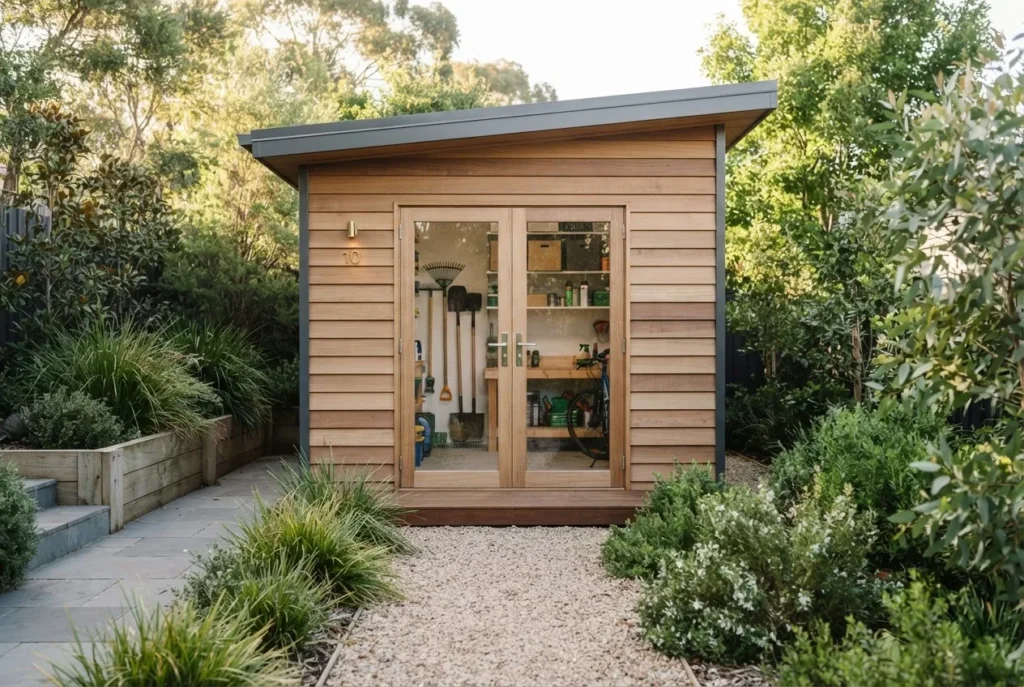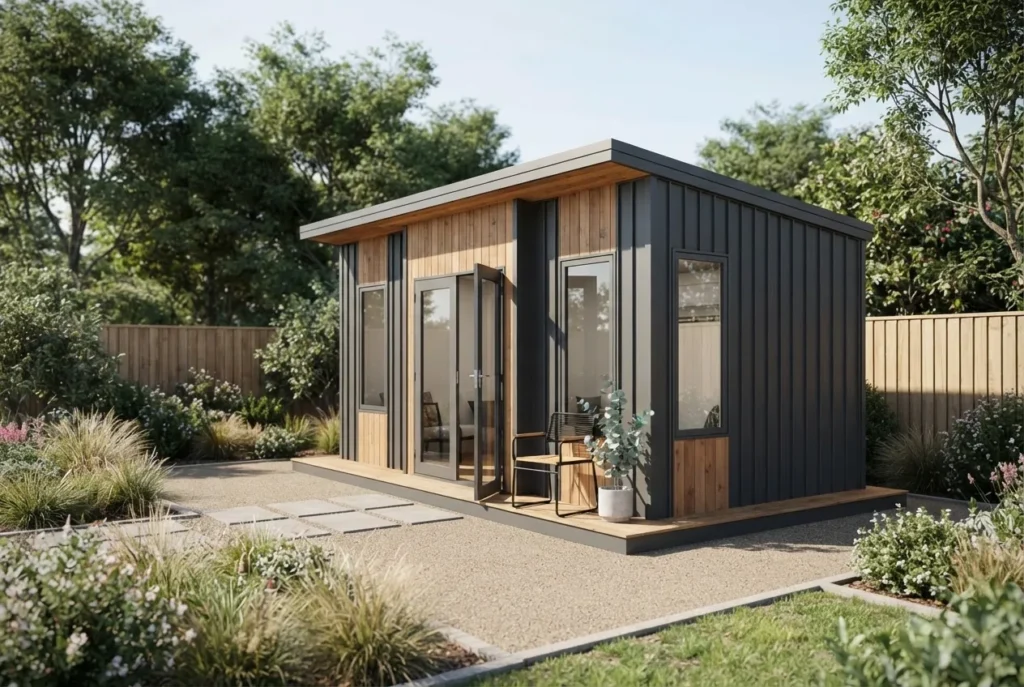

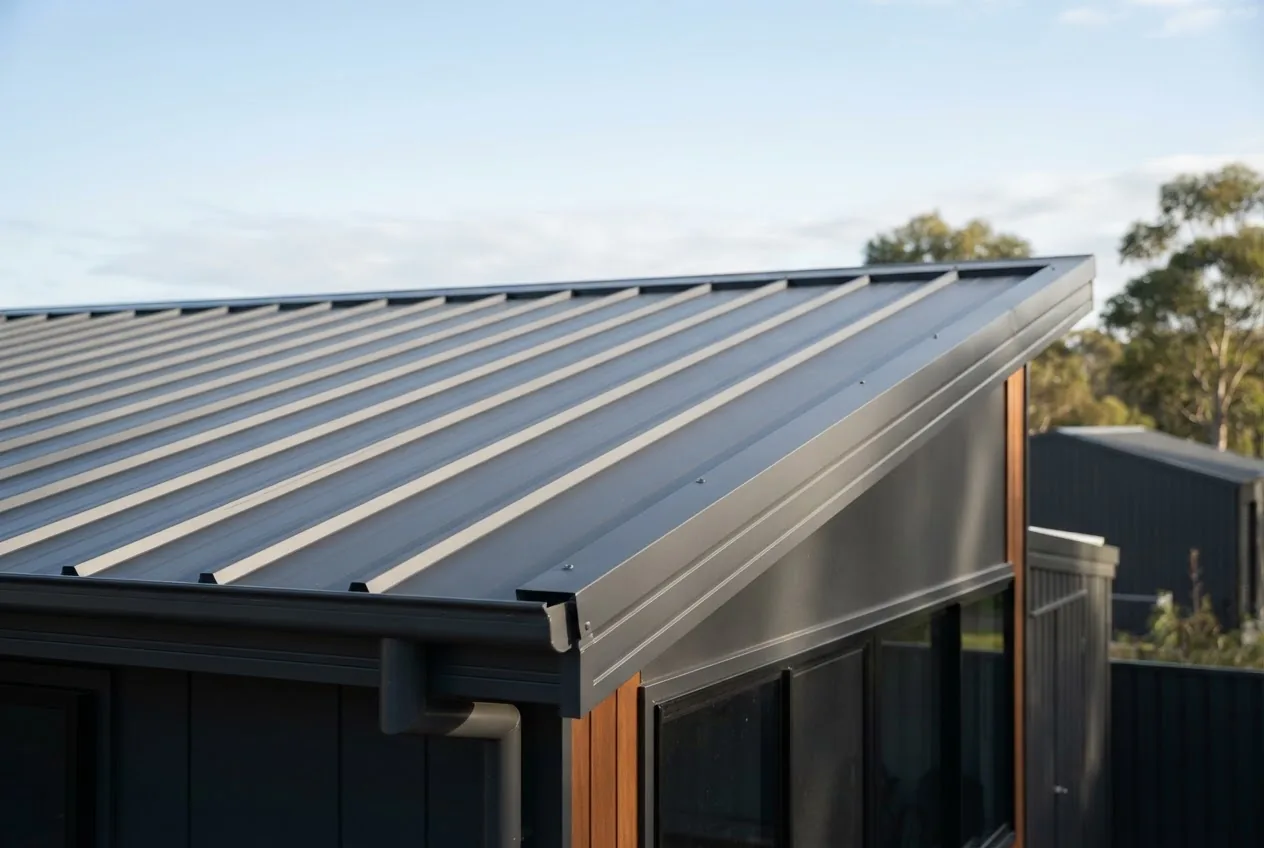

Tray roofing is a metal roofing system using flat-bottomed, shallow channels (trays) that interlock to form weatherproof spans; it suits sheds and commercial buildings where a clean, low-profile finish and good water control are needed. This guide explains tray profiles, compatible materials and Melbourne-specific recommendations.
What is Tray Roofing?
Answer: Tray roofing is a type of metal roofing composed of sheet profiles with flat pans (trays) and raised ribs that interlock across bays to shed water and give a clean, modern appearance—commonly used on sheds, garages and commercial steel buildings.
Term: Tray roofing — a metal roofing system where sheets form flat pan sections (trays) between raised ribs to manage drainage and provide a sealed surface.
Tray roofing uses metal roofing sheets shaped with shallow, flat pans separated by ribs. These panels are typically roll-formed from steel and can be supplied in various widths and thicknesses. Tray roof sheets can be fixed through ribs or into the pan depending on the profile and manufacturer recommendations.
Tray roofing systems are chosen for:
- Low visual profile and tight drainage control.
- Compatibility with coated steels such as Colorbond steel roofing and plain-coated substrate options like Zincalume roofing.
- Applications on sheds, agricultural buildings and low-pitched commercial roofs.
Tray roofing differs from corrugated or ribbed profiles by offering wider flat areas (trays) and shorter rib heights; that reduces sound in rain events and helps give a contemporary aesthetic while still providing effective water discharge when installed with correct slope and flashing.
Key components of a tray roof system include sheets, fasteners (self-drilling screws or concealed clips), ridge and eave flashings, underlay where required, and sealants at penetrations.
Transition: Next, compare the common roof profile types you’ll encounter when choosing tray roofing and where each performs best.
Common Roof Profile Types for Tray Roofing
Answer: Common profiles used with tray roofing include tray profiles (shallow pans), corrugated, ribbed (trapezoidal ribs) and long-span sheets; each offers different drainage, span limits and visual outcomes—choose by building use, span and wind/cyclone rating.
Term: Roof profile — the cross-sectional shape of a metal roofing sheet that determines drainage, strength and fixings.
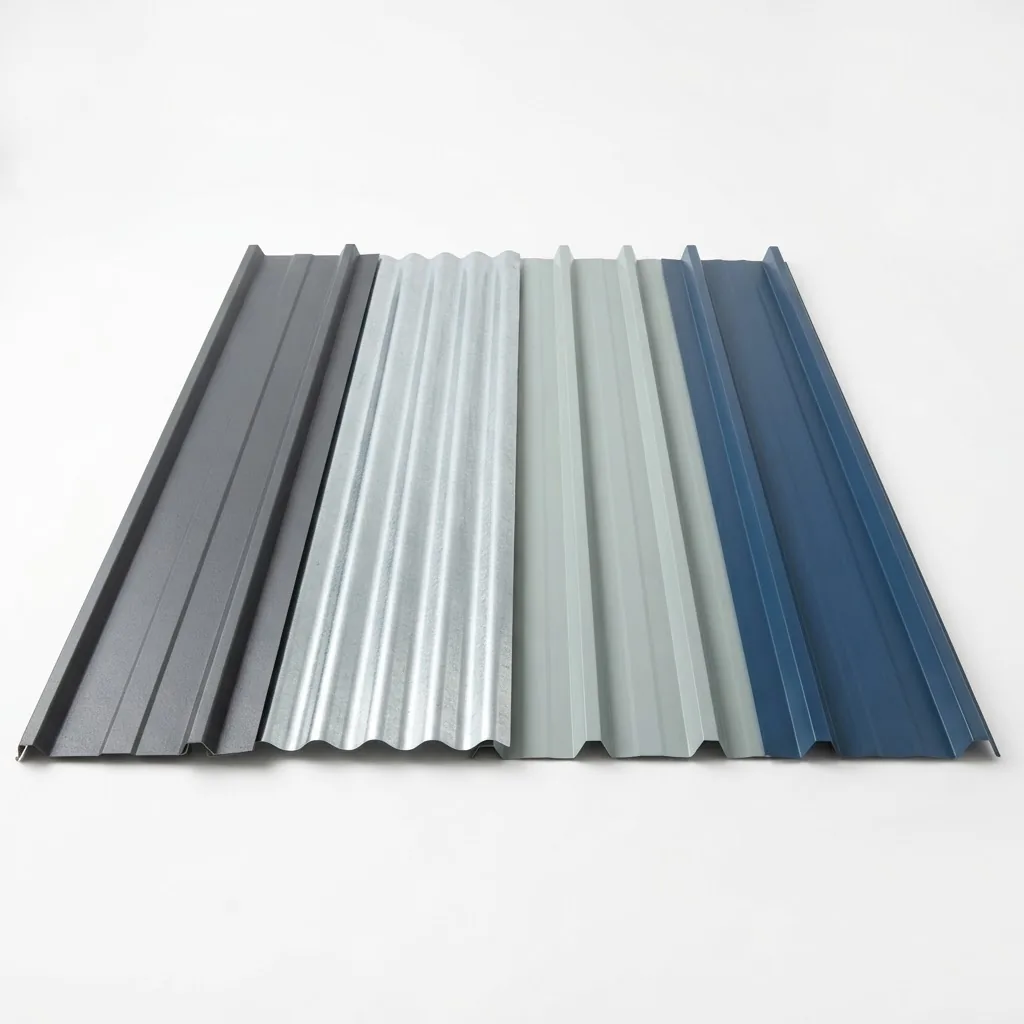
Below are profile descriptions, typical sheet widths/thicknesses and where each excels. Technical data such as span limits and load capacities vary by gauge and manufacturer; typical values below reference industry practice. According to a 2024 industry report, span limits for common trapezoidal and tray profiles range from 900mm to 1200mm for single-span roofs using 0.42–0.75mm steel depending on support spacing.
-
Tray Profile
Answer: Tray profiles have wide, flat pans with short ribs—optimised for a clean look and controlled water flow; best for low to moderate pitches and sheds where concealed-fix options reduce leakage risk.
Characteristics:
- Typical pan width: 200–400mm; sheet widths commonly 760–1200mm (after laps).
- Common steel thickness: 0.42mm to 0.75mm; thicker gauges used for longer spans and higher loads.
- Fixing: concealed clips or face-fix fasteners at ribs; depends on manufacturer system.
Pros: low visual profile, reduced rain noise, good for gutters and flashings. Cons: pans require careful sealant attention at overlaps; longer unsupported spans need heavier gauge.
-
Corrugated Profile
Answer: Corrugated roofing has round crests and troughs providing excellent strength-to-weight ratio and flexibility for curved roofs; it’s a traditional option for sheds and rural buildings.
Characteristics:
- Sheet widths: commonly 600–760mm effective cover per sheet.
- Thickness: 0.42–0.48mm typical for domestic use; heavier gauges for commercial.
- Fixing: face-fixed through crests with washers; not typically concealed-fixture compatible.
Pros: economical, forgiving on uneven substrates. Cons: more undulating profile than tray gives higher rainfall noise and a more traditional look.
-
Ribbed / Trapezoidal Profile
Answer: Ribbed or trapezoidal profiles have deeper ribs providing higher stiffness and longer span capability; they suit commercial buildings and longer bays where load capacity matters.
Typical features:
- Wide sheet covers (760–1100mm) and higher ribs for strength.
- Often suitable for concealed-fix systems on commercial roofs.
- Span capacity increases significantly with rib depth and gauge—see manufacturer tables.
Use ribbed sheets when you need larger spans or reduced purlin frequency; they often align visually with industrial buildings.
-
Long Span Sheets
Answer: Long span metal roofing sheets are roll-formed to cover wide bays with minimal joins, reducing leakage risk and speeding installation; they’re ideal for commercial steel buildings and sheds with few intermediate supports.
Characteristics and uses:
- Typical supplied lengths up to 12–15m or more depending on transport and site access.
- Require careful handling and stricter installation tolerances for thermal movement.
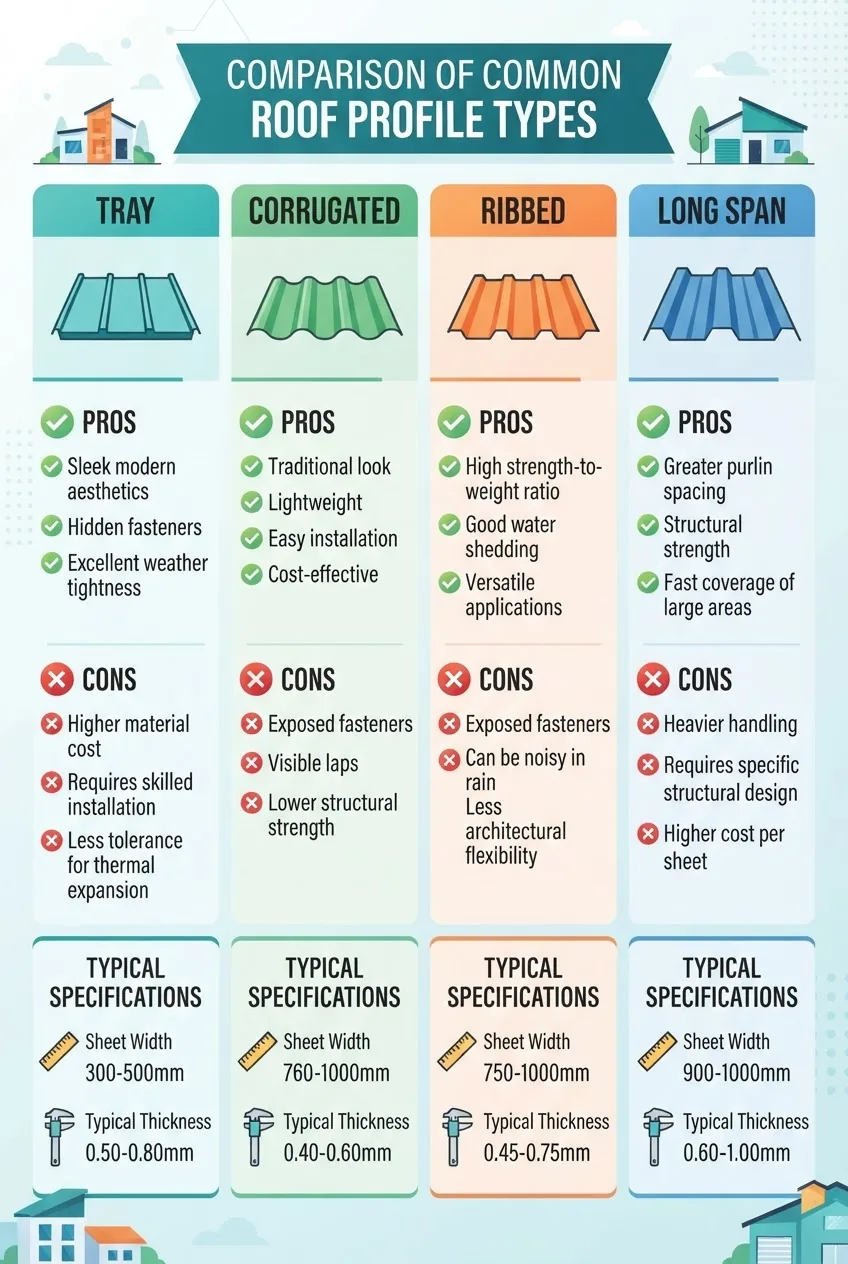
Comparison table: quick features and typical specification ranges. Values are representative; consult product technical data sheets for exact spans and load capacities.
| Profile | Typical Pan/Rib | Common Gauges | Best for |
|---|---|---|---|
| Tray | Wide flat pan, short rib | 0.42–0.75mm | Sheds, low-profile commercial |
| Corrugated | Round crest & trough | 0.42–0.48mm | Rural sheds, acid-resistant roofs |
| Ribbed / Trapezoidal | Deep trapezoid ribs | 0.55–0.75mm+ | Commercial, longer spans |
| Long Span | Shallow or ribbed long sheets | 0.55–0.95mm | Large sheds, warehouses |
Transition: After selecting a profile, material choice determines durability, corrosion resistance and thermal performance—covered next.
Material Options for Tray Roofing
Answer: Tray roofing commonly uses painted, pre-finished steels such as Colorbond steel roofing or metallic-coated substrates like Zincalume roofing; options include coated steels, aluminium and high-performance steels (e.g., Colorbond Ultra), each with trade-offs in corrosion resistance, thermal performance and lifespan.
Term: Colorbond steel roofing — a pre-painted, zinc/aluminium/alloy-coated steel with a paint system designed for outdoor durability in Australia.
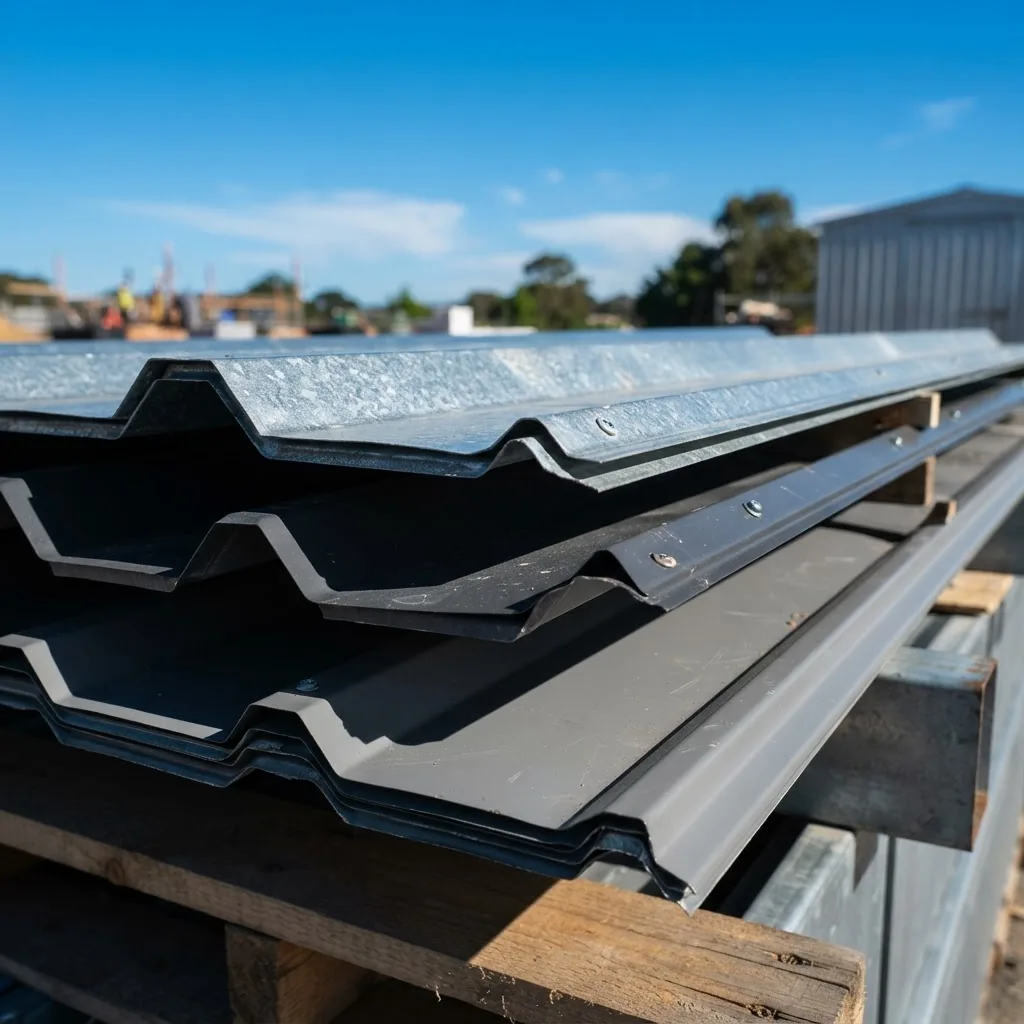
Material comparison factors: corrosion resistance, expected service life, thermal reflectivity, paint system performance and cost. According to a 2023 Australian Building Standards summary, product selection must comply with local BCA requirements and manufacturer warranties.
Colorbond Steel Roofing
Answer: Colorbond is a pre-painted steel product with a zinc-aluminium alloy coating and a multi-layer paint system offering strong corrosion protection, a range of colours and excellent UV resistance—well-suited for Melbourne’s temperate climate.
Benefits:
- Proprietary paint systems improve UV and chalking resistance—suitable for Melbourne’s variable sun exposure.
- Available in multiple gauges and profiles, including tray-compatible roll-formed sheets.
- Often backed by manufacturer warranties; see product technical data for specifics.
Limitations:
- Paint damage at cut edges or during installation can reduce corrosion resistance without proper edge treatment or capping.
- Higher initial cost versus unpainted Zincalume in some gauges; see Colorbond roof pricing for budgeting.
Colorbond Bushland colour options
Colorbond Ultra steel features
Colorbond fence panel materials
Colorbond gates and installation costs
For colour choices and finishes that complement trays, consult the Colorbond Bushland colour options and product colour guides (see related links in Choosing Tray Roofing section).
Zincalume and Zinc-Aluminium Coated Steels
Answer: Zincalume roofing refers to steel coated with a zinc-aluminium alloy (typically 55% aluminium, 43.5% zinc, 1.5% silicon) providing sacrificial and barrier corrosion protection; it’s often used unpainted for a metallic finish and is cost-effective for sheds.
Benefits:
- Excellent corrosion resistance in coastal and rural environments when maintained; very durable as a substrate.
- Lower upfront cost than painted alternatives in many gauges.
Limitations:
- Higher risk of visible surface staining over time compared to painted systems; lacks the aesthetic finish of Colorbond unless painted.
- Edge corrosion can occur if cut edges are not adequately protected or if dissimilar metals create electrolytic corrosion.
Zincalume shed roofing materials
Zincalume versus Colorbond roofing
Other Materials: Aluminium and Specialty Coatings
Answer: Aluminium is used where weight savings and corrosion resistance matter; specialised coatings like high-build fluoropolymer paints or Colorbond Ultra upgrades improve longevity but add cost.
Aluminium is useful in corrosive coastal zones and for lightweight structures, but its thermal expansion differs from steel and requires compatible flashings and fasteners. For high-durability needs, consider premium product lines—see Colorbond Ultra steel features.
Colorbond sheeting and cladding
Standards and testing: manufacturers reference product compliance to Standards Australia; installers should check product Technical Data Sheets and warranties. For regulatory requirements refer to the Australian Building Codes Board guidance.
External authority:
Australian Building Codes Board (ABCB) standards for roofing materials and construction.
For research on coating durability and climate impacts, consult:
CSIRO studies on roofing material durability and climate impact.
For product compliance and test methods:
Standards Australia for metal roofing product compliance and safety.
Transition: Understanding advantages clarifies why tray roofing might be preferable for many shed and commercial applications.
Advantages of Tray Roofing vs Other Roofing Profiles
Answer: Tray roofing offers a modern finish, improved water control, concealed-fix options and reduced rain noise; it balances durability and aesthetics vs corrugated or deep-ribbed alternatives, especially on low-pitched shed roofs.
- Durability: Tray profiles with the correct material (Colorbond or Zincalume) provide multi-decade life—according to a 2024 industry report, properly maintained painted steel roofs commonly reach 25–40 years depending on environment and coating.
- Weather resistance: Shallow pans with raised ribs reduce direct water entry at fixings when combined with concealed clips and correct flashings; this improves weatherproofing over face-fixed corrugated sheets on low slopes.
- Installation ease: Concealed-fix tray systems can speed installation and produce cleaner finishes, though they may require more precise purlin spacing and clip systems compared with simpler corrugated fixes.
- Thermal performance: Painted Colorbond offers better solar reflectivity options and emissivity control; combining with insulation or reflective sarking improves thermal comfort—particularly relevant for Melbourne’s warm summers and cool winters.
- Cost efficiency: While initial material cost may be higher than basic corrugated Zincalume, reduced leakage risk and longer paint warranties can lower lifecycle costs; see product pricing references such as Colorbond roof pricing.
- Maintenance and repair: Flat pans are easier to inspect and patch-seal; however, they require attention to lap seals and edge protection.
Caveat: manufacturer product lines differ—warranties, coating thickness and alloy chemistry vary. Always consult technical data and the Australian Building Code provisions when designing roofs for particular wind zones or cyclonic regions.
External authority citation for standards and longevity guidance:
Australian Building Codes Board (ABCB).
Transition: Next is a clear, hands-on installation walkthrough covering required steps, fixings and weatherproofing techniques for tray roofs.
Installation Considerations for Tray Roofing
Answer: Install tray roofing by verifying structure and purlin spacing, choosing the correct sheet profile and gauge, using appropriate fasteners or concealed clips, installing flashings and cappings, and sealing laps—follow manufacturer spans and ABCB/BCA requirements for wind and condensation control.
Term: Flashing — sheet metal pieces used at roof junctions to prevent water ingress at hips, valleys, ridges, eaves and penetrations.
- Design verification: Confirm purlin spacing, truss spans and wind classification with structural drawings; for large commercial buildings consult an engineer. According to a 2024 industry practice note, verify span charts in product technical manuals before specifying gauge and clip spacing.
- Sheet selection and orientation: Order tray sheets to the longest feasible length to minimise end laps; establish fall direction and ensure minimum roof pitch meets profile requirements.
- Fixing systems: Use concealed clips where specified to reduce leak risk; otherwise, use factory-supplied self-drilling screws with neoprene washers into high points unless system calls for pan-fixings. Fastener corrosion class must match substrate and environment.
- Flashing and capping: Fit eave, ridge and side flashings manufactured from the same material/finish; consider pre-painted capping for edges to avoid visible corrosion. roof capping materials and costs
- Paint and flashing techniques: Use compatible sealants and ensure paint touch-ups on cut edges where required; follow recommended surface prep for long-term adhesion. roof paint and flashing techniques
- Gutters and fascias: Correct gutter sizing and outlet placement are critical; match fascia finishes for longevity and to manage deflection at the eave. fascia and gutter installation tips
- Sealing and workmanship tips: Seal laps and penetrations with roof-grade butyl or polyurethane sealants; avoid over-application which traps moisture. Use dedicated lifting gear for long-span sheets to prevent panel distortion.
- Compliance: Confirm the installation meets the National Construction Code/BCA and referenced Australian Standards; installers should retain manufacturer warranties and compliance documentation for handover.
For detailed capping choices and costs consult the Colorbond Capping Guide, and for paint and flashing techniques see the roof paint and flashing techniques.
External authority for installation standards:
Australian Building Codes Board (ABCB) standards.
Transition: Proper maintenance extends tray roof life—here’s how to care for them and common longevity expectations.
Maintenance and Longevity of Tray Roofing
Answer: Regular inspection, cleaning gutters, resealing laps, touch-up painting at cut edges and prompt repair of damaged flashings greatly extend tray roofing longevity; expect 25–40 years on Colorbond and 20–35 years on Zincalume depending on environment and maintenance.
Best-practice maintenance checklist:
- Inspect twice yearly (spring and autumn) and after major storms for loose fixings, displaced flashings or debris in trays.
- Clear gutters and downpipes to prevent ponding at eaves which can accelerate corrosion.
- Touch up scratched paint and cut edges with recommended primer/coating; use manufacturer-specified touch-up kits.
- Replace failed sealants and torn underlays; check for condensation control in uninsulated sheds.
- Use non-abrasive cleaning; avoid high-pressure washing that can damage paint films.
Case example: a Melbourne hobby-shed with Colorbond tray roof installed in 2010 required minor edge touch-ups and sealant renewal in 2020 and maintained original panels—in line with manufacturer recommendations and local climate stress. According to a 2023 manufacturer field maintenance survey, scheduled maintenance every 5–10 years significantly reduces corrosion-related failures.
Common problems and repairs:
- Leaking laps: reseal with compatible roof-grade sealant and check fastener torque.
- Corroded fasteners: replace with stainless or corrosion-class-matched fasteners and treat surrounding paint.
- Panel distortion: caused by improper handling or thermal movement—replace or refasten as needed.
Disclaimer: Lifespan and maintenance needs vary by product line and site exposure; consult manufacturer warranties and product data sheets for exact lifespan expectations.
Transition: Finally, here is a decision guide tailored for Melbourne sheds and steel buildings to choose the right tray roofing profile and material.
Choosing Tray Roofing for Your Shed or Steel Building in Melbourne
Answer: Choose tray roofing based on building span, exposure, desired finish and budget—Colorbond tray profiles suit most Melbourne sheds for aesthetics and UV resistance, Zincalume suits budget or simple metallic finishes; match profile to span and consider long-span or ribbed sheets for larger commercial bays.
Decision checklist:
- Define building use: residential shed, workshop or large commercial warehouse—this affects required spans, thermal insulation and fire ratings.
- Assess exposure: coastal suburbs require higher corrosion resistance; inner Melbourne needs UV durability and thermal performance.
- Choose profile to match purlin spacing and desired look: tray for low-profile aesthetics, ribbed for spans and load.
- Select material based on budget, warranty and finish: Colorbond for painted finish and UV resistance, Zincalume for metallic finish and lower cost.
- Confirm supplier’s span tables and warranty terms; ensure compliance with local council building requirements and BCA clauses.
Pros and cons table for Melbourne sheds and small commercial buildings:
| Option | Pros | Cons |
|---|---|---|
| Colorbond Tray | Aesthetic, UV resistant, range of colours, good warranties | Higher initial cost, requires careful edge protection |
| Zincalume Tray | Cost-effective, durable substrate, metallic finish | Less aesthetic variety, may show patina/staining |
| Long Span / Ribbed Steel | Fewer joints, faster install on large bays, higher span capability | Requires precise installation, heavier panels |
Practical Melbourne recommendations:
- If you want a low-maintenance, finished appearance for a suburban shed, choose Colorbond tray with adequate ventilation and insulation.
- For agricultural or rough workshop use where budget trumps finish, Zincalume tray performs well and is easy to maintain.
- For commercial buildings with wide bays, use long-span ribbed trays with structural checks and engineered purlin spacing.
Local design notes: Melbourne’s climate has UV exposure and seasonal moisture; select paint systems with strong UV warranties and ensure flashings are sealed against seasonal heavy rain. According to a 2023 CSIRO materials study, corrosion rates increase where debris and moisture accumulate—design gutters and eaves to avoid trapping water.
Case study (Melbourne): A 10m x 12m backyard workshop fitted with Colorbond tray roofing in 2018 used 0.55mm gauge sheets, concealed clip fixings and pre-painted cappings. After scheduled maintenance (cleaning and touch-ups) in 2023 the roof showed minimal wear and retained the manufacturer’s protective coating integrity—demonstrating suitability for suburban Melbourne when installed per guidelines.
Design resources and further reading for colour and finish selection:
commercial steel building costs
Ironstone Colorbond roof colour
Final recommendation: For most Melbourne shed owners seeking balance between durability, appearance and lifecycle costs, a Colorbond tray system in 0.42–0.55mm gauge with proper flashings and scheduled maintenance is optimal; choose Zincalume where budget or metallic finish is primary.
Conclusion — key takeaways and next step
Tray roofing offers a low-profile, weather-tight solution for sheds and commercial steel buildings when matched correctly to the profile, material and local climate. Choose Colorbond for painted durability and Zincalume for economical metallic performance; confirm span tables, fixings and flashings with suppliers and follow ABCB and Standards Australia guidance before installation.
Ready to choose a tray roof for your Melbourne shed? Review manufacturer span tables, check local building requirements and consult a licensed installer to get a quote and specification tailored to your project.