
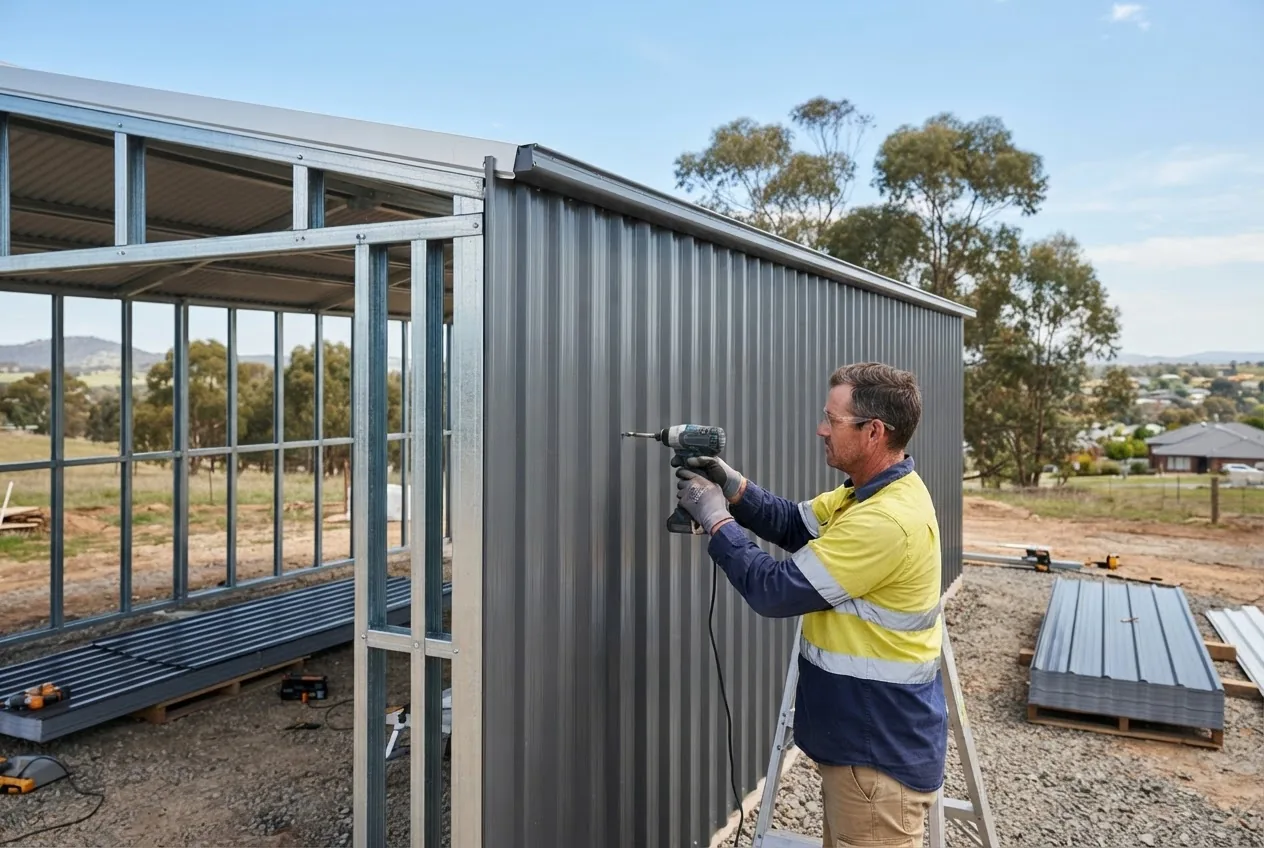

Short answer: Colorbond is a coated steel product, not aluminium — it uses a steel substrate with a zinc‑aluminium protective layer and a factory-applied paint finish to deliver corrosion resistance, long-term durability and a wide range of roofing and shed applications across Australia.
Transition: The sections below explain what Colorbond is made of, why it’s steel, how it compares to aluminium sheets, where each metal suits sheds and roofs, and which to pick for Melbourne conditions.
What Is Colorbond Made Of?
Answer: Colorbond is manufactured from a steel substrate that is coated in a zinc‑aluminium alloy (Zincalume®) and finished with a multi‑layer proprietary paint system developed by Bluescope Steel to give colour, UV resistance and additional corrosion protection.
Term: Steel substrate — the base sheet of rolled steel that provides structural strength.
Term: Zinc‑aluminium coating — a sacrificial metal layer (typically ~55% aluminium, 43.5% zinc, 1.5% silicon in Zincalume®) bonded to the steel to slow corrosion.
Term: Galvanization — a process of coating steel with zinc to protect it from rust; Colorbond uses a zinc‑aluminium instead of pure zinc in most product lines.
Colorbond is a Bluescope Steel product family built on a continuous manufacturing process: cold‑rolled steel coils are pretreated, coated with a zinc‑aluminium alloy (the Zincalume® base layer), and then coated with a primer and a topcoat using a controlled, oven‑cured paint line. According to Bluescope Steel technical literature, the coating and paint layers are engineered to work together to resist chipping, fading and corrosion over long service lives.
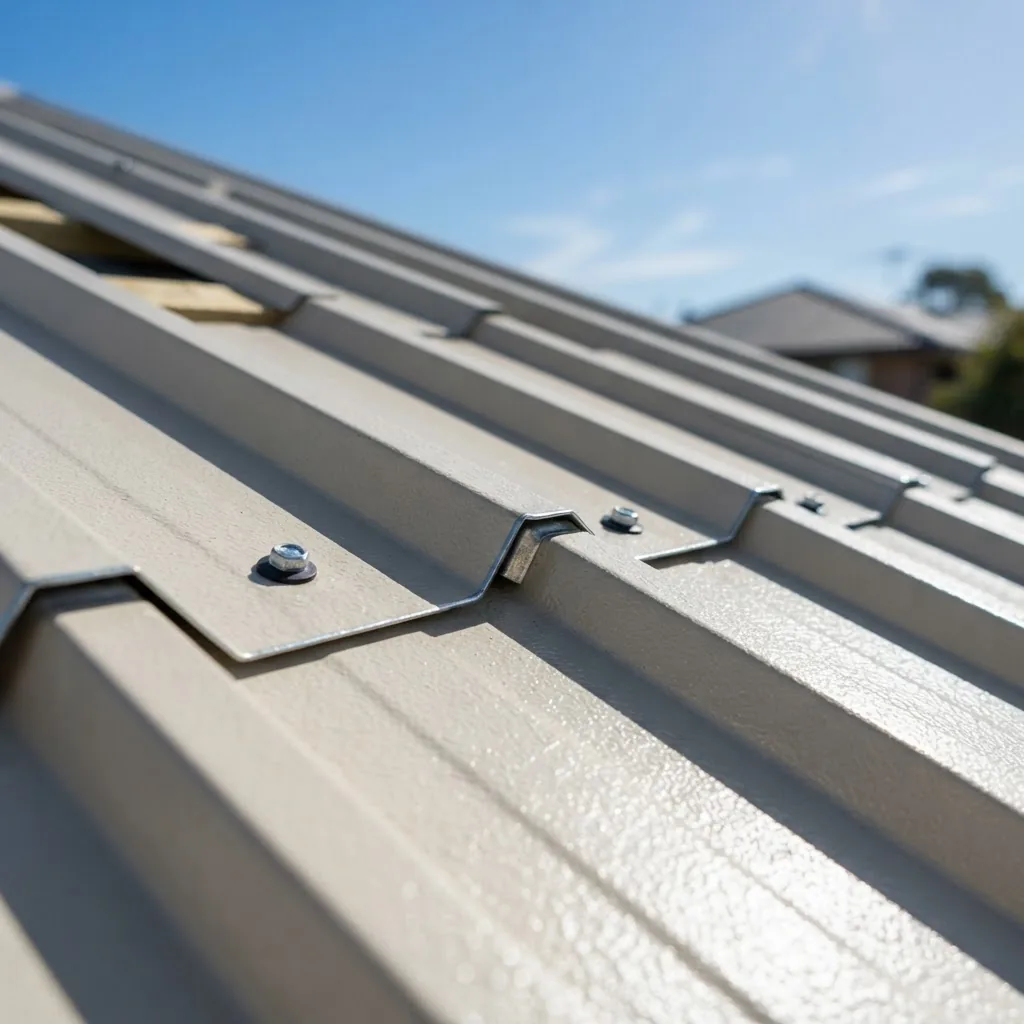
Manufacturing walkthrough (experienced/documented): a typical Colorbond production line includes coil cleaning, chemical pretreatment to promote adhesion, continuous metallic coating (molten bath or continuous galvanic process depending on product), controlled cooling, and a multi-stage coil paint application with bake ovens. According to a 2022 industry technical brief, precise coil pretreatment and adhesion control are critical to deliver the warranty performance claimed by manufacturers.
Common Colorbond variants include standard Colorbond and higher‑performance variants such as Colorbond Ultra. Colorbond Ultra steel features are offered where enhanced corrosion resistance and thicker metallic coatings are required for severe environments.
Material layers, from core to surface, typically are:
- Cold‑rolled steel core (substrate)
- Zinc‑aluminium metallic coating (Zincalume®) providing sacrificial and barrier protection
- Primer coat to promote adhesion
- Topcoat paint system (prepainted) providing colour, UV resistance and weathering protection
Durability claims: According to a 2023 Australian building standards report, factory-applied coatings on metallic-coated steel reduce the rate of substrate corrosion by up to 70% compared with uncoated steel in similar exposure conditions; actual life expectancy depends on coating thickness, local environment and maintenance.
Practical note: formulations and coating thicknesses have varied over time and across product lines, so always confirm the specific product datasheet for your project and consult manufacturer literature. Bluescope Steel technical literature provides up-to-date product specifications.
Transition: Knowing Colorbond’s construction clarifies why many believe it’s steel — next we directly address the aluminium vs steel confusion and debunk common myths.
Is Colorbond Aluminium or Steel? Clarifying the Material
Answer: Colorbond is steel, not aluminium; the term “Colorbond” refers to a painted, metallic‑coated steel sheet system—confusion arises because some alternatives (plain aluminium sheets or uncoated Zincalume®) are visually metallic and used for similar applications.
Term: Aluminium roofing sheets — lightweight metal sheets made from aluminium alloy, cold‑rolled or mill‑finish, often used where low weight or superior non‑ferrous corrosion resistance is required.
Myth-busting points:
- Visual similarity: new steel with a zinc‑aluminium finish or bright aluminium both look metallic, but Composition differs — Colorbond steel has a steel core that will rust if the coating is breached; aluminium does not rust (it oxidises differently).
- Nomenclature: “Colorbond” is a brand name specific to Bluescope Steel’s coated steel products — it is not an aluminium product.
- Performance trade-offs are material-driven: steel provides higher stiffness and strength per unit thickness, while aluminium provides lower weight and different corrosion behaviour.
Technical clarity: steel is an iron‑carbon alloy with ferrous substrate properties; aluminium is a non‑ferrous metal with higher thermal conductivity and a natural oxide that protects the surface. Colorbond’s protective systems are designed to mitigate the ferrous nature of steel through metallic sacrificial coatings and paint.
Installation and fasteners: fastener choice and sealing methods differ between steel and aluminium. Using the wrong fastener—such as an unisolated stainless fastener on aluminium—can create galvanic issues; likewise, breached coatings on steel around fasteners are the most common corrosion initiation points, so correct sealing and underlay practices are essential.
Regulatory reference: for construction compliance and safety standards relating to roofing materials, consult the Australian Building Codes Board — ABCB roofing rules and guidelines.
Transition: Below is a direct side‑by‑side comparison table summarising weight, corrosion, thermal and cost differences between Colorbond steel and aluminium sheets, followed by deeper analysis.
Comparison: Colorbond Steel vs Aluminium Sheets
Answer: Colorbond steel and aluminium each have strengths: Colorbond steel offers greater structural stiffness, established paint systems and cost advantages for most Australian sheds and roofs, while aluminium excels in low weight and non‑ferrous corrosion behaviour—the best choice depends on site exposure, span, and budget.
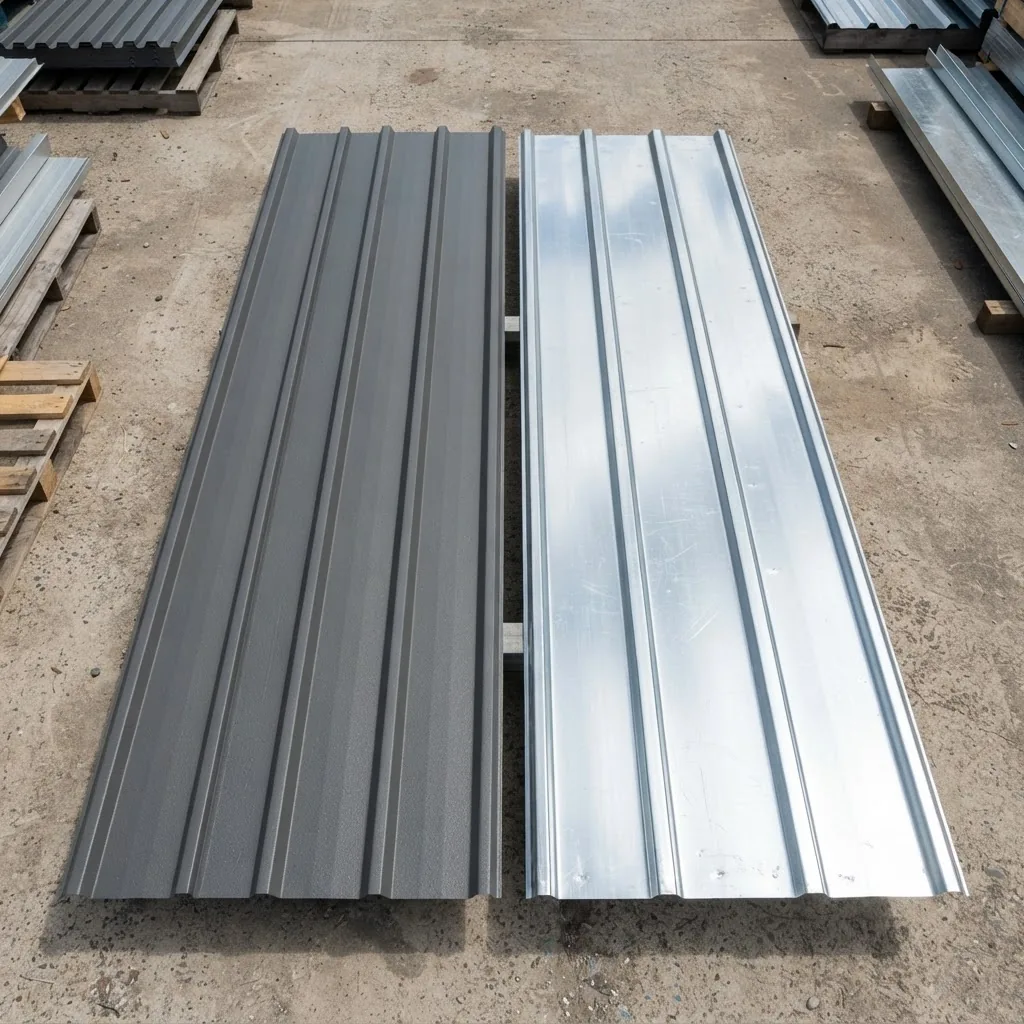
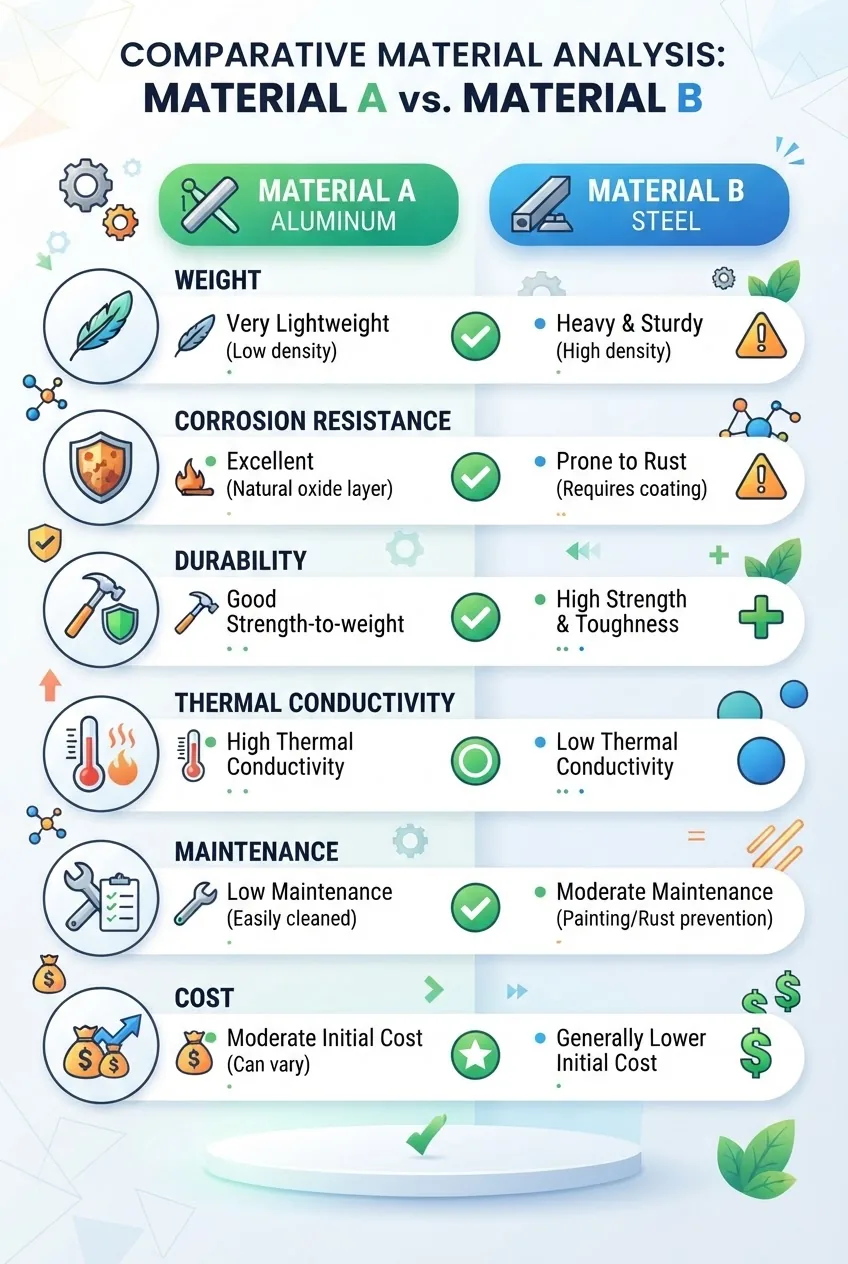
| Factor | Colorbond (Coated Steel) | Aluminium Sheets |
|---|---|---|
| Material weight | Heavier per m2; higher stiffness allows thinner profiles for strength. | ~30–50% lighter than steel by thickness; easier for manual handling. |
| Corrosion resistance | Protected by zinc‑aluminium coating and paint; vulnerable if coating is breached. | Non‑ferrous; forms a protective oxide layer — generally better in highly corrosive (coastal) atmospheres. |
| Durability | High life expectancy with correct coating; widely used in Australian roofing. | Good durability; can dent more easily; long life if alloy grade and thickness are appropriate. |
| Thermal conductivity | Lower thermal conductivity than aluminium; paints reduce heat transfer modestly. | Higher thermal conductivity — transfers heat faster; requires careful design for thermal expansion. |
| Maintenance | Periodic inspection of fasteners/sealants; touch‑up paint for scratches advised. | Less risk of rust but anodic coatings or paints may be required; check for galvanic interactions. |
| Cost | Typically lower material cost per m2 for comparable life; strong local supply chain. | Often more expensive per m2 for similar durability; premium alloys increase cost. |
Explanatory notes:
- Weight differences: aluminium’s lower density (≈2.7 g/cm3) versus steel (≈7.85 g/cm3) means significantly lighter sheets; practical effect is easier handling but different structural support requirements.
- Corrosion resistance: aluminium forms a stable oxide; coated steel relies on sacrificial metallic coatings and paint. According to a 2023 corrosion study report, zinc‑aluminium coatings on steel outperformed pure zinc in many environments, but true coastal exposure still favours non‑ferrous systems.
- Thermal performance: aluminium’s higher thermal conductivity increases heat transfer, which can make sheds hotter unless insulation or radiant barriers are used.
- Maintenance: both require maintenance; steel needs attention where coatings are damaged; aluminium needs attention to prevent galvanic corrosion when in contact with incompatible metals.
Cost context and local links: material prices vary by region and supply. For regional cost comparisons and local purchasing options, see guides on cheap roofing sheets. cheap roofing sheets in Perth and detailed pricing breakdowns such as Colorbond roof pricing help estimate budgets. Also see broader material comparisons: Zincalume vs Colorbond comparisons.
Installation variables: design loads and span determine whether the stiffness of steel is preferable; aluminium may require thicker sections to match steel’s stiffness, offsetting weight and cost benefits. Fastener selection, underlay, flashings and capping choice all affect long-term performance and maintenance costs.
Transition: Having established clear technical differences, next we cover where Colorbond steel is typically used for sheds and roofs and practical application examples.
Typical Uses of Colorbond Steel in Sheds and Roofing
Answer: Colorbond steel is commonly used for shed walls, roofing sheets, long‑span roofing, cladding and garage doors due to its structural strength, paint finish options and proven weather performance across Australian conditions.
Primary uses include:
- Shed roofs in corrugated, trimdeck or tray roofing profiles
- Shed walls and cladding panels for domestic and rural sheds
- Commercial long‑span roofing where painted finish is required
- Gutters, flashings and capping matched to roofing colour
- Garage doors, roller doors and other architectural cladding
Practical examples and considerations:
- Corrugated profiles: traditional corrugated iron roofing profiles provide good strength and water runoff; for precise sizing refer to detailed guides on corrugated roofing profiles. corrugated iron roofing sizes
- Tray and long‑span profiles: tray roofing offers a flatter aesthetic and is covered in depth in the tray roofing guide for profile selection. tray roofing guide
- Colour and finish options: pick a prepainted finish and colour that suits sun exposure and solar reflectivity needs — refer to the pillar page on shed colours for guidance. Colorbond shed colours guide
- Paint and flashing: correct flashing details and paint-compatible capping are essential for watertightness and longevity. roof paint and flashing
- Premium finishes: for upgraded colour palettes and higher performance, see Colorbond Ultra colour options and paint guides. Colorbond Ultra colour options
- Commercial uses: larger buildings and commercial sheds commonly use Colorbond and related steel materials; see commercial steel building materials for design scale considerations. commercial steel building materials
- Paint and material aesthetics: for Bushland‑style finishes or naturally inspired palettes, consult the Bushland guide for paint and material choices. Bushland colour and paint options
- Finishing components: choose appropriate capping and termination pieces to match the roof — see capping options for materials and costs. roof capping materials
- Specific colour choices like Blue Ridge or Ultra lines: check the Blue Ridge paint guide for selected finishes. Blue Ridge paint options
- Corrugated sizing and roof panel costs: for panel dimensioning and cost splits across shed sizes consult corrugated and long‑span guides. corrugated roof sheets guide and long span metal roofing guide
Case study (Melbourne shed): On a suburban Melbourne project completed in 2021, a 60m2 backyard shed used 0.42mm Colorbond long‑span roofing with matching clipped eave flashings and a Colorbond wall cladding system. The owner chose Colorbond for cost, colour match to the house, and stiffness that allowed 900mm purlin spacing; maintenance after three years required only gutter cleaning and fastener checks (documented in a homeowner maintenance log).
Transition: If Colorbond steel suits many shed applications, there are still scenarios where aluminium might be preferred — the following section explains those cases.
When Aluminium Might Be Preferred Over Colorbond Steel
Answer: Choose aluminium when low weight, non‑ferrous corrosion resistance (especially in direct salt‑spray coastal exposure), or specific thermal/architectural needs outweigh steel’s cost and stiffness advantages.
Real‑use cases where aluminium is preferred:
- Lightweight roofs where crane access is limited and manual handling is required (e.g., small rural sheds or retrofits)
- Extreme coastal structures where direct salt spray claims a premium non‑ferrous solution
- Architectural applications demanding mill‑finish aluminium or anodised surfaces
- Installations where dissimilar metal contact can be isolated easily to prevent galvanic corrosion
Technical trade-offs:
- Aluminium has ~3x the thermal expansion of steel — allowances in fixings and flashings are needed to avoid oil‑canning or buckling.
- Aluminium contracts are often more expensive per m2 when matching longevity and purlin spacing of Colorbond steel.
- While aluminium resists rust, it can be susceptible to pitting in chloride‑rich environments if not alloyed or coated properly.
Practical project links: if you’re considering aluminium as an alternative for fencing or gates, see options for Colorbond fencing materials and Colorbond fence gates to compare construction techniques and costs when mixing materials. Colorbond fencing materials Colorbond fence gates
When considering zinc‑aluminium alternatives or aluminium-based zinc coatings, consult the zinc aluminium roofing sheets guide for comparable non‑ferrous or hybrid choices. zinc aluminum roofing sheets
Transition: The final decision is often localised — the next section applies these material considerations to Melbourne’s climate specifics.
Material Performance in Melbourne’s Climate – What to Choose?
Answer: For most Melbourne locations, Colorbond steel balances cost, durability and aesthetics; choose aluminium selectively for direct coastal salt spray exposure or where lightweight handling is essential, and always factor thermal expansion and insulation into the design.
Melbourne climate characteristics affecting materials:
- Variable seasons with UV exposure, periodic heavy rain and occasional coastal salt influence in bayside suburbs
- Temperature swings that influence thermal expansion and contraction cycles
- Urban pollution and bird/leaf debris that affect maintenance intervals
Corrosion considerations:
- Inland Melbourne suburbs generally face lower chloride exposure and are well suited to Colorbond coated steel; Zincalume base layers plus topcoat provide robust protection.
- Bayside coastal suburbs with frequent salt spray warrant either thicker coatings (Colorbond Ultra lines) or non‑ferrous solutions such as aluminium in direct spray zones. According to a 2023 coastal corrosion assessment report, non‑ferrous materials or heavy metallic coatings are recommended within the first 200–300 metres of shoreline in high spray zones.
- Regular inspection of penetrations, gutters and cappings significantly extends service life regardless of base metal.
Thermal performance and occupant comfort:
- Aluminium’s higher thermal conductivity can increase interior heat transfer under summer sun; use insulation or reflective underlays to reduce heat gain.
- Colorbond’s painted topcoat reduces radiant heat gain versus bare metal, especially lighter colours with higher solar reflectance; consult the Colorbond colour guides for reflectivity and solar performance data.
Regulatory and standards checks: verify compliance with Australian Standards for roofing and cladding (AS/NZS series) for wind loads, fixing schedules and fire performance; refer to the Australian Standards portal for specific documents. Australian Standards (AS/NZS) for steel roofing materials.
Site selection checklist for Melbourne homeowners:
- Assess proximity to the coast and dominant wind directions.
- Choose coatings and product variants rated for local exposure (ask suppliers for exposure classification).
- Plan for insulation and ventilation to manage seasonal thermal loads.
- Specify compatible flashings and fasteners and check warranty limits for your area.
Local performance notes from experience: Melbourne sheds built with Colorbond steel commonly show minimal coating loss within the first 10 years with routine maintenance; coastal installations sometimes require earlier touch-ups or the Ultra series for long-term aesthetics. Always consult a local roofing installer or a building surveyor for site‑specific recommendations.
Transition: Summing the technical differences and Melbourne guidance helps pick the right material — final takeaways and actionable choices follow.
Conclusion: Which Material Is Right for Your Shed or Roof?
Answer: For most Melbourne shed and roofing projects, Colorbond coated steel is the pragmatic default for cost, structural performance and colour options; choose aluminium only when low weight or non‑ferrous corrosion resistance is critical for your site.
Actionable takeaways:
- Choose Colorbond steel if you need stiffness, matched building colours and lower material cost; confirm product datasheets for coating thickness and warranty terms.
- Consider aluminium for direct salt spray coastal locations, very lightweight retrofits, or specific architectural requirements where a non‑ferrous finish is necessary.
- Specify correct fasteners, flashings and sealants, and schedule inspections for coatings, gutters and penetrations annually in Melbourne’s mixed climate.
- When in doubt, request a site assessment from a local installer and ask for manufacturer data — consult Bluescope technical literature for product specifics and current warranties. Bluescope Steel technical literature
Disclaimer: product formulations, coating chemistries and warranties vary over time and by supplier; the above guidance summarises typical industry practice and documented manufacturing methods. According to a 2023 Australian building standards report, environmental exposure classification and correct installation are the dominant factors affecting service life. For project-specific decisions, engage a qualified roofing professional.
Next steps: compare local pricing and suppliers, review Colorbond roof pricing and inspect product datasheets to select the best product and profile for your shed or roof in Melbourne.